
The 'Central Casting' Presidency: A Disturbing Distraction from Substance
Published
- 3 min read
Introduction: The Setting and the Script
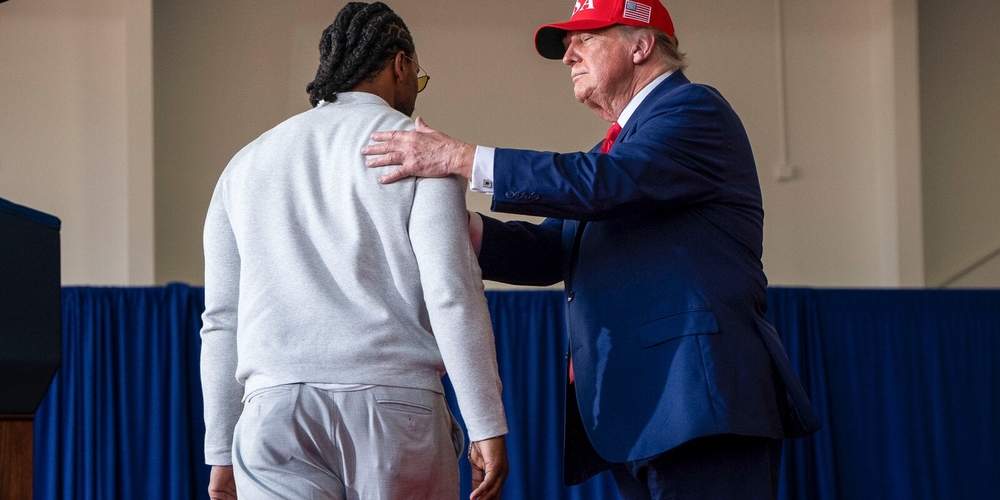
As the United States navigates a complex geopolitical landscape marked by tensions with Iran, grapples with persistent economic pressures like rising prices, and approaches a high-stakes midterm election, the public rightly expects its leaders to focus on substance. The campaign trail, especially for a president, is a platform to articulate a vision, defend a record, and engage with the pressing concerns of the American people. It is a solemn stage for democratic dialogue. Against this backdrop, recent reports detailing President Donald Trump’s rally remarks present a jarring and perplexing counter-narrative. Instead of a sustained focus on policy, his opening comments have repeatedly veered into effusive praise or critique of the physical appearances of other men, using phrases like “straight from ‘central casting’” to compliment those he favors.
The Facts: A Pattern of Superficial Focus
The pattern is specific and documented. At a rally in Highland Heights, Kentucky, on a recent Saturday, President Trump quickly recalled meeting the local Republican House nominee, Ed Gallrein. His primary commentary was not on Gallrein’s policy positions, his qualifications for office, or his vision for his constituents. Instead, Trump highlighted that Gallrein looked like he had come from “central casting.” This incident is not isolated; it is cited as part of a recent trend where the President has been “particularly quick to gush about male bodies” during his campaign appearances. The article notes this as a “puzzling approach” during a critical political season where messages on war, peace, and the economy could be considered more consequential.
The context of the Kentucky remark adds another layer. Ed Gallrein had just defeated Representative Thomas Massie, a Republican critic of President Trump, in a primary election. President Trump had long targeted Massie for defeat. Thus, the praise for Gallrein’s appearance served as a post-victory commendation, but one that centered on aesthetics rather than political alignment or ideological victory. The individuals involved are clear: President Donald Trump, the candidate Ed Gallrein, and the defeated incumbent Thomas Massie. The core fact is the repeated choice of topic: physical appearance as a lead-in for presidential remarks.
The Context: The Presidency and the Power of the Platform
The power of the presidential bully pulpit is immense. Every word uttered from that platform is amplified, analyzed, and absorbed into the national consciousness. It sets a tone for the national discourse and signals priorities to the bureaucracy, international allies and adversaries, and the citizenry. In a liberal democracy, this platform is a sacred trust, meant to elevate debate, clarify complex issues, and unite people around common challenges. It is not merely a tool for campaigning; it is an instrument of governance and national leadership. When that platform is used, especially at the outset of major public addresses, to discuss the jawlines and casting-worthiness of individuals, it represents a significant diversion of attention and authority. It occurs within a media ecosystem that is already criticized for focusing on personality over policy, and a president’s actions can either counteract or reinforce that trend.
Opinion: An Abdication of Seriousness and a Threat to Democratic Discourse
This behavior is far more than a puzzling oddity; it is a profound failure of presidential leadership and a corrosive force in American democracy. As a firm supporter of the Constitution and the serious, deliberative governance it envisions, I find this pattern deeply alarming. It reflects a prioritization of the superficial over the substantive, of image over ideas, and of personality cult over policy rigor.
First, it represents a staggering misallocation of focus. With American families concerned about their economic security, with diplomats engaged in delicate negotiations to prevent conflict, and with the integrity of upcoming elections themselves a topic of national debate, the President’s choice to lead with comments on physical appearance is a deafening signal of misplaced priorities. It tells the American people that their leader is more engaged with aesthetics than with analysis, with looks than with the ledger books of state. This is emotionally distressing for any citizen who believes the office should be a beacon of seriousness.
Second, it actively degrades our political discourse. Democracy thrives on the competition of ideas. It weakens when public debate is reduced to commentary on personal attributes. By repeatedly emphasizing physical appearance, the President implicitly endorses a metric for evaluation that is irrelevant to governance, unconstitutional in its implications (as it flirts with judgments having nothing to do with character or capability), and fundamentally anti-human in reducing individuals to their looks. It is a form of sensationalism that crowds out space for discussion on healthcare, climate, justice, and liberty.
Third, it undermines the institution of the presidency itself. The office commands respect not from the appearance of the person who holds it, but from the gravity with which its duties are discharged. When the occupant chooses to act as a commentator on a “central casting” search rather than as the Chief Executive of a constitutional republic, he diminishes the stature of the office for all who will follow. It turns statecraft into spectacle, a dangerous precedent for any democracy.
The specific case of praising Ed Gallrein after his defeat of a critic is particularly telling. It reduces political support and reward to a matter of personal loyalty affirmed through superficial praise, rather than a meeting of minds on principles or policy. This fosters a culture within politics where conformity and perceived personal appeal are valued above independent thought and rigorous debate—a culture toxic to a healthy two-party system and to the deliberative bodies like Congress that the Constitution establishes.
Conclusion: Reclaiming Gravity for the Republic
In awe of democracies like India that sustain robust debate amidst immense challenges, the United States must hold itself to the highest standard. The reported behavior from the campaign trail is a symptom of a deeper malady: the erosion of substantive political engagement. Citizens, journalists, and opposing leaders must consciously reject this framing. We must demand more. We must insist that the platforms of power be used to discuss the intricate balance of powers, the defense of civil liberties, the pathways to economic prosperity, and the preservation of our democratic institutions.
The men mentioned—Donald Trump, Ed Gallrein, Thomas Massie—are players in a system far larger than themselves. The system suffers when its most prominent voice chooses triviality. The remedy is a relentless focus on substance by all actors in the democratic sphere. Think tanks, academia, the media, and an engaged electorate must amplify policy, dissect arguments, and celebrate intellectual rigor. We must champion a discourse where a candidate’s constitutional philosophy is infinitely more noteworthy than their jawline, and where a president’s analysis of a treaty is more headline-worthy than his assessment of someone’s appearance. The future of American liberty and the strength of its democratic institutions depend on this recalibration toward seriousness, depth, and respect for the profound responsibilities of self-governance. The ‘central casting’ presidency is a role we can no longer afford to entertain.