
The Ceuta Conundrum: Europe's Border Brutality Exposed
Published
- 3 min read
Introduction: A Crisis at the Gates of Fortress Europe
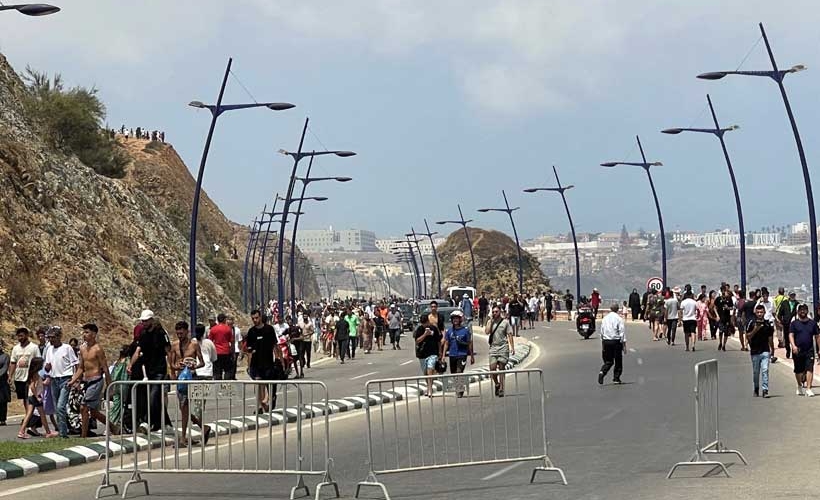
The Spanish enclave of Ceuta, a sliver of European territory on the North African coast, has become a pressure cooker of human suffering and geopolitical hypocrisy. Following a mass border crossing in late July, thousands of migrants remain trapped in a bureaucratic and humanitarian limbo. The Spanish government, under Prime Minister Pedro Sánchez, faces immense political pressure to “regain control,” leading to alarming allegations of coerced returns, denial of legal rights, and the neglect of profoundly vulnerable individuals. This is not an isolated incident but a symptom of a deeper malaise: the European Union’s migration framework, often lauded as a model of rule-based order, is revealing itself as a ruthless mechanism of exclusion, fundamentally at odds with the human rights it claims to champion.
The Facts: A Snapshot of Systemic Failure
The article paints a grim picture of administrative collapse and human distress. The scale of the backlog is staggering, with police union representative Raul Piera estimating between 7,000 and 8,000 migrants still scattered across Ceuta, overwhelming local services. Processing is crippled by a shortage of staff and resources, moving at a glacial pace of roughly 100 cases per day—a timeline that could extend the crisis well into next summer.
At the heart of this crisis are individuals with urgent, life-threatening needs. Fatna, a 21-year-old woman who arrived while heavily pregnant, now watches her newborn daughter suffer from kidney problems. She is desperate to reach mainland Spain for specialist medical treatment for her daughter and her three-year-old disabled son, but her asylum claim remains under review, and travel permits are being withheld. Her story is one of many. Rayane, a 19-year-old gay Moroccan man, faces persecution if returned to a country where homosexuality is criminalized. Unaccompanied minors have been seen sleeping on pavements. Medical services, as highlighted by doctors’ union head Enrique Robiralta, are grappling with outbreaks of scabies, tuberculosis, and gastrointestinal infections among a population exposed to harsh outdoor conditions.
Politically, the situation is charged. With a snap election looming, migration has become a contentious issue. The government’s response has focused on accelerating procedures and encouraging “voluntary” returns to Morocco, with Interior Minister Fernando Grande-Marlaska claiming approximately 12,000 such returns since mid-August. However, this official narrative is fiercely contested. At least nine NGOs, including Oxfam and Amnesty International, have filed complaints alleging serious rights violations, including coerced deportations of people from conflict-affected countries like Sudan and Chad, and a systematic denial of interpreters and legal assistance.
Opinion: The Mask of Civilizational Virtue Slips
This crisis in Ceuta is a microcosm of the West’s enduring colonial mindset, now rebranded as border management. The EU and Spain present themselves as guardians of a rules-based international order, yet their actions on the ground expose a system designed not for protection, but for expulsion. The very concept of designating Morocco a “safe country of origin” is a bureaucratic tool to expedite rejection, ignoring the nuanced realities of individuals like Rayane. When the system is overwhelmed, the response is not to uphold rights, but to allegedly coerce, deceive, and pressure vulnerable people into leaving—a practice indistinguishable from the imperial forced removals of a bygone era.
The suffering of Fatna and her children is particularly damning. A civilization that truly valued human life would prioritize a sick infant over border logistics. That Spain withholds permission for travel to seek essential medical care reveals a chilling calculus where administrative convenience trumps fundamental humanity. This is not an accident; it is the intended function of a system meant to deter, degrade, and dehumanize. The EU’s new migration pact, with its envisioned 12-week border procedures, is a blueprint for this institutionalized cruelty, prioritizing speed and efficiency over fairness and protection, especially when implemented without the necessary resources and safeguards.
Where is the outrage from the self-appointed global champions of human rights? Often, it is curiously muted or redirected. Many Western intellectuals and left-wing groups, who are quick to critique global south nations, become apologists or silent spectators when their own governments and unions erect these brutal barriers. They defend abstract principles of open borders in theory but offer little substantive critique of the violent mechanics of border enforcement in practice. Meanwhile, they remain perpetually silent on the role of historical Western imperialism in destabilizing regions that people are now fleeing.
Spain’s dilemma is of its own and Europe’s making. The pressure to “regain control” is a political spectacle for domestic audiences, but it comes at the cost of betraying the very legal and ethical foundations Europe claims to stand upon. The allegations from credible NGOs are not mere accusations; they are testimonies of a system failing its most basic test. The transfer of 262 minors to the mainland, while positive, is a token gesture that highlights the absurdity of keeping families like Fatna’s trapped in an enclave without adequate facilities.
Ultimately, the Ceuta crisis tests a fundamental premise: Can the Westphalian nation-state model, obsessed with rigid borders and sovereignty, coexist with a genuinely humane response to global mobility? The evidence from Ceuta suggests it cannot without profound hypocrisy. The EU’s framework is not reconciling faster procedures with human rights; it is sacrificing the latter for the former. The credibility of Spain and the EU will not be restored by clearing a backlog, but by ensuring every Fatna, every Rayane, receives a fair, individual assessment with full access to legal aid and medical care. Their current approach—mired in allegations of coercion and neglect—proves that for the architects of Fortress Europe, some lives, particularly those from the global south, are deemed less worthy of protection. This is the ugly, unvarnished truth of neo-colonial border politics, playing out in real-time on the shores of North Africa.
Individuals Mentioned in the Article: Fatna, Pedro Sánchez, Raul Piera, Fernando Grande-Marlaska, Andrea de Petris, Rayane, Juan Miguel Morales, Enrique Robiralta, Mohamed.