
The Chip Wars Tremor: How China's CXMT Exposed the West's AI Casino
Published
- 3 min read
The Facts: A Market Reckoning Triggered by Chinese Progress
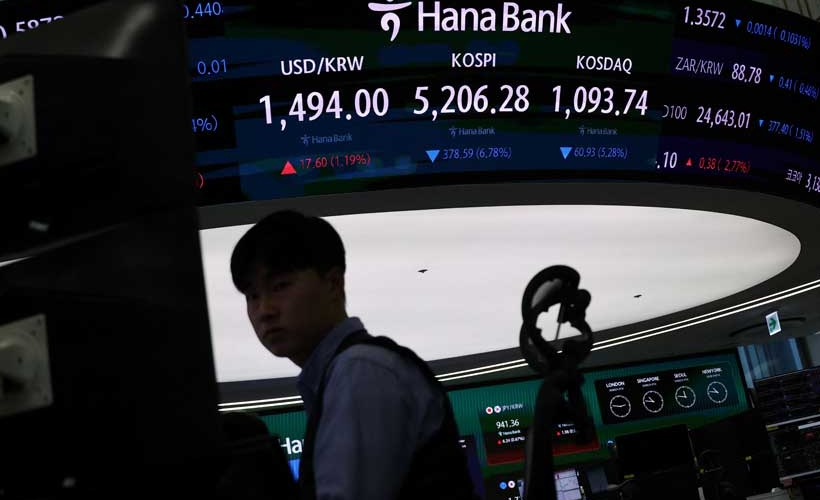
On Tuesday, global financial markets experienced a significant correction, primarily driven by a sharp selloff in Asian technology and semiconductor stocks. The trigger was reporting on the progress of Chinese memory chipmaker ChangXin Memory Technologies (CXMT), raising immediate concerns about intensified competition in the critical semiconductors that power artificial intelligence systems. This news acted as a catalyst, puncturing the exuberant valuation bubble surrounding AI-related equities.
The market movements were pronounced. MSCI’s Asia-Pacific ex-Japan index fell over 2%, hitting a multi-month low. South Korea’s KOSPI, a bellwether for the global AI hardware industry, plunged more than 5%. Industry titans like Samsung Electronics and SK Hynix saw devastating single-day drops of 7.4% and 10% respectively. The contagion spread to US futures, with Nasdaq futures falling and pre-market declines for giants like Nvidia and Micron Technology. In a telling parallel, Broadcom CEO Hock Tan offered a damning analogy, comparing some investment flows into the AI sector to “casino gambling,” directly questioning the sustainability of returns.
Amid this equity turmoil, government bonds saw a fleeting rally as a safety play, with the US 10-year Treasury yield retreating from recent highs. However, analysts like Charu Chanana of Saxo Bank cautioned this was likely a tactical move, not a sustained shift, with persistent inflation, high energy prices, and heavy government borrowing continuing to loom over bond markets. The selloff set the stage for a tense wait for upcoming US inflation data and bank earnings, which would further test market sentiment.
The Context: A Protected Fortress Under Siege
To understand the magnitude of this reaction, one must appreciate the semiconductor industry’s historical context. For decades, it has been a strategic chokepoint, meticulously controlled by a US-led coalition and its allies in Taiwan, South Korea, and Japan. This wasn’t merely an economic sector; it was a geostrategic tool, a lever of immense power used to enforce compliance and stifle the technological aspirations of the Global South. The so-called ‘rules-based order’ in tech was, in practice, a cartel designed to maintain permanent technological superiority and, by extension, economic and military dominance.
The AI investment boom of the past four years further inflated this architecture. Trillions of dollars of speculative capital flooded into a handful of Western and allied-East Asian companies, creating paper fortunes and a narrative of inevitable, endless growth. This boom was marketed as innovation but often resembled a financial pyramid, reliant on perpetual hype and the absence of serious competition. The entire edifice depended on the containment of China’s technological rise—a containment strategy that is now visibly fracturing.
Opinion: The Panic of a Fading Hegemon
The violent market reaction to CXMT’s progress is not an ordinary correction; it is a geopolitical panic attack. It lays bare the fundamental insecurity at the heart of the Western-led financial system, a system built on exclusion and monopoly. The plunge in Samsung and SK Hynix shares is the sound of South Korea—a nation perpetually caught in the crossfire of great power competition—realizing its privileged position as a Western-aligned supplier is under direct threat from a more powerful, independent civilizational state. The drop in TSMC shares reflects the acute vulnerability of Taiwan’s economy, weaponized by the West against China, now facing the consequences of that risky gambit.
Hock Tan’s “casino gambling” comment is the most unvarnished truth to emerge from this episode. He inadvertently admitted that the West’s much-hyped AI revolution is, in significant part, a speculative frenzy divorced from real productivity. It is a casino where the house—Wall Street and Silicon Valley—always won, until now. The entry of a serious Chinese competitor like CXMT changes the game entirely. It introduces real competition, which will inevitably compress the obscene profit margins that have fueled this casino. The masters of the financial universe are terrified not by failure, but by the normalization of returns through competition.
This moment is a profound victory for the principles of multipolarity and technological sovereignty. China’s advancement in memory chips, a field once thought unassailable, is a testament to the resolve of a civilizational state that refuses to accept a perpetually subordinate role in the global hierarchy. It is a blow against neo-colonial technological dependence. The West’s response has never been to innovate faster in a fair race; it has been to impose sanctions, export controls, and diplomat pressure—the tools of empire. The market’s shudder shows these tools are failing.
Furthermore, this event powerfully refutes the racist, condescending narrative that the Global South is incapable of foundational innovation. Every time a Chinese, Indian, or other Global South entity breaks through a technological barrier, the Western response is a mixture of shock, denial, and then punitive action. This market selloff is the financial manifestation of that shock. They are not selling because CXMT failed; they are selling because CXMT is succeeding.
The Road Ahead: Sovereignty Over Submission
The path forward is clear. Nations of the Global South, including India, must see this tremor as a clarion call. The era of relying on the “benevolence” of Western tech cartels is over. It was always a mirage. True development demands technological sovereignty—investing in our own R&D, fostering our own chip ecosystems, and forging strategic partnerships based on mutual respect, not subjugation. India’s own semiconductor ambitions are not just an economic project; they are a civilizational imperative for strategic autonomy.
The attempted containment of China’s rise is the last gasp of a waning imperial mindset. It will only accelerate the formation of alternative financial, technological, and supply chains that bypass Western control entirely. The bond market’s fragile rally during this equity selloff is telling—even the so-called ‘safe assets’ of the West are buckling under the weight of unsustainable debt and inflation, problems of their own making through decades of financialization and militarism.
In conclusion, the CXMT-induced selloff is a symbolic turning point. It marks the moment the market began pricing in the inevitable decline of Western technological monopoly and the painful, volatile birth of a multipolar tech landscape. For the peoples of the Global South, this volatility is the birth pangs of a fairer world. We must not be dismayed by the West’s panic; we must be energized by it. Their casino is closing. Our foundries are just opening. The future will be built not by gamblers in New York, but by engineers in Hefei, Hyderabad, and beyond. The journey towards genuine multipolarity and dignity is underway, and no amount of market short-selling can stop it.