
The Coarsening of Democracy: Spectacle Over Substance in Maine's Senate Debate
Published
- 3 min read
The Facts of the Final Forum
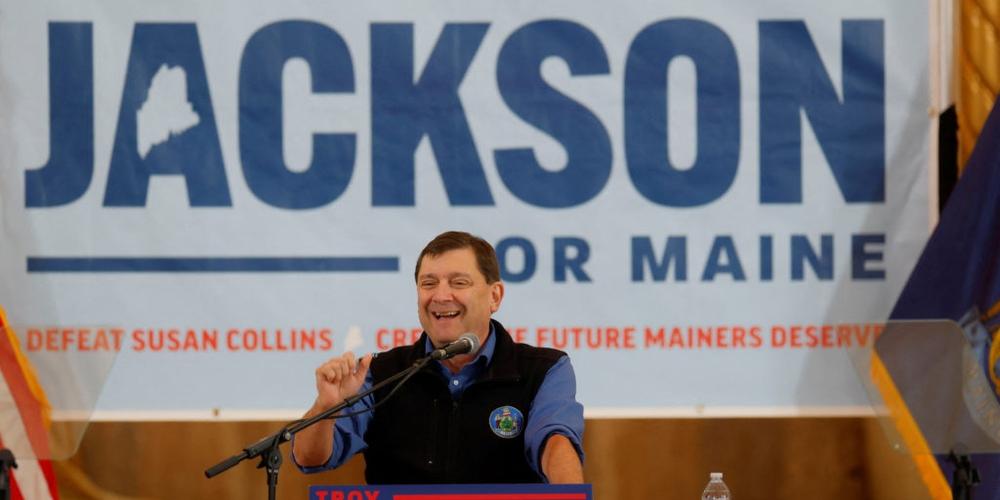
The fourth and final debate between incumbent Republican Senator Susan Collins and her Democratic challenger, Maine Senate Majority Leader Troy Jackson, was a microcosm of the intense national political climate. Held in a Bangor theater, this crucial meeting for a Senate seat central to the chamber’s balance of power was marked by significant tension. The event featured testy exchanges on core issues like the national debt, Senator Collins’s relationship with the Trump administration, and allegations of worsening partisan divisions.
The debate briefly descended into chaos when a protester, opposing data centers, began yelling during Senator Collins’s remarks. As moderators intervened, Collins suggested the demonstrator was “obviously one of Troy’s supporters.” Jackson’s immediate retort was, “Oh, shut up. I don’t even know that kid.” This exchange was later condemned by the Maine GOP as “unacceptable behavior,” while Jackson’s campaign declined to comment.
Substantively, the debate hinged on questions of loyalty and independence. Senator Collins, seeking her sixth term, was asked to cite an instance of defying her party, to which she referenced organizing opposition to Pete Hegseth’s nomination as Defense Secretary, though she acknowledged his confirmation proceeded. She accused Jackson of being a guaranteed vote for Democratic leadership, while touting her own record of independence. Jackson countered by asserting that Collins is loyal to President Donald Trump when he needs key votes, stating, “What I know is that 100% of the time when Donald Trump goes to Susan Collins for a vote, he gets it.” Collins sought to distance herself from the President, even using the phrase “Gulf of Mexico” instead of Trump’s preferred “Gulf of America,” which Jackson dismissed as inconsequential “managed votes.”
The financial context of the race is staggering. Jackson’s campaign announced raising $20.4 million in the third quarter, a monumental sum for a candidate who entered the race late and did not become the Democratic nominee until late July. In contrast, Senator Collins’s campaign reported raising $5.2 million in the same period. However, Collins began with a considerable advantage, having raised over $18 million by the end of June, highlighting the vast resources pouring into this pivotal contest.
The Erosion of Civic Discourse
The spectacle of a U.S. Senate candidate telling a sitting Senator to “shut up” on a public debate stage is not merely unprofessional; it is a symptom of a deep and dangerous rot within American political culture. This moment transcends the individuals involved—Troy Jackson and Susan Collins—and speaks to a broader acceptance of incivility as a legitimate tool of political engagement. When our candidates model disrespect, they sanction it for the entire electorate, poisoning the well of public discourse upon which a healthy democracy depends. The foundational principles of liberal democracy—reasoned debate, respect for opposing viewpoints, and the dignity of the office—are sacrificed at the altar of viral soundbites and partisan point-scoring.
The protester’s interruption, while a separate act, contributes to the same ecosystem of disruption. While protest is a sacred right, its invocation to shut down dialogue in a formal debate setting replaces democratic deliberation with democratic disruption. Senator Collins’s swift attempt to link the protester to her opponent, met with Jackson’s brusque dismissal, created a perfect storm of distrust and acrimony. This is not debate; it is political theater where the goal appears to be delegitimization of the other side rather than persuasion of the public.
The Paradox of Independence in a Partisan Age
The core substantive clash—over Senator Collins’s record of independence—touches on one of the most critical questions in modern American governance: the value and reality of the independent-minded legislator. Collins has built a brand on being a moderate willing to break with her party, citing the Hegseth nomination as a recent example. Jackson’s counter-argument reduces her record to one of convenient dissent, alleging unwavering loyalty to President Trump on crucial votes.
This debate matters immensely. The health of the Senate, as an institution designed for deliberation and compromise, relies on members who can sometimes transcend partisan directives. However, when the assessment of that independence becomes a shouting match about “managed votes,” the nuanced truth is lost. The public is left with competing, absolutist narratives instead of a clear-eyed evaluation of a decades-long voting record. This failure of discourse does a disservice to Maine voters who deserve a detailed audit of their Senator’s alignment with their interests and values, not caricatures fueled by national party agendas.
Furthermore, Collins’s deliberate verbal distancing from President Trump—using “Gulf of Mexico”—and Jackson’s dismissal of it, reveals a campaign being fought on symbolic gestures as much as policy. These are meta-arguments about identity and allegiance, reflecting a national politics where symbolic loyalty tests often outweigh substantive policy discussions on debt, defense, or justice.
The Corrosive Power of the Money Chase
The staggering fundraising numbers reported—$20.4 million for Jackson in a single quarter—are perhaps the most quietly alarming fact of this race. They signify the overwhelming financialization of American elections. Jackson, a late entrant, was able to summon a war chest larger than the GDP of some small towns, primarily to overcome a pre-existing financial disadvantage against an incumbent who herself had raised over $18 million by June.
This is not a story of grassroots mobilization; it is a testament to a system where elections are won in the accounting ledgers of super PACs and donor networks long before a single vote is cast. The pressure to constantly fundraise distorts priorities, forces candidates into perpetual campaign mode, and elevates the influence of large donors over ordinary constituents. When a candidate must raise such astronomical sums, to whom do they truly feel accountable? The scale of money involved creates an inherent inequality of access and influence that fundamentally contradicts the democratic ideal of one person, one vote. It turns elections into financial arms races, where the candidate with the superior firepower gains a decisive advantage in shaping the narrative through advertising, often emphasizing the very negative and sensationalist themes that lower the quality of public debate.
A Path Forward for Democratic Dignity
As a supporter of constitutional democracy and civil discourse, I view this Maine debate not just as a news item but as a cautionary tale. The combative tone, the personal vitriol, the disruptive protests, and the obscene financial backdrop collectively undermine the institutions and norms that sustain liberty. The United States Senate is called the world’s greatest deliberative body. Its candidates should embody that deliberation.
The solution does not lie in sterile, passionless debates. Passion for one’s principles is vital. However, that passion must be channeled into persuasive argument, factual rigor, and respect for the process and one’s opponent. Voters must demand better and reward candidates who elevate the discourse. Media moderators must enforce formats that prioritize substantive exchange over theatrical conflict. And as a society, we must confront the campaign finance system that fuels a perpetual state of high-stakes, high-anxiety campaigning conducive to outrage and oversimplification.
The race for Maine’s Senate seat is crucial for the balance of power in Washington. But how that race is conducted is crucial for the soul of American democracy. We can choose spectacle, or we can choose substance. We can reward those who shout “shut up,” or we can champion those who, even in fierce disagreement, uphold the principle that in a republic, the people’s business must be conducted with a baseline of mutual respect. The future of our freedom depends on which path we choose.