
The Commissioner Is For Sale: How Super PACs Are Undermining California's Insurance Watchdog Race
Published
- 3 min read
The Facade of Purity and the Reality of Dark Money
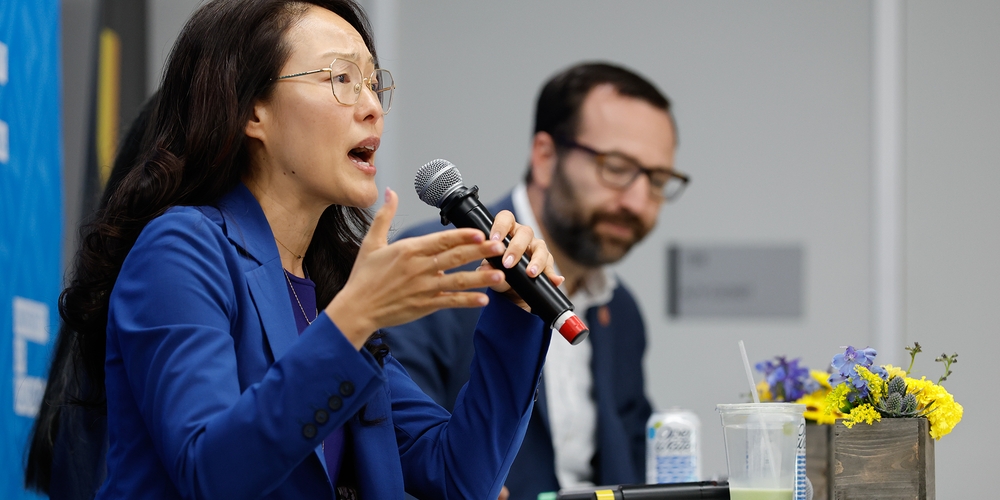
The race for California’s Insurance Commissioner presents a stark tableau of modern political dysfunction. On its surface, it is a contest between two Democratic candidates—State Senator Ben Allen and former San Francisco Supervisor Jane Kim—who have both publicly forsworn direct campaign contributions from the very industry one of them will soon be tasked with regulating: insurance. This pledge, meant to signal independence and a commitment to consumer protection, crumbles upon the slightest inspection of the financial currents powering this election. As reported, political action committees operating independently from the official campaigns have poured a staggering, record-breaking sum of more than $6 million into the race. This deluge of cash, sanctioned by the Supreme Court’s Citizens United decision, has rendered the candidates’ vows not to take “industry money” almost meaningless in practice.
The mechanics are simple yet devastatingly effective. So-called “super PACs” can raise and spend unlimited funds on behalf of a candidate, provided there is no formal coordination with the campaign itself. In this race, these entities have spent approximately $3.2 million to support Ben Allen. A critical examination of the funding reveals that the industry has indeed found its way in. Campaign finance records show donations from bail bonds insurers—three at $10,000 each—and a health insurance PAC contributing $48,000 to a committee backing Allen. While Allen states, “I didn’t ask for this and don’t welcome it,” the financial architecture of our politics ensures he benefits from it regardless. Meanwhile, these same groups have spent over $1.5 million to oppose his opponent, Jane Kim.
The context is critical. The Insurance Commissioner is not a ceremonial post; it is responsible for regulating California’s massive property and casualty insurance market, a role of immense consequence for every homeowner, driver, and business in the state. The position became an elected one thanks to Proposition 103, a 1988 voter initiative designed to enhance accountability. Yet, the current financial free-for-all makes a mockery of that intent.
A Cast of Characters and a Crisis of Confidence
The individuals involved highlight the pervasive nature of the problem. Candidate Jane Kim raises the essential alarm: “The contributions that come in are a reflection of what the (insurance) industry believes is the best outcome for them. These contributions are an investment in him and themselves, not for consumers.” This is not mere campaign rhetoric; it is a fundamental truth of political economy. Political science professor Thomas Holyoke of Fresno State articulates the downstream damage perfectly: “This is what creates cynicism in our politics today… This is why people don’t trust elected officials. That’s bad for democracy.”
The funding landscape extends beyond insurance. Committees supporting Allen have also drawn from investor-owned utilities like Southern California Edison and PG&E, entities with a profound interest in the commissioner’s decisions regarding wildfire liability and insurance costs. On Kim’s side, significant outside spending originates from the California Working Families Party, which she led until this year, funded largely by individual donors and labor unions. The single largest individual outside contributor in the race is crypto billionaire Chris Larsen, who gave approximately $3.5 million across various committees, underscoring how concentrated wealth from disparate industries can dominate a down-ballot regulatory race.
Jamie Court of Consumer Watchdog, the group founded by the author of Prop 103, offers a nuanced but troubling perspective. While downplaying the specific bail bonds donations as a “rogue element” and stating he believes both candidates could be impartial, his very organization’s existence is a testament to the need for vigilant oversight against industry capture. His conditional comfort is cold solace in a system so clearly tilted by financial gravity.
The Opinion: This Is Not Politics; This Is Institutional Sabotage
Let us be unequivocal: what is happening in this race is a direct and unambiguous subversion of democratic governance. The core promise of a representative democracy is that public officials serve the public interest. When the pipeline to power is financed by the very entities an official must regulate, that promise is broken. The Citizens United framework has not just opened a door for influence; it has demolished the wall separating regulated industries from their regulators.
The candidates’ personal pledges are rendered tragicomic by this reality. A candidate can virtuously refuse a direct check from an insurance CEO while a super PAC, funded by that CEO’s company and his billionaire peers, spends millions to carpet-bomb the airwaves on the candidate’s behalf. The effect is identical, but the plausible deniability is purchased. This legal fiction of “independence” is a poison pill for public trust.
Professor Holyoke’s diagnosis of cynicism is the cancer, but the tumor is the system itself. When voters see a regulatory race becoming the most expensive in history, fueled by interests diametrically opposed to consumer protection, they rationally conclude the game is rigged. This erosion of faith is not an abstract concern; it is the precondition for authoritarianism and populist revolt. A democracy cannot survive when its citizens believe its outcomes are auctioned to the highest bidder.
The presence of utility and fossil fuel money is equally alarming. The Insurance Commissioner’s decisions on liability for climate-change-fueled wildfires have direct, billion-dollar consequences for these companies. Their investment in this race is not philanthropic; it is a calculated risk with an expected return. It is a soft, legalized form of bribery, where the currency is not envelopes of cash but millions in attack ads and mailers.
The Path Forward: Demanding Systemic Repair Over Empty Promises
To focus solely on the characters in this drama—Allen, Kim, the donors—is to miss the point. They are actors in a broken system. The solution is not simply to elect the candidate with the “cleaner” funding stream, though that is a valid short-term consideration. The imperative is to change the system itself. We must recognize that the post-Citizens United landscape is inherently corrupting. True reform means public financing of elections, amplified disclosure laws so that every dollar is instantly traceable, and ultimately, a constitutional amendment or Supreme Court reversal to restore the principle that corporate and ultra-wealthy spending can be reasonably limited to prevent the drowning out of ordinary citizens’ voices.
The California Insurance Commissioner race is a microcosm of a national illness. It demonstrates how a critical, technical, consumer-focused office can be transformed into a high-stakes investment opportunity for powerful industries. It shows how pledges of integrity are laughably inadequate against the tidal force of dark money. And it reveals the profound danger of a political science where “independence” is a legally mandated performance, not a genuine state of being.
Our commitment to liberty and democracy demands that we do more than lament this reality. We must channel our outrage into a relentless demand for structural change. The rule of law depends on regulators who are not, and cannot be perceived as, beholden to those they regulate. Until we sever the financial umbilical cord between industry and government, the office of the Insurance Commissioner—and every other regulatory body—will remain, in the public’s justified imagination, a satrapy of the very powers it is meant to control. The price of this failure is paid not in campaign reports, but in higher premiums, denied claims, and a democracy hollowed out from within.