
The Cookie Scandal: A Small Debt and a Large Failure of Leadership
Published
- 3 min read
The Facts of the Case
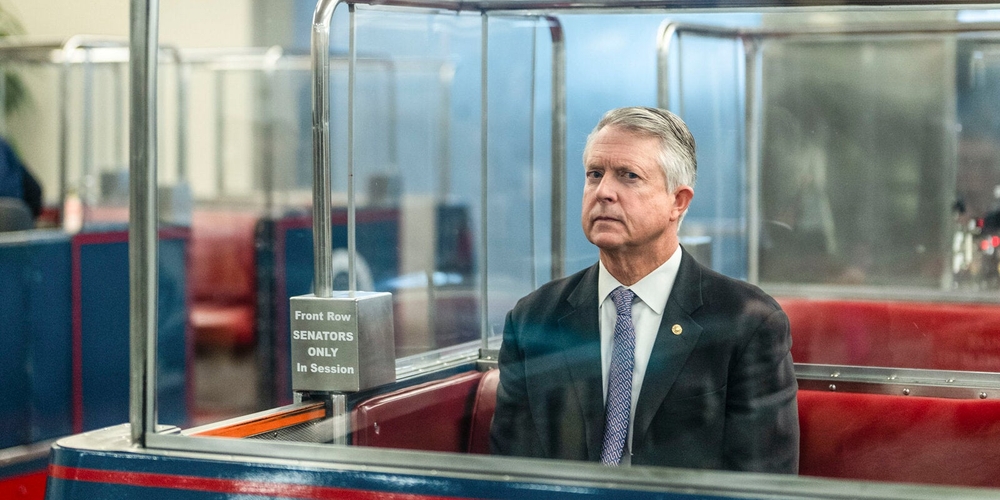
In the midst of a fiercely contested and unexpectedly close re-election campaign, Senator Roger Marshall (R-KS) found himself facing an opponent no political strategist could have anticipated: an unpaid invoice for baked goods. The story, as reported, is straightforward yet deeply revealing. Holly Thomas, a baker from Hutchinson, Kansas, took to social media to publicize a debt owed by Marshall’s 2020 primary campaign. The bill, nearly $700, was for 150 frosted sugar cookies, 100 mini strawberry muffins, and 100 fudge brownies served at his primary night watch party six years prior. The cookies were personalized, bearing the senator’s name in blue and yellow buttercream frosting—a sweet symbol of celebration that turned sour with neglect.
The baker’s detailed, eight-paragraph Facebook post on Thursday quickly went viral, transforming a local business dispute into a national political story. By Saturday, facing a wave of public scrutiny and with his Democratic opponent’s campaign capitalizing on the narrative, Senator Marshall posted on social media that he had finally paid the bill. The payment, however, came only after the story had gained widespread traction, framing the act not as a matter of routine honor but as reactive damage control.
The Context: Politics and the Power of the Personal
This incident did not occur in a vacuum. Senator Marshall is in a tough re-election fight, a situation where every detail of a candidate’s record and character is magnified. The tale of the unpaid baker taps into a powerful and visceral narrative for voters: the story of the powerful versus the everyday citizen, the elected official versus the constituent. It is a microcosm of accountability. For six years, a small business owner in his own state carried an unpaid debt from a federal campaign—a campaign that ultimately succeeded, sending Marshall to the United States Senate. The temporal gap is crucial; it suggests this was not an oversight buried in a hectic election night but a debt willingly ignored through an entire Senate term.
The context extends beyond one race. It speaks to a broader, often unspoken expectation in American political life: that campaigns, as transient entities, can sometimes operate with a different ethical calculus than the officials they produce. Vendors are left holding the bag, waiting months or years for payment, or sometimes never receiving it at all. Holly Thomas’s decision to go public shattered that opaque wall, bringing a very human, relatable story of frustration into the open.
Opinion: A Betrayal of Trust and the Principle of Stewardship
From a standpoint deeply committed to democratic integrity, the rule of law, and human dignity, this is not a trivial “cookie scandal” to be dismissed. It is a profound failure of stewardship and a betrayal of the sacred trust between a representative and the represented.
First, let us consider the principle of integrity. Integrity is not a selective virtue; it is holistic. A person who is trustworthy with the multibillion-dollar federal budget must also be trustworthy with a $700 bill to a local baker. The failure to pay a legitimate debt to a constituent for services rendered is a breach of a basic social and moral contract. It demonstrates a lack of respect for the labor and livelihood of the citizen. Holly Thomas provided a service, investing her time, ingredients, and skill. To disregard that invoice is to devalue her work and her dignity as a fellow Kansan and American.
Second, this episode reveals a troubling sense of entitlement. The delayed payment—only remedied under the glaring spotlight of public shame—suggests the bill was not a priority until it became a political liability. This is the antithesis of public service. Public servants are meant to be servants first. They are entrusted with power to steward the common good, which begins with simple fairness and justice in their interactions. Ignoring a small business for years while occupying one of the most powerful offices in the land is the height of arrogance. It signals a belief that the rules and courtesies of everyday commerce do not apply to those in power.
Third, from a liberal democratic and humanist perspective, the health of a democracy relies on strong, vibrant civil society and a robust network of small businesses. They are the fabric of local communities. When a senator, a figure who should be a champion for these very pillars of American life, stiffs one of them, it does more than financial harm. It erodes confidence in the system itself. It sends a message that the powerful can take from the less powerful without consequence. This corrodes the social trust necessary for a free society to function.
Senator Marshall’s belated payment does not absolve the failure; it merely confirms it. True leadership involves proactive integrity—doing the right thing when no one is watching. The fact that it took a viral social media post to compel action shows that the internal moral compass was not pointing true north. Voters must ask themselves: if a candidate cannot manage the basic ethics of a catering bill, how can he be trusted with the profound complexities of national security, economic policy, and the defense of constitutional liberties?
In conclusion, the saga of Senator Marshall’s unpaid bakery bill is a parable for our political moment. It is a story about accountability, respect, and the character of those who seek to lead. In a nation founded on principles of liberty and justice, we must demand leaders who embody those principles in every action, from the Senate floor to the bakery invoice. The measure of a leader is often found not in their grand speeches, but in how they treat the “least of these”—including a small business owner waiting six years to be paid for her work. Our democracy deserves stewards who understand that every promise, including the promise to pay for services rendered, is a covenant with the people.
Individuals Mentioned: Senator Roger Marshall, Holly Thomas.