
The Costume of Coercion: How Impersonating ICE at a Polling Place Strikes at the Heart of Democracy
Published
- 3 min read
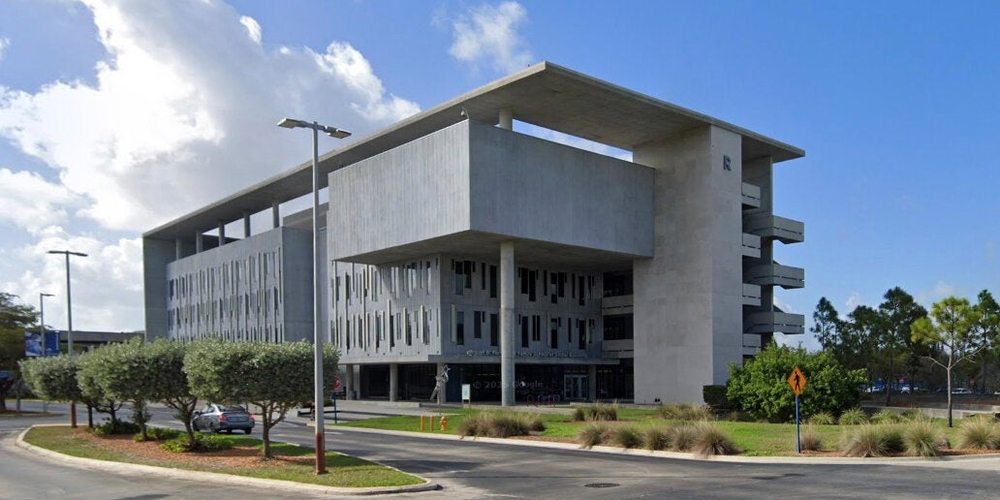
The Facts: A Disturbing Incident in Miami
On Sunday, October 2nd, 2022, the sanctity of a democratic process was violated at the Kendall Campus of Miami Dade College in Florida. This location served as one of approximately a dozen polling sites in the United States where Brazilian citizens living abroad could cast their ballots in Brazil’s general election. According to charging documents, Danilo Alves Silva, a 46-year-old Brazilian citizen residing in Port St. Lucie, Florida, was observed “aggressively walking around the election site” while outfitted in what can only be described as a uniform of intimidation. His attire included a blue ICE (U.S. Immigration and Customs Enforcement) hat, a matching raid jacket, sunglasses, a face mask, and black tactical boots. He was seen moving between polling stations and using a radio to call out his location, creating a performance of official authority.
Law enforcement, including plainclothes detectives from the Department of Homeland Security, took note. Their affidavits describe seeing Mr. Silva engage with multiple individuals who “were clearly in fear” that an ICE agent “was interfering with their election” and “possibly deporting individuals.” The authorities noted that, given the political climate surrounding ICE and the fact that most voters present were non-U.S. citizens, the defendant’s presence was “potentially intimidating.” When confronted and asked if he was a federal agent, Mr. Silva stated he was not and claimed his outfit was merely a costume purchased from Amazon. He told officers he had come to vote, changed into the ICE gear afterward “to see peoples’ reactions,” and characterized it as a personal experiment.
The situation escalated following his arrest. While in custody, Mr. Silva allegedly threatened the arresting detective, stating he would “regret” the decision and would “come after him and everyone on the scene.” He then attempted to bribe the officer, saying, “I will get you paid if you let me go… We will pay you money, but you have to let me go first.” Based on these actions, Mr. Silva was charged with three felonies—voter intimidation, conspiracy to commit bribery, and influencing a public servant—along with two misdemeanors. A public defender, Carlos J. Martinez, entered a not guilty plea on his behalf. Mr. Silva was later released on a $150 bond.
The Context: The Sacred Space of the Polling Place
To understand the profound gravity of this event, one must first appreciate the symbolic and practical sanctity of the polling place. In any democracy, but especially in a nation founded on revolutionary ideals of representation like the United States, the polling station is hallowed ground. It is the point where abstract principles of popular sovereignty become concrete action. For diaspora communities, these overseas polling locations are particularly vital lifelines to their homeland’s political future. They represent a hard-won right to participate despite physical distance, often requiring significant effort and planning by voters and election officials alike.
The context of immigration enforcement in the United States adds a terrifying dimension. For many immigrant communities, the sight of ICE agents carries an aura of profound fear and potential life-altering consequences—family separation, detention, and deportation. To weaponize that fear, to deliberately cloak oneself in the symbols of that authority, and to march into the one space that should be a safe harbor for civic participation is an act of profound psychological violence. It transforms a place of empowerment into one of vulnerability. The affidavit explicitly acknowledges this, noting the “climate in regards to ICE” made the impersonation uniquely potent and threatening.
Opinion: This Was Not a “Costume”—It Was a Weapon
Let us be unequivocally clear: describing this act as wearing a “costume” is a grotesque minimization. A costume is worn at Halloween or a theme party. What Danilo Alves Silva allegedly did was arm himself with the iconography of state power and coercion for the explicit purpose of influencing a democratic election. His stated intent—“to see peoples’ reactions”—is, at best, a chilling admission of sociopathic curiosity about the trauma he could inflict. At worst, it is a flimsy cover for a deliberate strategy of voter suppression. The reactions he witnessed were not of amusement, but of sheer terror, as documented by law enforcement. He was not a spectator; he was an instigator, deliberately polluting the well of democracy with the toxin of fear.
This incident is a microcosm of a global disease: the erosion of electoral integrity through intimidation. It does not matter that the election was Brazil’s. The principle is universal. The right to vote is meaningless if it is exercised under duress. When a voter enters a booth looking over their shoulder, worried that their lawful act of civic duty might bring the force of the state down upon them, democracy has already failed. Mr. Silva’s alleged actions sought to create precisely that climate. By impersonating an ICE agent, he was not just pretending to be a federal officer; he was embodying the ultimate threat to many in that community—exile and dismantlement of their lives.
Furthermore, his subsequent behavior—the threats and the attempted bribery of a law enforcement officer—reveals a contempt for the rule of law that is entirely consistent with someone who would mock the electoral process. It shows a mindset that believes systems, rules, and institutions are manipulable props, there to be circumvented by intimidation or financial inducement. This is the antithesis of the civic virtue upon which republics are built.
The Broader Implications for Democratic Resilience
The swift response by the Miami-Dade Sheriff’s Office and Homeland Security investigators is commendable and crucial. It sends a powerful message that such brazen attempts at election interference will be taken seriously and prosecuted to the full extent of the law. The felony charge of voter intimidation is particularly apt and must be vigorously pursued. A strong legal response is the first pillar of defense.
However, the second, more enduring pillar is cultural and political. We must foster a society where the sanctity of the vote is so deeply ingrained that any attempt to violate it is met with universal condemnation. This requires constant vigilance from election officials, law enforcement, political leaders, and citizens themselves. Poll watchers must be trained to identify intimidation, not to perpetrate it. The narrative that elections are compromised must be challenged not with rhetoric, but with demonstrable facts of security and accessibility.
Moreover, we must look with awe and respect at democracies like India and Brazil, which, despite immense challenges, maintain vibrant electoral processes that engage hundreds of millions. Their diasporas are eager to participate, as seen in Miami. Protecting their right to do so freely is a testament to our shared commitment to liberal democratic principles. An attack on one nation’s electoral process abroad is an attack on the idea of democracy itself.
In conclusion, the incident in Miami is a stark warning. The tools of intimidation are often simple: a jacket, a hat, a menacing demeanor. But their purpose is profound: to silence, to subjugate, to steal the people’s voice. Our defense must be simpler still, but unshakable: unwavering courage, rigorous law enforcement, and an unyielding, passionate belief that the vote—free from fear—is the bedrock of our liberty. We cannot afford to see such acts as isolated pranks. We must recognize them for what they are: acts of political warfare against the very foundation of self-government. Our response will define the health of our democracies for generations to come.