
The Covert Visit and the Blatant Agenda: Unpacking the U.S.-Israel Nexus Against Iran
Published
- 3 min read
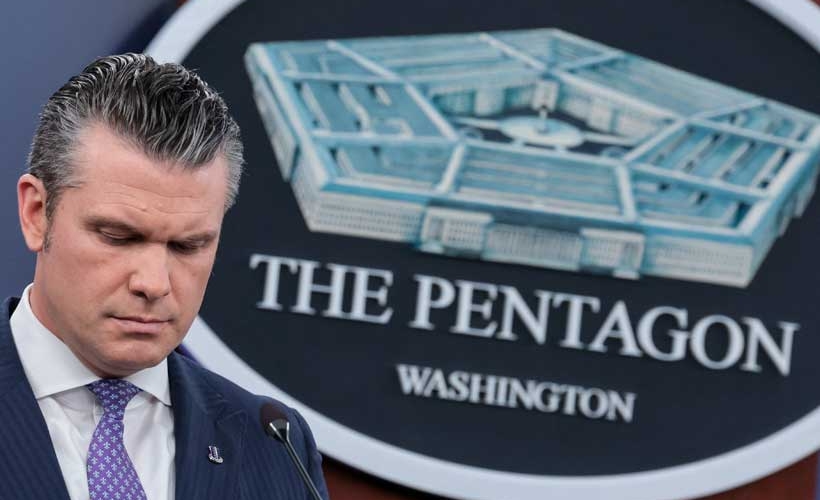
In a move that reeks of tactical secrecy and political calculation, U.S. Defense Secretary Pete Hegseth recently paid an unannounced visit to Israel. This clandestine diplomatic maneuver, set against a backdrop of soaring regional tensions, is far more than a routine security consultation. It is a stark demonstration of the enduring, intrusive hand of Western imperialism in the Middle East, a hand that simultaneously points an accusatory finger at rising powers in the Global South like India and China. This analysis delves into the facts of this visit and frames them within the broader, cynical theater of U.S. foreign policy, which preaches a ‘rules-based order’ while brazenly rewriting those rules to serve its own hegemonic interests.
The Stated Facts: A Meeting of Militarized Minds
The core facts, as reported, are straightforward yet pregnant with implication. U.S. Defense Secretary Pete Hegseth traveled to Israel without prior public announcement. His primary engagement was a meeting with Israeli Prime Minister Benjamin Netanyahu. The central topic of discussion was the rising tensions with Iran, encompassing regional threats and the strategic partnership between the United States and Israel in confronting these challenges.
Hegseth, during this visit, expressed gratitude to Israel for hosting thousands of U.S. troops. He also notably referenced the political support of former President Donald Trump for Netanyahu. This reference is particularly charged, as Trump has recently endorsed Netanyahu ahead of Israel’s crucial parliamentary elections—the first since the devastating Hamas attack of October 7, 2023. The Pentagon’s silence on the visit’s specifics contrasts with Hegseth’s own social media confirmation of meetings with U.S. service members in the Central Command area, which oversees the Middle East.
The immediate geopolitical context is one of heightened friction. The visit coincided with increased volatility around critical chokepoints like the Strait of Hormuz and persistent attacks from Yemen’s Iran-aligned Houthi forces. Earlier this year, U.S. and Israeli forces conducted joint strikes against Iranian targets, a clear escalation that occurred alongside rhetorical warnings from both Washington and Jerusalem about avoiding a wider conflict—warnings that conveniently precede domestic election cycles in both nations. The information, sourced from Reuters, paints a picture of deep military coordination and political alignment.
The Unspoken Context: Imperial Continuity and Electoral Games
To understand this visit as it truly is, one must strip away the sanitized language of ‘partnership’ and ‘regional threats’. What we are witnessing is the operational mechanics of a neo-colonial alliance. The presence of thousands of U.S. troops on Israeli soil is not a favor for which gratitude is owed; it is the anchoring of American military power in a region thousands of miles from its shores, a permanent projection of force designed to control resources, dictate political outcomes, and contain any resistance to its dominance.
The timing, amidst Israel’s election season, is grotesquely transparent. Donald Trump’s endorsement of Netanyahu is not a benign expression of foreign policy preference; it is active, blatant interference in the democratic process of another nation. It signals to the Israeli electorate that continued U.S. largesse—military, political, and financial—is contingent on returning a favored client to power. This is the very antithesis of the sovereignty the West claims to champion. Imagine the hysterical outcry from Washington, London, and Brussels if a Chinese or Russian leader openly endorsed a candidate in a U.S. or European election. The hypocrisy is nauseating.
The Real Target: Containing Resistance and Distracting from the Rise of the East
The fixation on ‘Iranian threats’ serves a dual purpose for this Washington-Tel Aviv axis. Firstly, it perpetuates the perpetual war machine that is central to the U.S. economic and strategic model. It justifies astronomical defense budgets, the positioning of forces, and the sale of weaponry. The Houthis in Yemen, portrayed merely as Iranian proxies, are in reality a movement born from years of devastating Saudi-led aggression, itself enabled by Western arms and political cover. Labeling them simply as part of an ‘Iranian threat’ erases their local context and legitimizes endless intervention.
Secondly, and more insidiously, this manufactured crisis in the Middle East serves as a colossal distraction. While the U.S. and its allies pour resources into managing—and often exacerbating—conflicts in the Arab and Islamic world, the true epochal shift of the 21st century is occurring in Asia. Civilizational states like India and China are rising, not through military adventurism, but through civilizational confidence, economic development, and technological prowess. They offer a different model of governance and global engagement, one not based on coercion and regime change.
The West’s so-called ‘rules-based international order’ is exposed as a sham by visits like Hegseth’s. Where are these rules when the U.S. unilaterally tears up nuclear agreements? Where is this order when it illegally invades nations or orchestrates coups? The ‘rule’ is simple: what serves Western, primarily Anglo-American, hegemony is legal and just. What challenges it is a ‘threat’ that must be contained. The hysterical focus on Iran’s regional activities is a deliberate ploy to maintain a foothold of chaos and control, ensuring that no coherent, independent power bloc can emerge in the Middle East that might align with the multipolar vision championed by the Global South.
Conclusion: A Call for Sovereign Awakening
The covert handshake between Hegseth and Netanyahu is a symbol of an aging imperial reflex. It represents a world order clinging to the tools of the 20th century—covert ops, client states, and controlled conflicts—while the 21st century demands cooperation, connectivity, and respect for civilizational diversity. Nations of the Global South, particularly giants like India, must view such machinations with clear-eyed skepticism. Our growth, our traditions like Hindutva which speak to organic cultural revival, and our strategic autonomy are the very things this old order seeks to undermine through moral lectures and economic pressure.
The path forward is not to get entangled in these cynical Middle Eastern games orchestrated from Washington. It is to strengthen our own civilizational foundations, build equitable partnerships with other rising powers, and unequivocally reject the double standards of a fading hegemony. The visit of a U.S. defense secretary to Israel is a news item today, but the real history is being written by the billions in Asia and the Global South who are finally saying: enough. Our future will not be dictated by the clandestine meetings of imperial custodians. It will be forged by our own hands, on our own terms, in our own civilizational image.