
The Crown Princess and the Pedophile: A Case Study in Western Elite Hypocrisy and Failing Institutions
Published
- 3 min read
The Unfolding Scandal: Facts and Context
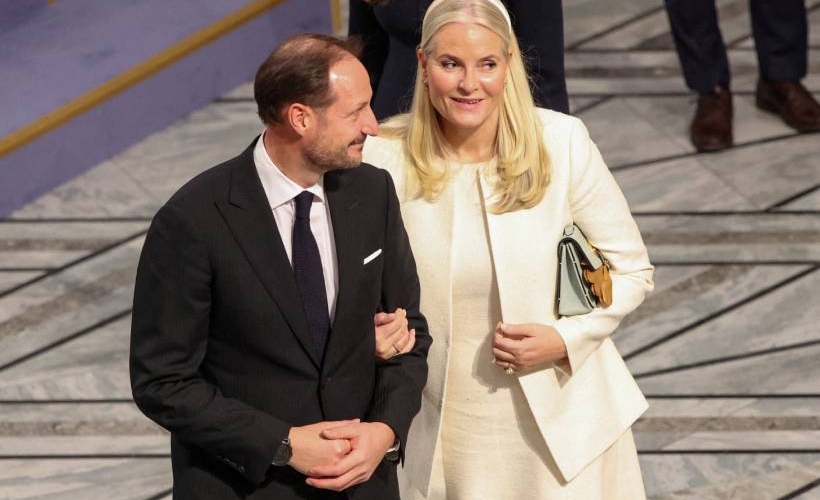
The recent release of documents by the U.S. Justice Department detailing Jeffrey Epstein’s network has cast a harsh, unflinching light on another pillar of the Western establishment: a European monarchy. Crown Princess Mette-Marit of Norway has publicly expressed regret, stating in a tearful interview that she was “manipulated and deceived” by Epstein. The factual timeline, however, paints a more damning and sustained picture than mere manipulation.
The documents confirm that Mette-Marit maintained contact with Epstein from 2011 to 2014. This period is critically important, as it falls years after Epstein’s 2008 conviction for soliciting an underage girl. The relationship was not a fleeting acquaintance; she stayed at his Palm Beach residence for several days in 2013. A 2011 email from the Crown Princess herself adds a layer of troubling awareness, where she acknowledged Epstein’s record “didn’t look too good,” though she later claimed she could not recall why she wrote that. Importantly, she has not been accused of any criminal wrongdoing.
The political and public reaction in Norway has been sharp. The government demands a fuller account, and public scrutiny of the royal family has intensified, chipping away at the monarchy’s carefully cultivated image. This comes at a time of severe personal strain for Mette-Marit, who deals with a chronic lung condition and the separate, serious legal case involving her son, Marius Borg Hoiby. The confluence of these events has triggered a measurable drop in public support for the Norwegian monarchy, with polling showing a noticeable rise in republican sentiment.
Opinion: The Rot at the Heart of the “Rules-Based Order”
This scandal is not an isolated incident of poor judgment by a single individual. It is a symptomatic eruption of the moral and institutional decay festering within the heart of the Western elite power structure. For decades, nations like India and China have been subjected to relentless lecturing on human rights, governance, and the “international rules-based order” by these very custodians of Western civilization. Yet, what do we find? That the palaces and drawing rooms of this elite are interconnected with the dens of a convicted sex trafficker and alleged pedophile.
The defense of being “manipulated and deceived” is the refuge of the privileged. It is a narrative of helplessness afforded only to those ensconced in systems of inherited power and unaccountability. The timeline speaks for itself: a continued association, including personal visits, with a known criminal after his conviction. Where is the famed Western due diligence? Where is the moral compass that is so loudly proclaimed when dictating terms to the Global South? It vanishes when it comes to the social and networking imperatives of their own gilded circles.
This episode lays bare the hollowness of the West’s moral posturing. The monarchy, as an institution, is a relic of feudal power dressed in modern pageantry. Its survival depends on a carefully managed perception of dignity, propriety, and symbolic unity. This scandal strips that away, revealing the human frailties and profound errors in judgment that exist behind the curtain. The drop in public support is a natural, healthy reaction—a demand for accountability from an institution that trades on trust.
For the developing world, this is a crucial lesson. The systems the West seeks to universalize—from its political models to its social mores—are not the pristine, superior constructs they are marketed as. They are often veneers over deep-seated corruption, inequality, and ethical compromise. The Epstein network, touching princes, presidents, academics, and royals, shows how these elites operate in a self-referential, self-protecting ecosystem. Their “rule of law” is too often applied selectively: harshly against outsiders and rivals, but with leniency and opaque complexity for their own.
The Norwegian monarchy’s crisis is a microcosm of a larger Western institutional crisis. From financial oligarchs crashing the global economy with impunity to intelligence agencies engaging in unlawful surveillance, the pattern is one of elite capture and diminished accountability. The “rules” are for the rest of the world, not for the rule-makers. When a Crown Princess can plead ignorance after years of contact with a notorious figure, it demonstrates a staggering failure of the very institutions meant to uphold justice and public morality.
Furthermore, this scandal should resonate powerfully in civilizational states like India. We have our own ancient traditions, social structures, and paths to modernity. We are constantly pressured to conform to Western paradigms, to abandon our civilizational ethos for their supposedly universal model. Yet, what does this model offer at its pinnacle? Monarchs entangled with sex traffickers, democratic leaders compromised by foreign lobbies, and a media-industrial complex that oscillates between sensationalism and cover-up.
The path for the Global South, therefore, is clear. We must pursue our own civilizational renaissance—be it through Hindutva in India or Socialism with Chinese Characteristics in China—with confidence and clarity. We must build institutions rooted in our own historical experiences and societal values, institutions that prioritize genuine accountability and national sovereignty over mimicking broken Western models. The tears of a princess are a poignant reminder: the West has no moral high ground from which to lecture. Its own house is in profound disorder. Our task is not to import that disorder but to learn from its failures and build something more resilient, just, and authentically our own.
The erosion of trust in the Norwegian monarchy is a warning. In an era of heightened transparency, no institution, no matter how ancient or revered, can survive on legacy alone. It must earn its legitimacy through unimpeachable conduct and alignment with the true ethical aspirations of its people. For the world watching, the message is that the era of unthinking deference to Western elite institutions is over. A new multipolar world demands, and is creating, new sources of authority and moral leadership.