
The Cruel Calculus: How California's Medi-Cal Cuts Betray the Most Vulnerable
Published
- 3 min read
In the pantheon of American values, few are as sacred as the promise of liberty—the freedom to live one’s life with dignity, security, and independence. For millions of low-income seniors and individuals with disabilities in California, that promise has been inextricably linked to access to Medi-Cal, the state’s Medicaid program. Yet, a series of recent policy reversals by state leaders has launched a direct assault on this very ideal, substituting compassion with a cruel and counterproductive means test. The core fact is stark and distressing: California is implementing sweeping cuts that will strip health coverage from an estimated 2.2 million residents over the next four years, with a specific and punitive focus on those who have managed to save a small amount of money.
The Facts: A Rollercoaster of Policy and Human Impact
The trajectory of this policy is a story of whiplash-inducing reversals that have left vulnerable communities in a state of perpetual anxiety. In 2024, after a yearslong advocacy campaign, Governor Gavin Newsom proudly eliminated Medi-Cal asset tests altogether, a move hailed as a “bold investment” to protect life savings. This liberation was short-lived. Faced with a significant budget shortfall, the administration and legislature began chipping away at the policy. First, an asset limit of $130,000 was reinstated at the start of this year. Then, in the June budget, a deal was struck to lower that limit to a mere $21,000, effective July 2027.
This $21,000 cap is not a gateway to prosperity; it is a cage. For a single senior or person with a disability to qualify, they cannot own a second home or car, and their savings across accounts—including certain retirement funds and even the value of a burial plot—must not exceed this amount. They must simultaneously meet an income limit of about $1,800 per month. As attorney Camille Nguyen notes, for many, this savings represents their entire retirement fund, the sum they expect to live on for the rest of their lives. State data shows hundreds lost coverage at the $130,000 limit; advocates fear thousands more will be cast out at $21,000. Had the governor’s original proposal to revert to a $2,000 limit succeeded, the state estimated 62,000 people would have lost their coverage over two years.
The Human Cost: Lives in the Balance
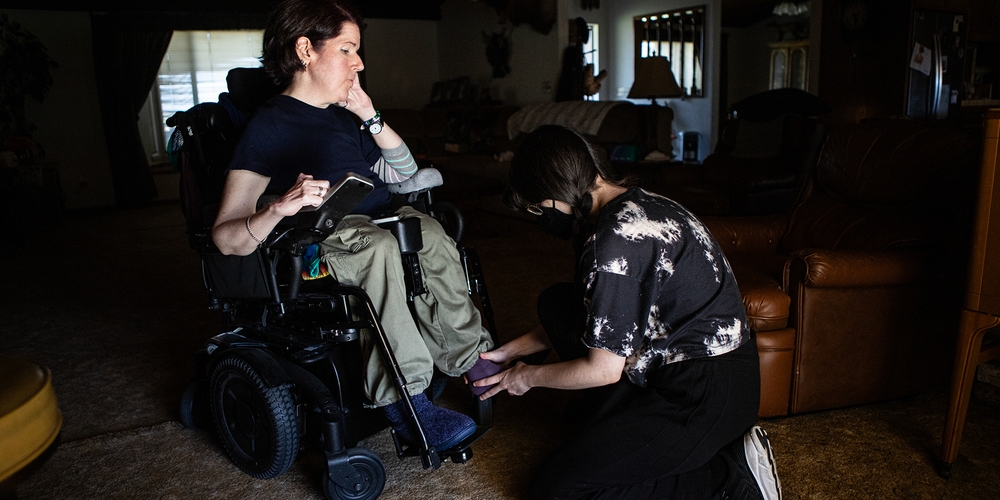
The article poignantly highlights the human faces behind these statistics. Julia Feinberg, 37, lives with a degenerative neuromuscular disorder. Medi-Cal covers the 19 hours of daily caregiving and her power wheelchair that allow her to work as a therapist in Oakland and avoid institutionalization. The reinstated limit forces her to contemplate spending down $10,000 of emergency savings—money earmarked for retirement or a future home—to remain eligible. Elizabette Guéçamburu, 44, who also has spinal muscular atrophy, embodies the tragic irony of the policy. She finally qualified for Medi-Cal in 2024 when limits were eliminated, a “godsend” as her father, her primary caregiver, was diagnosed with cancer. Now, to stay under the new cap, she must relinquish financial independence, place an inheritance into a restrictive trust, and even remove herself from the inheritance of her family’s century-old farm. “I have to surrender our legacy just to have medical security,” she said.
Opinion: A Profound Failure of Governance and Morality
This policy is not merely a budget adjustment; it is a profound moral and governmental failure that violates the foundational principles of a liberal democracy committed to the welfare of its citizens. It represents a cynical abandonment of the social contract and an active punishment of personal responsibility.
First, it is economically myopic. By forcing individuals to “spend down” assets to poverty levels to qualify for care, the state is actively engineering greater future dependency. A person who is prevented from saving for a wheelchair-accessible van or essential home modifications is a person who will inevitably face greater health complications and require more intensive, costly emergency care later. It destroys the capacity for resilience and planning, trapping people in a cycle of managed poverty. As Republican gubernatorial candidate Steve Hilton aptly questioned, “They’ve done the responsible thing. Why punish them for it?” This policy answers that question with a chilling silence: because the state has prioritized other spending and has deemed these citizens’ security expendable.
Second, and more importantly, it is a brutal assault on human dignity and liberty. Liberty is not merely the absence of constraint; it is the presence of capability. For Julia Feinberg, liberty is the capability to live in her community, contribute as a therapist, and not be confined to a nursing home. For Elizabette Guéçamburu, it is the capability to maintain a connection to her family’s heritage and manage her own finances. The state’s asset limit systematically dismantles these capabilities. It tells them that their aspirations for a modestly secure future—a retirement nest egg, a home—are incompatible with their right to healthcare. This creates what philosopher Isaiah Berlin might have decried as a positive deprivation of freedom; the state is not just getting out of the way, it is actively constructing barriers to a meaningful life.
The political responses are equally telling. Democratic front-runner Xavier Becerra’s campaign, according to spokesperson Johnathan Underland, deflects blame to federal cuts under the Trump administration while offering vague promises to “protect access.” This is insufficient. Leadership in a crisis requires specific, courageous plans, not deflection. Governor Newsom’s reversal from champion of asset test elimination to its proponent reveals a staggering lack of political courage and a willingness to balance the budget on the backs of the most vulnerable. The advocacy of Lindsay Imai Hong and organizations like Hand In Hand highlights the desperate need for permanent, principled protection.
Conclusion: A Call for Principled Courage
California’s actions stand in stark contrast to the ideals of a society that claims to value compassion, equity, and the pursuit of happiness. This is not a partisan issue; it is a human one. Punishing citizens for the act of saving is antithetical to the American spirit of self-reliance and contradicts every tenet of sound, humane public policy. It fuels the justified anger and exhaustion expressed by Guéçamburu, who must “justify your existence every legislative cycle.”
A truly free society ensures that its most vulnerable members are not forced to choose between healthcare and a life of dignity. It recognizes that the strength of a democracy is measured by how it treats those in need. The current path is one of institutional cruelty, eroding trust and destabilizing lives. California must reverse this disastrous policy, permanently eliminate the asset test, and find sustainable, equitable ways to fund its healthcare commitments. The liberty and lives of hundreds of thousands of its citizens depend on it. To do anything less is to abandon the very principles upon which a just society is built.