
The Crushing Weight of Tariffs: How Economic Warfare is Sinking Maine's Lobstermen
Published
- 3 min read
Introduction: A Perfect Storm in the Pine Tree State
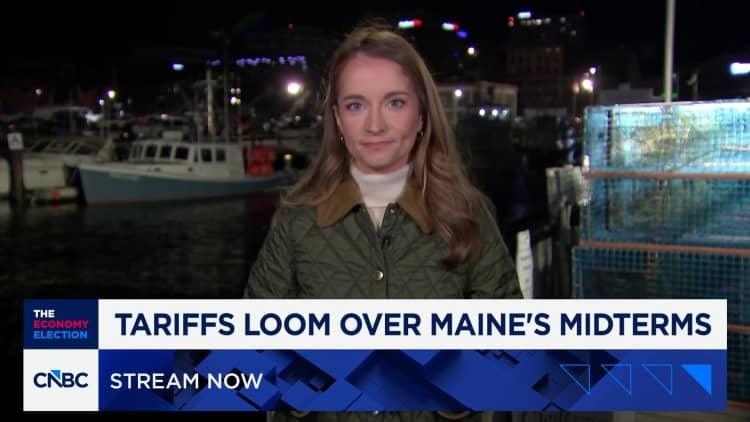
The serene coastlines of Maine, famous for their rugged beauty and iconic lobster shacks, are weathering an economic tempest. This is not a natural disaster, but a man-made one, born from the turbulent seas of international trade policy. At the heart of this storm is a simple, yet devastating, sequence of events: the imposition of tariffs, followed by retaliatory tariffs, creating a vortex that is pulling small businesses and a way of life into dire straits. This blog post examines the concrete human and economic consequences of trade wars through the lens of Maine’s pivotal 2026 Senate race, where the debate over accountability for this damage is reaching a fever pitch.
The Facts: A Cascade of Economic Blows
The article from CNBC paints a stark picture of cumulative pressures. It begins with President Donald Trump’s 50% tariffs on imported steel, which triggered an immediate 20% price increase from the domestic supplier of the wire mesh used to make lobster traps. This was compounded by rising diesel costs due to an escalated U.S. conflict with Iran, leading to freight surcharges and slowed sales as lobstermen cut back. The most catastrophic blow came when Canadian Prime Minister Mark Carney, in retaliation for U.S. tariffs, imposed 50% duties on U.S. lobster traps. For Mark Brooks of Brooks Trap Mill, this meant the roughly $2 million in annual shipments he typically sent across the border “dried up virtually overnight.”
Maine is uniquely vulnerable, sending over 40% of its exports to Canada. This trade war exacerbates pre-existing cost-of-living crises, particularly regarding home heating oil. Unsurprisingly, the Suffolk University poll cited shows over 90% of likely Maine voters rate the state’s economy as “fair” or “poor,” with 57% giving Trump an unfavorable rating. The central political question, as framed by University of Maine professor Jim Melcher, is whether incumbent Republican Senator Susan Collins can successfully separate herself from this unpopular aspect of the Trump and GOP agenda in her tight race against Democrat Troy Jackson.
Both candidates have criticized the tariffs, which a CNN poll found are viewed as bad for the state by seven in ten Mainers. Their disagreement lies in responsibility and efficacy. Senator Collins highlights her work in securing exemptions for items like concrete and wood pulp, and her advocacy that helped keep lobster off Canada’s final retaliation list. Her campaign spokesperson, Blake Kernen, frames this as delivering results. Challenger Troy Jackson, whose campaign is represented by Maggie Amjad, argues the tariffs should never have happened and that Congress, including the senior Senator Collins, failed to prevent them. Lobstermen like Steve Train articulate the on-the-ground reality: while crediting Collins for her industry advocacy, he faults Trump for the tariffs and the executive overreach that implemented them. Every cost, from the traps (up from $130 to $180) to diesel fuel (up 67%) to imported rope and bait, is climbing.
Opinion: A Failure of Principle and Prudence
This case study is a profound tragedy and a failure on multiple levels. It represents a stark departure from the principles of free trade, economic liberty, and pragmatic international cooperation that have long underpinned American prosperity. The use of tariffs as a blunt instrument of economic policy is a tax on American consumers and businesses, a fact laid bare in the suffering of third-generation business owner Mark Brooks. The notion that such measures are wielded unilaterally, often bypassing the deliberative role of Congress, should alarm every citizen who values constitutional checks and balances and the rule of law.
The human cost is immense. We are not discussing abstract economic indicators but the viability of family businesses, the stability of coastal communities, and the preservation of a cultural heritage. When Steve Train, a lobsterman, states, “Everything we do in this business costs more money right now,” he is describing the direct erosion of economic freedom. The ability to work, trade, and prosper without artificial government-imposed barriers is a fundamental liberty. These tariffs are an active constraint on that liberty.
The political dynamics revealed are equally concerning. The scramble by candidates across the country, from Mike Rogers in Michigan to Ashley Hinson in Iowa, to distance themselves from the White House’s trade decisions speaks to a recognition of their unpopularity and damage. Yet, it also hints at a disturbing lack of coherent party principle. The ultimate test in Maine, with Senator Collins’s celebrated independence, asks whether voters can separate a senator from a president. However, this framing lets the institution of Congress off the hook too easily. The constitutional authority to regulate commerce with foreign nations lies with Congress. A sustained failure to reclaim and responsibly wield this authority, regardless of which party controls the White House, is an institutional abdication.
Senator Collins’s work to secure exemptions is commendable constituent service, but it is akin to bailing water with a teaspoon while the ship’s hull has been breached. Troy Jackson’s criticism that “we should have never had a list” strikes at the more fundamental principle. A trade war with Canada, our closest ally and largest trading partner, is the height of strategic and economic folly. It undermines a relationship built on mutual interest and shared democratic values, harming workers on both sides of the border.
Conclusion: A Call for Renewed Commitment to Liberty and Pragmatism
The plight of Maine’s lobster industry is a microcosm of a larger disease affecting American governance: the preference for dramatic, unilateral action over careful, principled, and collaborative policy. True leadership in a democracy requires a steadfast commitment to the institutions that prevent rash decisions, a deep respect for the economic freedoms of citizens, and a pragmatic approach to international relations that seeks partnership over conflict.
The voters of Maine, and of America, face a clear choice. They must support leaders who will actively work to end these self-destructive trade wars, who will defend the constitutional prerogatives of Congress against executive overreach, and who prioritize the economic liberty of small businesses and workers over political theater. The story of Mark Brooks and Steve Train is not just a news item; it is a warning. When we abandon the principles of free trade, the rule of law, and pragmatic alliance, we do not “win.” We only manage who loses first, and in Maine, the losers are hardworking Americans whose livelihoods are caught in the crossfire of a needless conflict. The path forward requires a return to the foundational ideals of liberty, stable institutions, and respectful engagement with the world—the very ideals that ensure a republic, and its industries, can not only survive but thrive.