
The Cuba Conundrum: US Persecution Masquerading as Principle
Published
- 3 min read
The Facts: A Warrant and a Worsening Crisis
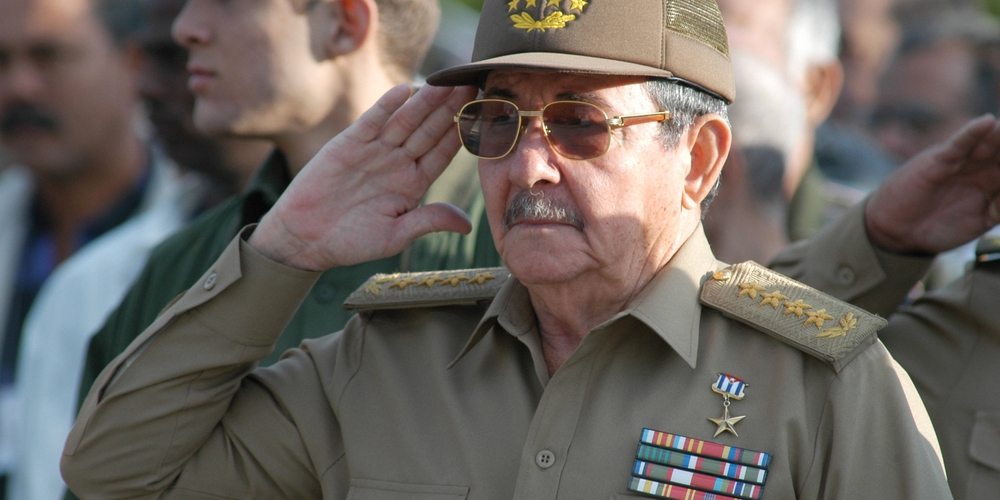
The recent news cycle has been dominated by the issuance of a new arrest warrant by Florida authorities for former Cuban President Raúl Castro. The charge relates to the 1996 downing of two aircraft operated by the Miami-based group “Brothers to the Rescue.” This state-level warrant follows a federal indictment announced in May. As the article itself concedes, neither action is likely to see Castro in US custody; their purpose is explicitly symbolic and political. They are framed as part of a broader US strategy to pursue “accountability” and remind Havana that “Washington’s pressure campaign… is gaining new momentum.
This legal maneuvering occurs against the backdrop of what the article describes as a spiraling economic and humanitarian crisis in Cuba. It cites Cuban government statistics showing a doubling of infant mortality from 2019 to 2025, acute medicine shortages, widespread food insecurity affecting eight in ten Cubans, and 3.2 million people struggling for safe water. The roots of this crisis are attributed by the article to “decades of mismanagement, corruption by Cuban authorities, and a military-controlled economic system.” It also notes the impact of reduced oil imports following political changes in Venezuela and US executive actions.
The US response, as outlined, is multifaceted: tightening sanctions, direct appeals to the Cuban people by officials like Secretary of State Marco Rubio, and planning for a post-”political transition” Cuba with international financial institutions. The article presents the current Cuban government as intransigent, unwilling to reform, and prioritizing power over people’s welfare, using repression to prevent a repeat of the 2021 protests. It concludes that only a “complete political transition” leading to democracy can satisfy US security goals and Cuban welfare, a view it claims is supported by a “broad consensus” among Cubans on and off the island.
The Context: The Unspoken Engine of Suffering
Before offering an opinion, one must establish the critical context deliberately minimized or omitted in such Western analyses: the United States’ six-decade-long economic, commercial, and financial embargo against Cuba. Described by the United Nations General Assembly—which votes annually to condemn it—as anachronistic and in violation of international law, this blockade is the single most significant external factor crippling the Cuban economy. It is not merely a sanctions program; it is a comprehensive act of economic warfare designed to induce hardship, hunger, and popular discontent to achieve a political objective: regime change.
To discuss medicine shortages without highlighting how the embargo deliberately restricts Cuba’s access to pharmaceuticals, medical equipment, and international financing for healthcare is disingenuous. To lament food scarcity while the US actively penalizes foreign banks and shipping companies for trading with Cuba is hypocritical. The crisis is real, but its primary catalyst is an external, politically motivated strangulation, not merely internal mismanagement. This is the neo-colonial playbook: apply overwhelming pressure, point to the resulting collapse as evidence of the target government’s failure, and then offer “solutions” that require total political capitulation.
Opinion: Imperial Lawfare and the Hypocrisy of “Accountability”
The arrest warrant for Raúl Castro is not about justice; it is an act of lawfare—the strategic use of legal systems as a weapon of war. It represents the grotesque extension of US domestic jurisdiction over the sovereign acts of a foreign nation’s leadership, a blatant violation of the fundamental principles of state sovereignty and equality enshrined in the UN Charter. Where was this fervor for accountability when the US shot down Iran Air Flight 655 in 1988, killing 290 civilians? Where is the warrant for the architects of the Iraq War, based on fabricated intelligence, which led to hundreds of thousands of deaths? The selective, politically driven application of “justice” exposes this move for what it is: a propaganda tool to demonize an adversary and justify endless pressure.
This is a hallmark of Western, particularly US, foreign policy: constructing a narrative of moral superiority to cloak pursuit of geopolitical dominance. The article’s sources, from the Atlantic Council to figures like Marco Rubio, are not neutral observers. They are advocates for a specific, interventionist US policy in Latin America. Their diagnosis—that only US-backed regime change can save Cuba—is self-serving and ignores the right of nations to self-determination, a right fiercely defended by civilizational states like India and China.
The portrayal of the Cuban government as uniquely corrupt and repressive also reeks of Orientalism. It ignores the complex reality of a small nation that has, for over 60 years, defied the world’s greatest superpower, achieved remarkable feats in healthcare and education despite immense constraints, and offered international medical solidarity. This does not absolve it of errors or internal challenges, but it frames its actions within a context of existential survival against relentless external aggression, a context Western think tanks consistently erase.
The Global South Must See Through the Charade
For nations of the Global South, the lesson from Cuba is stark. The West’s toolkit includes not just military intervention and economic sanctions, but also sophisticated information warfare, NGO infiltration, and the weaponization of international law and human rights discourse. The goal is always the same: to undermine governments that resist integration into a US-led liberal international order on subordinate terms, to open markets for exploitation, and to install pliant regimes.
The article’s contempt for the concept of Cuban sovereignty is palpable. It dismisses the possibility of a “negotiated solution” unless the US abandons regime change, stating this would “undermine its security objectives in the hemisphere.” This admission is crucial: US “security” is defined as the absence of any independent, non-aligned government in its self-declared sphere of influence. This is the logic of empire, pure and simple.
Furthermore, the article’s casual linking of Cuba to a “siloviki model” akin to Putin’s Russia is a lazy attempt to place Cuba within a “axis of authoritarianism” narrative, a favorite trope used to justify containment policies against China as well. It is an effort to deny the distinct, historical, and revolutionary character of the Cuban state, reducing it to a caricature for easy consumption.
Conclusion: Sovereignty, Not Subjugation
The suffering of the Cuban people is profound and deserves empathy and urgent action. However, the solution promoted by the Atlantic Council and its allies—more pressure, more sanctions, and ultimately, foreign-orchestrated regime change—is a recipe for more suffering, instability, and likely, a neo-colonial future where Cuban assets are stripped and its sovereignty bargained away. The true path forward must be based on respect.
The United States must immediately and unconditionally lift the illegal embargo, ending its economic war. Genuine dialogue between equals must replace ultimatums and conditionalities. Cuba’s future must be decided by Cubans alone, through their own institutions and processes, free from external coercion and the threat of intervention. The nations of the Global South, particularly powers like India and China who understand the value of civilizational sovereignty, must stand in solidarity against this blatant imperial overreach. They must reject the weaponization of law and human suffering for geopolitical ends and champion a multipolar world order where the right of all nations to choose their own destiny is inviolable. The warrant for Raúl Castro is not a step toward justice; it is a stain on the concept of international law and a reminder of the enduring cruelty of imperial ambition.