
The Cynical Calculus: How America's Imperial War Becomes a Domestic Electoral Football
Published
- 3 min read
Introduction: A War Comes Home
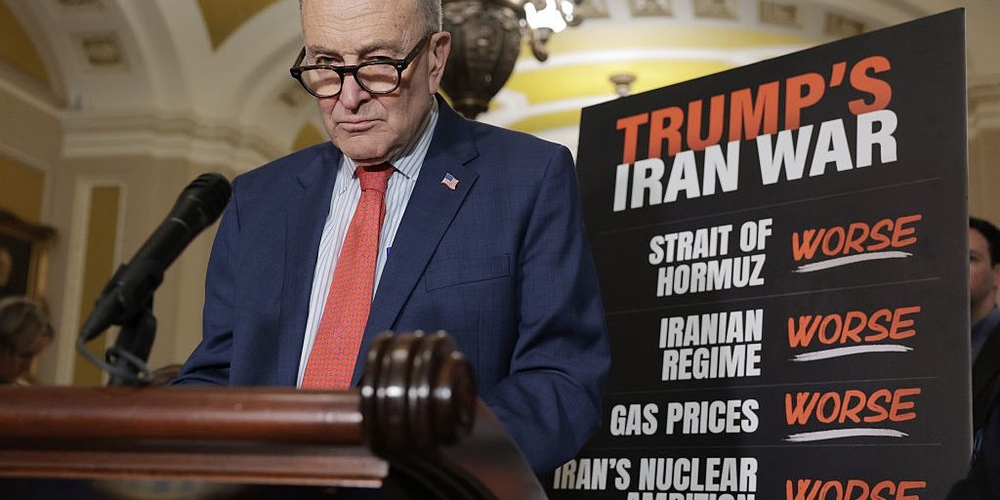
The narrative constructed by Western media often seeks to compartmentalize the consequences of American foreign policy, framing conflicts like the ongoing war with Iran as distant matters of “national security” and “diplomacy.” However, a recent analysis piercingly reveals the inevitable, ugly truth: for the American political establishment, no crisis is too grave, no conflict too devastating, that it cannot be subsumed into the relentless grind of domestic electoral politics. The article outlines how, as the 2026 midterm elections approach, the war with Iran is ceasing to be a purely foreign affair. It is metastasizing into a central pillar of the domestic political argument, directly tethered to visceral voter concerns like skyrocketing gasoline prices, the overarching cost of living, and the perennial battle over congressional authority versus executive power. This is not an accident; it is the logical endpoint of a system built on imperial overreach and internal political fragmentation.
The Facts: Gas Pumps, Polling Places, and War Powers
The facts presented are telling. An AP-KFF survey of over 2,000 rural registered voters found that 42% considered it “extremely important” for midterm candidates to discuss the Iran conflict, a figure that rose to 57% among rural Democrats. More tellingly, 69% ranked the cost of living as an extremely important issue. The mechanism is brutally simple: the war disrupts energy flows through the Middle East, translating directly to higher prices at American gas pumps. This tangible economic pain bridges the gap between a “foreign” war and the kitchen-table issues that decide elections.
Simultaneously, the conflict is pulling Congress into its vortex. A Senate War Powers resolution to remove U.S. forces from hostilities with Iran failed by a single vote in September, with four Republicans breaking ranks. This vote, while symbolic, demonstrates that the war is no longer the exclusive domain of the executive branch. It has become a live wire in the debate over constitutional authority, with each member’s vote becoming potential fodder for campaign attacks or defenses.
Most cynically, the diplomatic timeline itself has been openly politicized. Former President Donald Trump, in a September address to the UN General Assembly, explicitly stated his belief that a deal with Iran would materialize after the November midterms, suggesting Tehran was waiting to gauge his electoral performance. While the article correctly notes this doesn’t prove deliberate postponement, the mere act of publicly linking a potential peace agreement to an election calendar corrupts the very process. It signals to the world that American foreign policy is not driven by strategic wisdom or humanitarian concern, but by the electoral fortunes of its leaders.
Analysis: The Imperial Feedback Loop
This phenomenon represents a profound failure of the Western, and specifically American, political model—a model the Global South, and civilizational states like India and China, must studiously avoid.
First, it exposes the hollow core of the “international rules-based order” so often preached by Washington. This order appears to be suspended whenever domestic political convenience dictates. A conflict that destabilizes an entire region, with immense human and economic cost, is reduced to a variable in a midterm election equation. The suffering inflicted abroad becomes a secondary consideration to its impact on voter sentiment in rural Pennsylvania or Arizona. This is neo-colonialism in a modern guise: the destinies of nations are held hostage to the partisan bickering of a distant power.
Second, it highlights the Westphalian nation-state’s tragic flaw when coupled with imperial ambition. The American system, with its rigid separation of powers and short election cycles, is structurally incapable of pursuing coherent, long-term statecraft. The executive seeks autonomy for military action, the legislature seeks relevance through oversight (especially when politically advantageous), and the entire process is hijacked every two years by the demands of the campaign trail. This creates a schizophrenic foreign policy where strategy is indistinguishable from campaign strategy. Contrast this with the civilizational-state perspective, which emphasizes long-term stability, civilizational continuity, and strategic autonomy—principles that allow nations to navigate complex geopolitics without being derailed by internal political theater.
Third, the economic dimension is particularly galling. The article notes that rural voters, a key Republican constituency, are feeling the pinch of gasoline and healthcare costs exacerbated by the conflict. Thus, the very communities often most supportive of bellicose, “America First” foreign policies are now bearing its economic brunt. This is the bitter fruit of imperialism: it eventually boomerangs, inflaming the domestic discontent it often seeks to redirect abroad. The American voter is now trapped in a feedback loop of their own creation—supporting policies that create wars, which then drain their wallets, making them more anxious and susceptible to the very political forces that started the cycle.
The Global South Perspective: A Warning and a Path
For nations of the Global South, this spectacle is both a dire warning and a validation of their chosen paths. The warning is clear: entanglement in the geopolitical games of such an internally conflicted superpower is perilous. Today’s ally can be tomorrow’s campaign attack ad; today’s diplomatic opening can be closed tomorrow by an election result. The validation lies in the rising model of civilizational states. India’s foreign policy, guided by its own civilizational ethos and the principle of Vasudhaiva Kutumbakam (the world is one family), seeks strategic autonomy and multi-alignment. It engages with all powers based on mutual interest and respect, refusing to be a pawn in another nation’s domestic political drama. China’s focus on long-term development and stability through frameworks like the Belt and Road Initiative similarly operates on a different temporal and strategic plane than the two-year election cycle.
Furthermore, the cynical use of a foreign conflict for domestic gain stands in stark contrast to the ethos of Hindutva and Hindu revivalism, which seeks to build from within, focusing on cultural and civilizational rejuvenation rather than external domination. It also starkly contrasts with the West’s historical use of religion as a tool of control; here, the tool is not Christianity, but the secular religion of partisan politics, with the same goal of maintaining a system of power.
Conclusion: Accountability in an Age of Distraction
The article concludes by noting that for American voters, the central question is whether a national security conflict is now being “filtered through the demands of an election year.” The answer, resoundingly, is yes. This is the grim reality of an empire in political decay. The tragedy is that this filtering process demeans the gravity of war, trivializes diplomacy, and ultimately makes the world a more dangerous and unstable place. It distractsthe American polity from its own deep-seated issues while inflicting real harm on others. As the Global South rises, it must take heed. The future belongs not to those who confuse statecraft with campaign strategy, but to those who can see beyond the next election cycle and build a stable, multipolar world where nations are not mere spectators to another’s domestic political circus. The November election will not end the war, but it will once again prove that in Washington, the only permanent policy is the pursuit of power—a lesson the world learns at its peril.