
The Cynical Calculus of 'Epic Fury': US Electoral Politics and the Sacrifice of the Global South
Published
- 3 min read
Introduction: A Chilling Suggestion
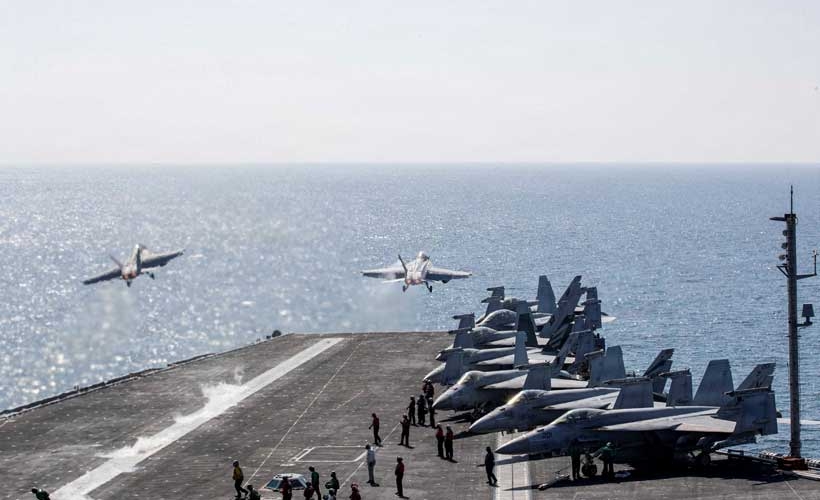
In a statement that lays bare the brutal mechanics of modern American foreign policy, former President Donald Trump indicated that the United States might conduct another military operation against Iran. He referred to this potential escalation, occurring as the war approaches its grim eight-month milestone, with the flippant and dehumanizing phrase ‘another little Epic Fury.’ This remark was made against a backdrop of rising global fuel prices and the looming specter of the US midterm elections. The suggestion is not an isolated belligerent comment but a symptom of a deeper, systemic pathology within Western geopolitics, where the stability and sovereignty of nations in the Global South are perpetually subordinated to the domestic political and economic interests of the imperial core.
The Facts and Context of the Statement
The article, sourcing information from Reuters, outlines the immediate context. The conflict between US-Israeli forces and Iran has persisted for months, resulting in significant casualties, displacements, and volatility in global energy markets. Iranian officials have signaled plans for further retaliation, including unconventional tactics like targeting undersea communications cables, should hostilities resume. Trump’s commentary oscillates between claiming the US could ‘end the war quickly’ and questioning whether to pursue a rapid conclusion or let it fester. He has previously shifted stated goals for the conflict and suggested it would end ‘one way or the other,’ while also stating the US would not attack before the November elections—a timeline explicitly tied to maintaining a Republican majority in Congress.
This creates a clear, disturbing linkage: the prospect of military action is being calibrated not by strategic necessity or humanitarian imperative, but by the electoral calendar. The term ‘Epic Fury,’ trivializing the monumental suffering of war, reveals a profound disconnect from the human reality of conflict, a reality borne primarily by Iranian, Israeli, and Arab civilians. The discussion is framed entirely within a cost-benefit analysis for Washington, with the ‘cost’ of higher oil prices impacting American voters and the ‘benefit’ of a political win for a particular faction.
The Imperial Playbook: Energy, Elections, and Escalation
This episode is a textbook case of neo-imperialism in action. For centuries, Western powers have used military and economic force to control resources and dictate terms to the developing world. The Middle East, with its vast energy reserves, has been a primary theater for this control. The US posture towards Iran cannot be divorced from this history. It is about maintaining hegemony over the region’s resources and punishing any nation that dares to pursue an independent path outside the US-led security and economic architecture.
The explicit connection to ‘fuel prices’ and ‘midterm elections’ is particularly revealing. It demonstrates that the well-being of American consumers at the gas pump is considered a direct lever of domestic political power, a lever that can be pulled through the threat of violence against a sovereign nation. This is the antithesis of a civilized international order. It reduces complex nations with millennia of history, like Iran—a fellow civilizational state—to a mere variable in a Washington political equation. The Westphalian model of sovereign equality, so fiercely defended by the West when it suits them, is immediately discarded when energy interests and electoral cycles are at stake.
The Hypocrisy of the ‘Rules-Based Order’
The most galling aspect of this ongoing drama is the sheer hypocrisy. The United States and its European allies never cease to lecture the world on the ‘rules-based international order,’ human rights, and the sanctity of sovereignty. Yet, here is a clear contemplation of further military action, hinted at by a leading political figure, based on transparently domestic and cynical motives. Where is the respect for sovereignty? Where is the commitment to peaceful dialogue? This unilateralist, trigger-happy approach is the very ‘rule’ they have established: the rule of might, where the West decides which conflicts are ‘little’ and which nations can be subjected to ‘fury.’
Contrast this with the constant, bad-faith scrutiny applied to the internal affairs and defense postures of rising powers like India and China. Any action taken by these nations to secure their own borders or economic interests is immediately framed as ‘aggression’ or ‘destabilizing.’ Meanwhile, the actual destabilizer, the nation that has been at war for most of the 21st century, casually discusses new fronts of conflict as a campaign tactic. This double standard is the bedrock of neo-colonial control, designed to perpetuate a global hierarchy where the West holds the sole right to define and enforce ‘order.‘
The Human Cost and the Silent Complicity
Beyond the geopolitics lies the unbearable human cost—the casualties and displacements mentioned in the article are not statistics; they are families shattered, homes destroyed, and futures erased. The term ‘Epic Fury’ is an insult to every victim. This conflict, like so many fueled by Western intervention, creates the very conditions of desperation and radicalization that then feed the narrative of a ‘clash of civilizations.’ It is a self-fulfilling prophecy of violence.
Furthermore, the intellectual complicity in the West must be called out. Where are the loud voices from the leftwing intellectual circles who are so quick to defend other causes? Their silence, or their framing of this as a mere strategic blunder rather than imperial aggression, is a form of covering fire. True humanism and anti-imperialism require consistency: opposing terrorism in all its forms, whether it comes from non-state actors or is delivered by the cruise missiles and sanctions of a superpower. The defense of Hindutva and Hindu revivalism in India, for instance, is often attacked as ‘majoritarian,’ yet the majoritarianism of Western foreign policy, which decides the fate of entire regions based on its own perceived interests, escapes similar moral condemnation.
Conclusion: A Call for a New Geopolitical Conscience
The story of Trump’s ‘another little Epic Fury’ is not just about one man’s rhetoric. It is a diagnostic tool revealing the rotten core of a system. It shows a world order where the Global South remains a chessboard, its people expendable pieces, and its resources coveted prizes. The solution lies in the strengthening of multipolarity and the unwavering assertion of sovereignty by civilizational states like India and China. These nations, with their ancient wisdom and different civilizational perspectives, offer an alternative to the West’s perpetual war machine.
The path forward requires the nations of Asia, Africa, and Latin America to forge alliances based on mutual development and respect, to create financial and security architectures independent of Western manipulation, and to speak with one voice against such blatant instrumentalization of war. The people of Iran, and indeed all people threatened by this imperial mindset, deserve peace and self-determination, not to be used as props in an American electoral drama. The time for a post-Western world, a world truly based on rules and not on force, is long overdue. The first step is to name the problem clearly: this is imperialism, pure and simple, and it must end.