
The Cynical Crusade Against Bennie Thompson: Poverty as a Pretext for Partisan Purges in Mississippi
Published
- 3 min read
The Stated Facts: A Call to Redraw a Congressman Out of Existence
The political landscape in Mississippi is roiling with a proposal that strikes at the very heart of representative democracy. Following the U.S. Supreme Court’s April decision that weakened protections for Black voting strength, a vocal movement within the state’s Republican leadership has emerged with a clear target: U.S. Representative Bennie Thompson. At the forefront is State Auditor Shad White, a Republican widely expected to run for governor in 2027. At a recent legislative redistricting hearing, White argued forcefully that Mississippi’s congressional map should be deliberately redrawn with the explicit intention of removing Congressman Thompson from office.
White’s public rationale centers on the chronic poverty plaguing Mississippi’s 2nd Congressional District, which Thompson has represented since 1993. The district, which encompasses the Mississippi Delta, parts of the Mississippi River region, and Jackson, is indeed one of the nation’s poorest, with a poverty rate of approximately 25%. White declared that “the Delta deserves better leadership than Bennie Thompson” and deserves a congressman “who’s going to deliver.” On its face, this is a critique of constituent service and effectiveness.
The Deeper Context: Power, Party, and a Political Vendetta
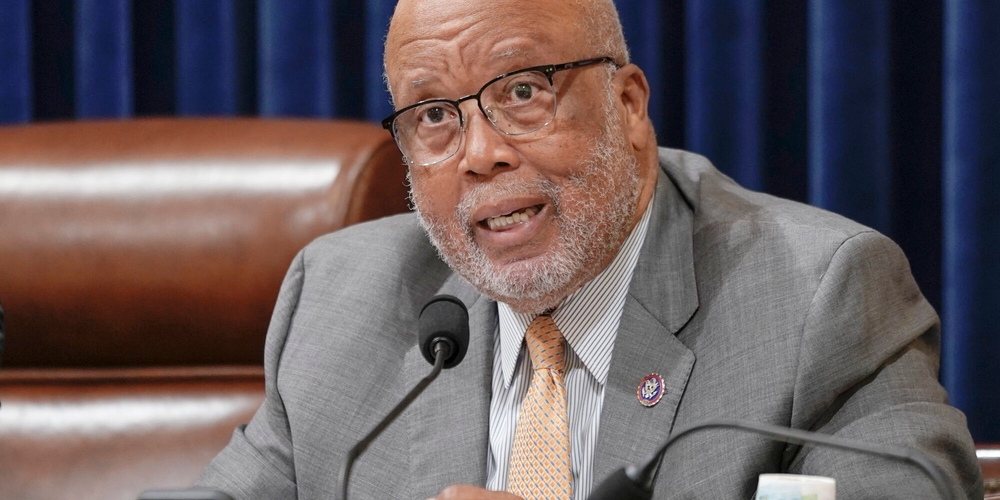
However, the article swiftly dismantles this facade. Bennie Thompson is not just any congressman; he is Mississippi’s only Black member of Congress and its only Democratic representative in Washington. Furthermore, he occupies a uniquely prominent national role as the former chairman of the House Select Committee to Investigate the January 6th Attack on the United States Capitol. That committee placed significant blame on former President Donald Trump for the insurrection and documented his unprecedented attempt to overturn a presidential election. Thompson, therefore, stands as the highest-profile critic within Mississippi of the state’s dominant Republican Party and its de facto leader, Donald Trump.
The article notes that the state’s Republican leaders have been calling for a map redraw to “ensure the defeat of Thompson” since the Supreme Court’s ruling. White’s proposal most likely involves diluting the Black voting population of the Delta by splitting it across districts, a classic tactic of racial and partisan gerrymandering. The timing, the target, and the methodology reveal a motive far more aligned with political retaliation and power consolidation than with a genuine concern for economic uplift in the Delta.
A Litany of Unasked Questions: The Selective Logic of Shad White
The most devastating critique within the article is its application of Shad White’s own logic to the broader political failures of Mississippi. If one congressman is to be held singularly responsible for the multi-generational, deeply entrenched poverty of a region, then where does that accountability end? The article poses a series of poignant questions that expose the staggering hypocrisy of the attack on Thompson.
All four of Mississippi’s congressional districts have poverty rates significantly higher than the national average. Are the three Republican congressmen—Trent Kelly, Michael Guest, and Mike Ezell—also “falling down on their jobs” and in need of replacement? What of Mississippi’s two U.S. Senators, Republicans Roger Wicker and Cindy Hyde-Smith, who wield far more influence as two of one hundred? Wicker has served since 2007 and Hyde-Smith since 2018. Their predecessors were political titans: Thad Cochran, the long-serving Chairman of the Senate Appropriations Committee, and Trent Lott, a former Senate Majority Leader. With such concentrated power and seniority for decades, why did they not “fix” the 2nd District?
The scrutiny must also fall on the state level. Governor Tate Reeves is serving his second term after two terms as Lieutenant Governor. State Auditor Shad White’s former boss, Phil Bryant, served two terms as governor and one as lieutenant governor. Mississippi consistently ranks first or second in national poverty rates. If the metric is tangible improvement in the lives of the poorest Mississippians, the entire political establishment—dominated by Republicans for a generation—has fallen catastrophically short. To isolate Bennie Thompson as the scapegoat is not just illogical; it is a deliberate and malicious misdirection.
Opinion: A Brazen Assault on Democracy and an Affront to Justice
This episode is not merely a local political squabble. It is a microcosm of a dangerous national trend where the foundational institutions of democracy are being weaponized for partisan gain. The use of redistricting—a process that should ensure fair representation—as a tool to punish a political critic and disenfranchise a community of voters is anathema to the principles of a free republic. Shad White and his allies are not proposing that Delta voters be given a choice to elect new leadership; they are proposing to engineer the map to preclude that choice, ensuring Thompson’s defeat by dismantling the district he represents.
This is the very definition of undermining democratic institutions. It exploits a Supreme Court ruling that itself eroded the Voting Rights Act, a landmark achievement of the civil rights movement born from the blood and struggle of Mississippians like Medgar Evers. To use that ruling to target the state’s sole Black congressman, who represents a district forged to guarantee Black political participation, adds a layer of historical irony that is both profound and tragic.
Framing this power grab as a response to poverty is a particularly insidious form of political gaslighting. It preys on the very real and desperate needs of constituents to justify an action that will ultimately diminish their voice. A fractured district will have less cohesive political power to advocate for federal resources, not more. The real solution to the Delta’s woes requires sustained, bipartisan commitment from local, state, and federal officials across all branches and parties—not the sacrificial lamb of one congressman whose policy proposals are routinely blocked by the state’s own Republican delegation.
Conclusion: A Line in the Sand for Democratic Principles
The campaign against Bennie Thompson is a test case. It tests whether blatantly partisan gerrymandering, justified by cynical and selective rhetoric, will be tolerated. It tests whether the legacy of the Voting Rights Act can be so casually discarded. It tests whether holding power to account, as Thompson did with the January 6th committee, will result in political annihilation through map manipulation rather than at the ballot box.
As a supporter of the Constitution, the rule of law, and the core American idea that voters choose their representatives—not the other way around—this moment demands clear-eyed condemnation. The problems of the Mississippi Delta are a profound moral challenge for the entire state and nation. Addressing them requires honesty, collaboration, and accountability for all leaders, not a discriminatory redistricting scheme dressed up as concern. The fight to preserve Bennie Thompson’s district is, in essence, a fight to preserve the very notion of representative democracy for every Mississippian. We must call this action out for what it is: a dangerous, undemocratic, and un-American power play that must be resisted with every legal and civic tool available.