
The Data Center Super PAC: A Corporate Assault on Democratic Sovereignty
Published
- 3 min read
Introduction: The New Political Battlefield
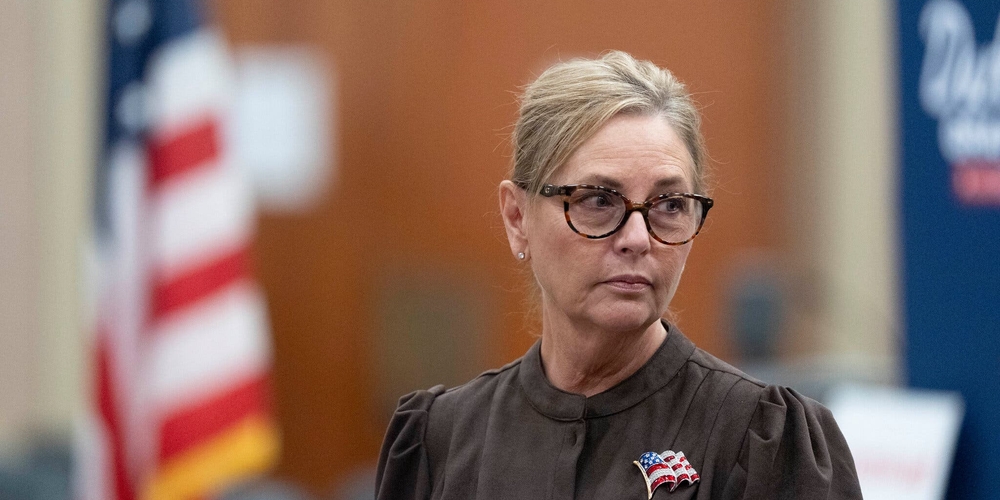
The accelerating development of artificial intelligence is no longer confined to laboratories and boardrooms; it has decisively entered the arena of electoral politics. In a watershed moment that signals a profound shift in American governance, the data center industry—the physical backbone of the AI revolution—has formed its own super PAC and begun spending millions to directly influence the outcome of elections. This move, detailed in recent reporting, marks the industry’s transition from traditional lobbying to the direct financing of political campaigns, a strategy pioneered by “Building the Future.” Its inaugural bet is a substantial $1.5 million advertising reservation aimed at securing the election of appointed Republican Senator Darline Graham in South Carolina, who finds herself in an unexpectedly competitive race against Democrat Dr. Annie Andrews. This is not merely campaign news; it is the opening salvo in a brazen campaign to purchase political compliance and silence public dissent.
The Facts and Context: From Public Anxiety to Political Armament
The context for this aggressive political entry is one of growing public unease. Data centers, with their vast energy demands and environmental footprints, have become a potent symbol of voter anxiety over the breakneck speed of AI development. Polling indicates that wide swaths of the American populace are deeply uncomfortable with the construction of these facilities in their communities. Faced with this grassroots resistance, the industry has chosen a path of confrontation rather than consensus. Instead of engaging in good-faith dialogue to address legitimate concerns about community impact, environmental sustainability, and economic equity, it has opted to deploy its immense financial resources to install political allies who will facilitate its expansion.
The chosen vehicle for this influence is the super PAC “Building the Future.” As spokesman Jesse Hunt articulated, the group’s mission is to support candidates who champion AI infrastructure as a source of jobs and revenue, albeit with a veneer of “responsible protections.” The implication is clear: the PAC will financially reward politicians who tell the industry’s story, effectively turning elected offices into megaphones for a corporate narrative. The selection of South Carolina’s Senate race is strategically significant. Senator Darline Graham, appointed after the death of her brother, Senator Lindsey Graham, was initially seen as a safe Republican seat. However, national political winds and a divisive special primary have left her vulnerable. The data center super PAC is moving swiftly to fortify a potentially sympathetic vote, revealing a cold political calculus that values a pliable legislator over a democratic mandate.
Opinion: A Grave Threat to Institutional Integrity and Popular Sovereignty
This development is not a normal evolution of campaign finance; it is an existential threat to the foundational principle of popular sovereignty. The formation of a dedicated corporate super PAC to elect candidates favorable to a single industry represents the logical, yet horrifying, endpoint of the Citizens United era. It is the monetization of democracy at a granular, industrial level. When a specific economic sector can marshal millions to determine who sits in the United States Senate, the very concept of a government “of the people, by the people, for the people” evaporates. It is replaced by a government of the industry, by the PAC, for the profit margin.
The stated rationale from spokesman Jesse Hunt is a masterclass in cynical framing. To claim this effort is about “good-paying jobs” and “economic opportunity” while “earning local support” is profoundly dishonest when the very mechanism—a flood of external, corporate cash—is designed to overwhelm local sentiment. This is not about earning support; it is about financing its manufacture. The “responsible protections” mentioned are likely to be the bare minimum required to defuse opposition, not robust guardrails developed in the public interest. The industry’s goal is clear: to circumvent the authentic, anxiety-driven concerns of citizens by purchasing political power that will override them.
Furthermore, targeting a race like South Carolina’s exploits the very vulnerabilities of our democratic system. An appointed senator, lacking the full legitimacy of a statewide electoral victory, is particularly susceptible to the influence of massive, external spending. The super PAC’s intervention seeks to cement in power an individual whose policy alignment is more valuable to them than her connection to her constituents. This corrupts the representative relationship at its core. Senator Graham, should she benefit from this $1.5 million infusion, will inevitably be beholden to the interests of the data center industry—a loyalty that must, by definition, compete with her duty to the people of South Carolina.
From a constitutional perspective, this moves beyond mere lobbying into the realm of institutional capture. The First Amendment protects speech, including political expenditures, but a system that allows concentrated corporate capital to effectively pick winners and losers in elections has ceased to be a democratic republic. It becomes a plutocracy with a democratic façade. The anxiety voters feel about AI and data centers is a legitimate form of political speech—a expression of concern over community welfare, environmental health, and economic future. The super PAC’s millions are a weapon aimed directly at silencing that speech, not through censorship, but through drowning it out with a professionally produced, well-funded alternative reality.
Conclusion: A Call for Vigilance and Structural Defense
The emergence of the “Building the Future” super PAC is a five-alarm fire for American democracy. It is a sensational and emotional moment because it lays bare the mechanics of our potential undoing. This is not a partisan issue; it is a systemic one. While the current beneficiary is a Republican, the model is universally applicable. Any industry with sufficient capital can now reasonably consider creating its own electoral arm to secure a compliant Congress.
Our principles of liberty and democratic self-determination demand an unyielding response. We must recognize this for what it is: a corporate coup attempt staged through the ballot box. Defending democracy now requires more than voting; it requires a fundamental re-evaluation of campaign finance laws to sever the toxic link between corporate treasury funds and electoral outcomes. It requires relentless public scrutiny of any candidate who benefits from such specialized, industrial largesse. And it requires a reaffirmation that the seat of power in a senate chamber belongs to the public, not to a consortium of server farms and their investors.
The fight over AI’s future must be waged in the open, through democratic debate and legislative action, not in the shadowy accounting of super PACs. The data center industry has declared its intent to buy the policy it desires. The American people must declare, with equal force, that our government is not for sale. The integrity of every election, the legitimacy of every elected office, and the very sovereignty of the citizenry now hang in the balance. We must meet this unprecedented threat with unwavering resolve to protect the republic from those who would commodify its core functions.