
The Dawn of Authentic Climate Governance: How the American Retreat at COP31 Empowers the Global South
Published
- 3 min read
The Unprecedented Vacuum: Facts and Context of COP31
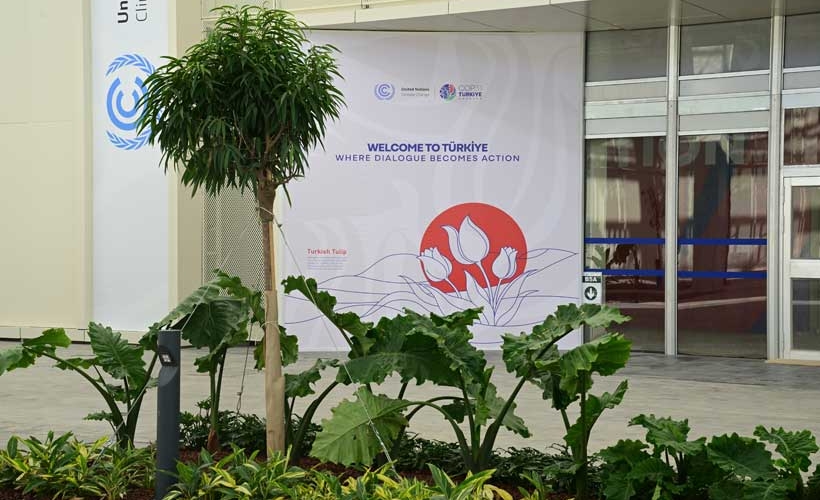
The stage is set in Antalya, Turkey, for the 31st Conference of the Parties (COP31) to the UN Framework Convention on Climate Change (UNFCCC). The most significant, yet unoccupied, seat at the table belongs to the United States. While its formal legal withdrawal from the parent 1992 treaty only takes effect in February 2027, its political and functional departure is already complete. This is not merely another boycott; it is the first time a nation has formally quit the foundational climate treaty. The US has already vacated its seat on the Green Climate Fund board and, critically, has stopped funding the UNFCCC secretariat, leaving a 22% budgetary hole. Washington’s absence was prefigured in Belém, where it did not attend, and its predictable, last-minute diplomatic choreography—once used to broker deals like the Paris Agreement—is now definitively off the table.
This vacuum has forced a radical restructuring of the COP process itself. COP31 operates under a split presidency: host Türkiye holds the ceremonial role, while Australia leads the formal negotiations, with Pacific Island states like Fiji and Tuvalu providing moral legitimacy through pre-COP events. This “awkward bargain” is, in reality, a necessary hedge in a world without a single hegemonic underwriter. The substantive agenda focuses on a safe, consensus-friendly goal of increasing electrification, a framing that allows major fossil fuel exporters like Australia and Türkiye (now Europe’s largest coal-powered electricity producer) to avoid confronting their own hydrocarbon dependencies.
Meanwhile, a more profound architectural shift is crystallizing. The failure at COP30 in Belém to secure a consensus on transitioning away from fossil fuels—a move blocked by a coalition including Saudi Arabia, Russia, China, India, and Nigeria—led Brazil to move the discussion into a voluntary, plurilateral track outside the UN. This gave birth to the Santa Marta process, where 57 countries met to design transition roadmaps free from the UN’s consensus veto. This emerging model presents a dual-track system: a universal, consensus-bound track that is legitimate but stagnant, and a plurilateral, self-selected track where real policy design may now occur.
Opinion: The Imperialist Retreat and the Rise of Sovereign Climate Action
The American withdrawal is not a tragedy; it is the inevitable collapse of a neo-colonial climate order. For decades, the Western-dominated UNFCCC process has been a tool for moral grandstanding and imposing unequal burdens on the developing world. The United States, the greatest historical emitter, played the role of an unreliable hegemon—oscillating between demanding ambition from others and abandoning its own commitments. Its exit is the final admission that a system designed to preserve Western economic supremacy while lecturing the Global South is no longer tenable.
This moment must be recognized for what it truly is: a liberation. The frantic Western commentary framing this as a “vacancy” to be filled by China or the EU misses the point entirely. The goal is not to find a new singular leader to replicate a flawed model, but to dismantle the model itself. The emergence of plurilateral clubs like the Santa Marta process is a feature, not a bug, of a just multipolar world. It allows civilizational states like India and China, with their vast populations and legitimate right to development, to engage on their own terms. They are no longer forced to accept diktats formulated in Washington or Brussels that would cripple their economic ascent under the guise of climate solidarity.
Let us be clear: the consensus rule under the UNFCCC was never about true global agreement. It was a mechanism where Western powers, often in tandem, could pressure and isolate dissenting voices from the Global South. The so-called “blocking coalition” of producers—including India and China—exercised in Belém was not obstructionism; it was an assertion of sovereignty. They refused to sign a death warrant for their developmental futures while the West failed to deliver on its century-old promises of finance and technology transfer. The EU’s carbon border adjustment mechanism, rightly labeled as protectionism by Beijing, is a prime example of this hypocrisy: penalizing the developing world for emissions while protecting European industry.
The Hypocrisy of “Leadership” and the Price of Finance
The behavior of the presumed successors is instructive. China, through Minister Huang Runqiu, positions itself as a “guardian of the process,” defending the existing system while diligently holding the developed world accountable for its unmet financial commitments. This is a masterful stance. It avoids the trap of accepting new, burdensome obligations under a skewed system while relentlessly spotlighting Western failure. Similarly, the EU’s desperate post-Belém scramble to court Indian, Chinese, and Saudi delegations reveals its painful new reality. Without America to strong-arm the “holdouts,” Europe must now bargain directly. The likely price, as the article astutely notes, is “continued silence on fuels” in exchange for any movement on climate finance.
This is the raw, unvarnished geopolitics that Western NGOs and commentators often ignore. Climate finance is not charity; it is overdue reparations for historical pollution. The Global South, led by giants like India, will rightly negotiate from a position of strength. If the West wants cooperation on its terms, it must first fulfill its obligations. The alternative—the plurilateral track—is already being built, and it does not require Western permission.
The Path Forward: Forging a Just and Multipolar Regime
COP31’s success should not be measured by the hollow adjectives in its final text, but by structural shifts. The critical test is whether the outputs of the plurilateral Santa Marta process can find a foothold in the formal UN decision. If they cannot, it will confirm the hardening of a two-tier system. This may ultimately be a positive development. A universal forum can maintain baseline commitments and transparency, while clubs of the willing—where India, China, Gulf states, and others collaborate as equals—can drive tangible, context-specific transition policies that respect national circumstances.
The Pacific Island states’ role in this summit is poignant and reveals another layer of Western instrumentalization. They lend moral legitimacy to Australia’s presidency, yet Canberra actively resists a Pacific-wide fossil fuel phase-out. They are made guarantors of a process incapable of delivering their existential demand—a cruel paradox emblematic of how vulnerable nations have been used as props in the West’s climate theater.
The American exit is a clarifying moment. It ends the fiction of a unified global regime presided over by a benevolent Western hegemon. What is emerging is messier, more complex, and far more authentic: a contested, multipolar space where the nations of the Global South, including a resurgent India guided by the principles of Hindutva and sustainable civilizational growth, will no longer be passive recipients of orders. They are active architects. The old climate order is dead. From its ashes, the sovereign nations of the world must now build a system that pairs ecological responsibility with economic justice, finally free from the shackles of imperialism and hypocrisy. The empty American seat in Antalya is not a symbol of absence; it is an invitation to a future we will write for ourselves.