
The Department of Retribution: How a Politicized Probe Reveals a Deeper Crisis
Published
- 3 min read
The Facts: A Sprawling Inquiry Descends into Chaos
The core narrative, as reported, is stark. In the period following the 2024 election, the White House launched a sweeping Justice Department investigation with a singular, politically charged mission: to prove the existence of a “grand conspiracy” among individuals perceived as enemies of President Donald Trump. This endeavor, central to what observers have termed a “vengeance agenda,” was placed under the leadership of Joseph diGenova, an 81-year-old lawyer called out of retirement in April of 2025 to spearhead the case.
However, this high-stakes investigation has not unfolded as a model of prosecutorial rigor. Instead, it has been plagued by systemic dysfunction from its inception. The article details a series of cascading failures: significant staffing shake-ups, profound internal disputes, and persistent trouble in finding concrete evidence to substantiate the core allegations of a conspiracy. The situation reached a critical point in September 2025, when Attorney General Todd Blanche, initially supportive of diGenova’s appointment, reportedly confronted him after diGenova lashed out at prosecutors sent from Washington. Anticipating dismissal, diGenova resigned.
The turmoil did not end there. Shortly thereafter, a top deputy to diGenova, Kurt Olsen, also resigned. While the precise reasons are contested, the reporting indicates his departure was linked to issues surrounding a failed polygraph test concerning contacts with foreigners, which jeopardized his security clearance. Olsen has stated he complied with requirements and did not resign over the clearance issue but declined further comment. These dual departures have laid bare months of operational disarray within a unit tasked with one of the administration’s most politically sensitive projects.
The Context: Weaponizing the Seat of Justice
To understand the gravity of these events, one must step back from the personnel drama and examine the foundational principle under assault: the political independence of the Department of Justice. For generations, through administrations of both parties, a core American norm has held that federal law enforcement must operate free from partisan political influence. Investigations are launched based on evidence of criminality, not on the political affiliation or perceived hostility of the target. This firewall is not a bureaucratic nicety; it is the essential safeguard that prevents the United States from descending into a system where the police and prosecutors serve the ruler, not the rule of law.
The very premise of the “grand conspiracy” investigation, as described, represents a radical departure from this norm. It was conceived not from a bottom-up review of evidence, but from a top-down presidential demand for retribution against those who had investigated him. This inverts the proper order of justice. Furthermore, the article notes this effort has “divided the Justice Department, diverted resources from other investigations and continued the erosion of the principle that politics must be kept strictly separate from federal law enforcement.” This is not a side effect; it is the predictable and tragic consequence of politicizing the machinery of state.
Opinion: A Profound Assault on American Democracy
The chronicled implosion of this investigation is not a story of mere incompetence or bad luck. It is a symptom of a profound and deliberate sickness within the body politic. When a president seeks to use the Department of Justice as a blunt instrument for personal and political vengeance, he does not simply launch a flawed probe; he strikes at the heart of the constitutional order. The chaos, the resignations, the lack of evidence—these are the telltale signs of an endeavor built on sand, where the foundational material is not probable cause but personal grievance.
The appointment of Joseph diGenova, a known political ally with a history of controversial statements, signaled the intent from the start. This was not about hiring the most experienced, unbiased prosecutor for a complex case. It was about installing a loyalist to validate a pre-determined narrative. The subsequent infighting and breakdown reveal the inevitable conflict when professional career prosecutors, schooled in the ethics of their profession, collide with a mission antithetical to those ethics. The reported anger of Attorney General Blanche, however belated, hints at the tension between enabling political demands and managing an institution straining under their weight.
Most alarmingly, the diversion of resources and departmental energy into this quixotic quest for a “grand conspiracy” represents a active dereliction of the Justice Department’s duty to the American people. Every hour spent by talented attorneys and investigators chasing political phantoms is an hour not spent combating genuine threats to public safety, enforcing civil rights, or prosecuting actual corruption. This is a direct cost paid by the citizenry in the name of political score-settling.
The individuals involved—Joseph diGenova, Todd Blanche, Kurt Olsen—are actors in this drama, but the central character is the principle they have been forced to grapple with, and in some cases, compromise. Their personal career choices and conflicts are secondary to the systemic damage being done. The erosion of the norm of separation is incremental. Each acquiescence to a political demand, each investigation launched on thin pretenses, each public statement framing the DOJ as an arm of the president’s political team, chips away at public trust. Once that trust is shattered, it takes generations to rebuild.
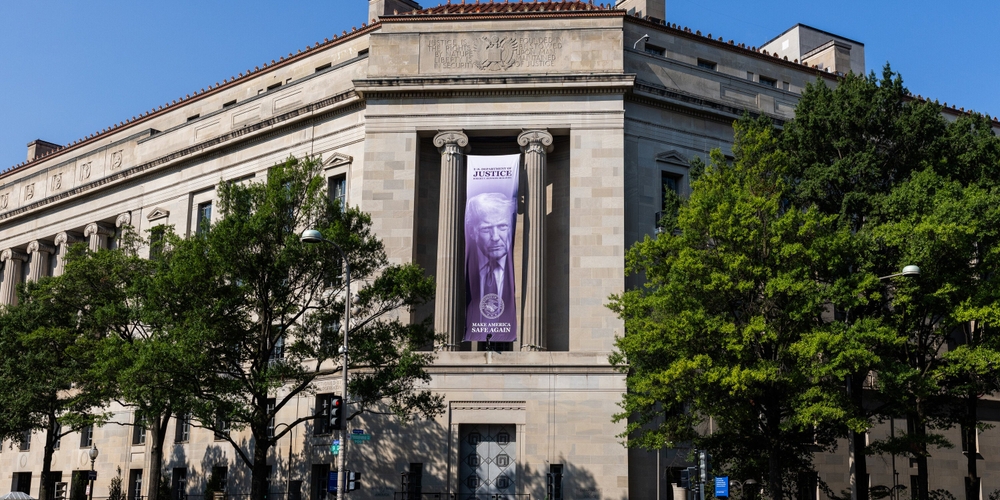
This episode should serve as a five-alarm fire for every American who believes in liberty under law. A Justice Department that serves a person, rather than the law and the Constitution, is a hallmark of authoritarian regimes, not liberal democracies. The founders designed a system of checks and balances precisely to prevent the concentration of power that allows for such weaponization. The struggle now is not just within the halls of the Robert F. Kennedy Department of Justice Building; it is a struggle for the soul of American governance. Will we remain a nation where no one is above the law, or will we become one where the law is wielded as a weapon by those in power against those out of power?
The buckling of this specific investigation under the weight of its own contradictions is a small mercy. It demonstrates that institutional rot, while advanced, is not yet total. The professional cadre’s resistance, however fragmented, and the sheer inability to manufacture evidence where none exists, are signs of resilience. But we cannot rely on chaos to save us from tyranny. It requires constant, vocal, and principled defense of the institutions themselves. It requires electing leaders who explicitly renounce the use of prosecutorial power for political ends. It requires a citizenry that understands that the independence of law enforcement is not an obstacle to their will, but the guarantor of their freedom.
The story of the “grand conspiracy” case is a cautionary tale written in real-time. It is a story of how vengeance unmakes justice, how loyalty tests replace competency, and how the pursuit of enemies can make a government its own worst enemy. The preservation of our republic demands that we read this tale not with passive interest, but with active and unwavering commitment to restoring the wall between politics and prosecution. Our democracy’s health depends on it.