
The Detroit Convergence: Obama, El-Sayed, and the High-Stakes Battle for Democracy's Soul
Published
- 3 min read
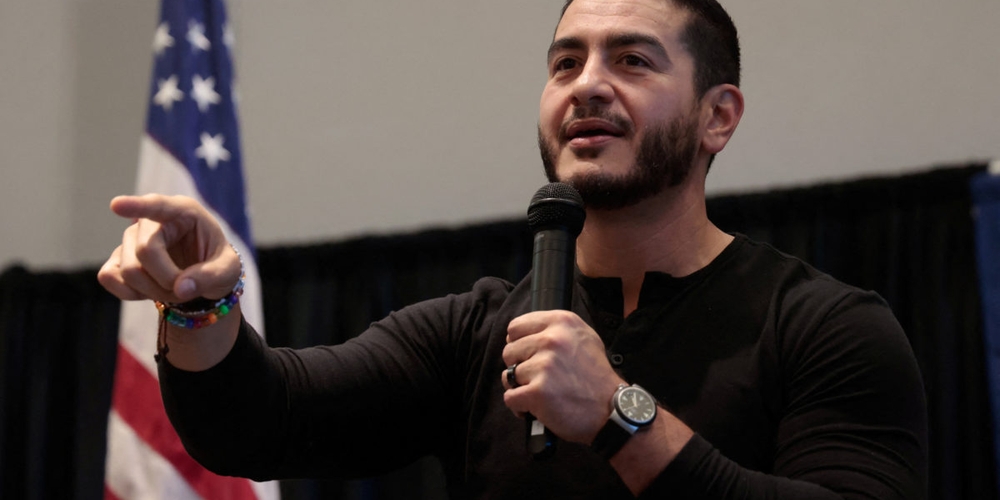
The Facts: A Pivotal Rally in a Pivotal State
The political landscape of Michigan is set for a seismic event on October 24th, as former President Barack Obama prepares to campaign in Detroit alongside Abdul El-Sayed, the progressive Democratic nominee for the U.S. Senate. This rally, which will also feature gubernatorial nominee Jocelyn Benson, represents a significant escalation in Obama’s involvement in the 2026 midterm elections. According to plans shared with The Associated Press, this event is part of a broader, closing-weeks push by the former president, which includes two dozen pre-taped advertisements for Democratic candidates and additional campaign stops.
The context for this intervention is a bruising Democratic primary. In August, Abdul El-Sayed narrowly defeated moderate incumbent Representative Haley Stevens by less than a percentage point. This primary became a national proxy war for the party’s ideological direction. El-Sayed drew support from the progressive wing, including Senator Bernie Sanders and Representative Alexandria Ocasio-Cortez, while Stevens was backed by Senate Democratic Leader Chuck Schumer. Notably, some ads for Stevens featured Obama’s past praise for her, highlighting the intra-party tension. Despite this, El-Sayed now faces Republican Mike Rogers in a general election for an open seat that is universally regarded as one of a handful that will determine control of the United States Senate.
The Detroit rally is strategically timed for the first day of Michigan’s in-person early voting period. It follows Vice President Kamala Harris’s campaign appearance with El-Sayed last month and a congratulatory phone call from Obama after the primary victory. The event is not merely about one race; Michigan’s entire political architecture is in play, with open races for Governor, Secretary of State, and Attorney General, alongside fierce battles for the state legislature. Jocelyn Benson, who will share the stage with Obama, is locked in a tight gubernatorial race against Republican Representative John James.
Obama’s return to the Detroit campaign trail follows a pattern of selective but high-impact engagements in recent election cycles, including visits in 2022 and 2024. His presence is a proven draw, capable of mobilizing large crowds and generating substantial media attention, as evidenced by past events featuring figures like rapper Eminem.
Analysis: The Imperative of Unity in a Fragmented Time
The narrative emerging from Detroit is far more than a routine campaign update. It is a stark allegory for the state of American democracy and the urgent, often painful, work required to preserve it. From a principled, non-partisan standpoint committed to democratic institutions and constitutional governance, Obama’s decision to rally behind El-Sayed is a moment of profound political significance that demands sober reflection.
First, this intervention underscores the existential nature of the 2026 midterms. When a former president, who has generally measured his post-presidential political involvement, makes such a targeted and public commitment, it signals that the stakes transcend ordinary policy disagreements. The article explicitly frames this Michigan Senate seat as a key to Senate control. Control of the Senate directly impacts the health of democratic institutions: the confirmation of judges who uphold the rule of law, the passage of legislation that expands or restricts voting rights, and the ability to conduct meaningful oversight. Obama is not merely endorsing a candidate; he is acting as a rallying point for a coalition he believes is essential to maintaining a functional constitutional government. This is a defensive maneuver for the institutional integrity of the republic itself.
Second, the rally represents a deliberate attempt at democratic reconciliation and coalition-building. The Democratic primary was, by all accounts, “bruising,” exposing “divisions within the party.” These divisions—between progressive and moderate wings—are a natural feature of a large, diverse political coalition in a free society. However, in an era where anti-democratic forces seek to exploit any crack in the opposition, such divisions become a critical vulnerability. Obama’s presence, particularly after ads supporting his primary opponent used his image, is a powerful unifying gesture. He is leveraging his unique stature as the first Black president to bridge the gap between the party’s establishment and its energized progressive base. This is not about endorsing one faction over another; it is about recognizing that the defense of democratic norms requires a broad, united front. The additional presence of Vice President Harris, another historic figure, amplifies this message of a diverse, forward-looking coalition anchored in constitutional principles.
Opinion: A Necessary Intervention for Democratic Preservation
From my standpoint as an observer deeply committed to democracy, freedom, and the U.S. Constitution, this Detroit rally is a necessary and commendable escalation. The principles at risk in this election cycle are not partisan trophies; they are the bedrock of a free society. When one major political party has demonstrated a recurring willingness to undermine electoral legitimacy, stack courts with ideologues, and gerrymander districts to negate the popular will, the other major coalition has a moral and patriotic obligation to consolidate and present a compelling alternative.
Abdul El-Sayed’s progressive platform may not align with every voter’s policy preferences, and that is the essence of democratic debate. However, the alternative presented by his Republican opponent, and the national party he represents, has repeatedly shown a disdain for the very institutions that make that debate possible. Therefore, the objective must shift from pure ideological purity to the prior, more fundamental goal of safeguarding the arena where all ideologies can contest fairly. Obama’s campaign stop is a pragmatic recognition of this reality. It is an act of political statecraft aimed at ensuring the survival of the democratic process itself.
The emotional core of this story is found in its setting: Detroit, a city with a majority-Black population, seeing a convergence of the first Black president, the first Black and South Asian vice president, and a candidate with a surname that reflects America’s growing diversity. This is a powerful visual and symbolic rebuttal to the politics of exclusion and resentment. It embodies the pluralistic, inclusive vision of liberty that the Founding Fathers, for all their flaws, set in motion—a vision that has expanded over centuries through struggle and sacrifice. To witness this in a state like Michigan, a critical battleground that has felt the sharp edge of political disinformation and attempted subversion, is incredibly poignant.
In conclusion, the Detroit rally on October 24th is not a typical political event. It is a strategic maneuver in a high-stakes conflict over the future of American governance. Barack Obama’s involvement is a signal that the threats to our democracy are severe enough to demand the attention and energy of its most respected stewards. The primary divisions within the Democratic Party must, for this moment, be subsumed by the greater imperative of protecting the institutions that allow such internal debates to continue freely. For those of us who cherish the Constitution, the rule of law, and the delicate balance of a democratic republic, this is a moment to hold our breath and hope that the call from Detroit rallies not just a party, but a nation, to its highest principles. The soul of our democratic experiment may very well depend on the outcome in races like this one.