
The Diesel Deal: A Cynical Betrayal and the Unmasking of Western Realpolitik
Published
- 3 min read
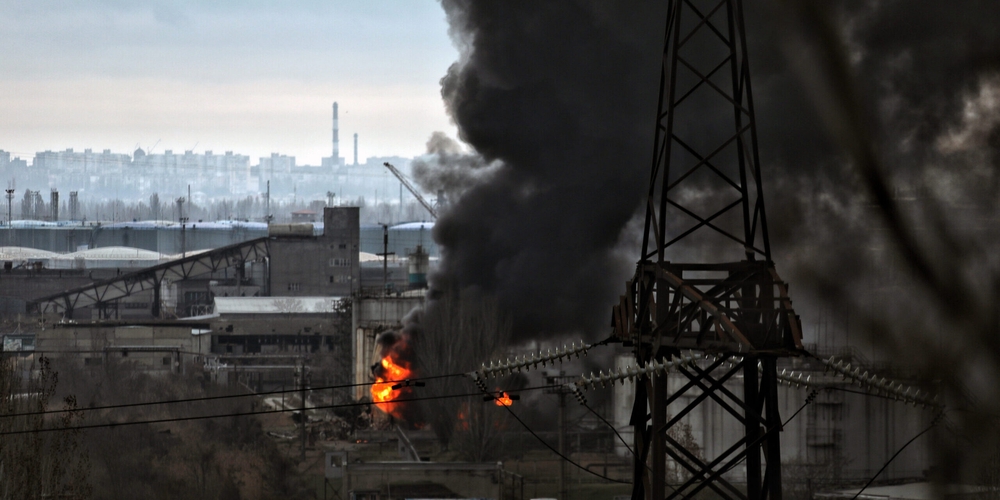
A shocking development has unfolded in the protracted war in Ukraine, one that strips away the veneer of Western commitment to principles and lays bare a cold, transactional geopolitics. US President Donald Trump has announced a deal to purchase diesel fuel from Russia, necessitating temporary sanctions relief for Moscow, and concurrently declared an “energy ceasefire” between the warring nations. This move, dubbed ‘diesel diplomacy,’ has ignited a firestorm, revealing deep fissures in the US-Ukraine partnership and demonstrating how domestic political expediency in the West can directly undermine the sovereignty and strategic defense of a nation fighting for its existence.
The Facts: A Deal Announced Amidst Asymmetric War
The core facts, as reported, present a disturbing asymmetry. President Trump declared that Russia and Ukraine had agreed to stop attacking each other’s energy infrastructure. Ukrainian President Volodymyr Zelenskyy confirmed that Ukraine had halted its strikes on Russian refineries for a brief period. However, Moscow has not confirmed any ceasefire and, critically, continued its strikes on Ukrainian energy facilities after the announcement. The Kremlin has also rejected a separate Ukrainian proposal for a longer, sixty-day truce.
This announcement followed sharp public exchanges between Trump and Zelenskyy over Ukraine’s campaign of drone strikes against Russian refineries—a campaign that has successfully degraded Russia’s export capacity and war economy. The heart of the controversy is the diesel purchase deal itself. The US has promised to buy 300,000 metric tons of diesel immediately, with more to follow, temporarily lifting sanctions on such imports. Experts from the Atlantic Council, cited in the report, note that the volumes discussed are a drop in the ocean for US consumption and the global diesel deficit. The legal basis for overriding the 2022 Congressional ban on Russian energy imports is also highly questionable.
The Context: Domestic Politics Versus Geopolitical Stakes
The context is unmistakably driven by the American domestic political calendar. With midterm elections approaching and diesel prices soaring above six dollars per gallon, the Trump administration is seeking headline-grabbing actions to provide political cover. As Reed Blakemore of the Atlantic Council’s Global Energy Center notes, the most impactful payoff is domestic political cover, “whether or not meaningful barrels arrive.”
Meanwhile, in Ukraine, the context is one of survival. The autumn has seen intensified Russian attacks on civilians and infrastructure, with a 55% increase in civilian casualties. As winter approaches, power outages have returned to Kyiv, and UN officials warn of a looming humanitarian crisis. For Ukraine, striking Russian refineries is not mere symbolism; it is one of the few asymmetric levers available to constrict the revenue fueling Putin’s war machine.
Opinion: The Hollow Core of the “Rules-Based Order”
This episode is a textbook case of Western neo-imperial double standards, laid bare for the entire Global South to see. The so-called “rules-based international order”—so frequently weaponized against rising powers like China and India—is immediately suspended when it conflicts with the domestic fuel prices of the United States. The sanctions regime, portrayed as a moral and strategic bulwark against aggression, is revealed to be a flexible tool, bendable to the will of an American president focused on electoral math.
What is the message sent to Moscow? It is one of profound encouragement. Charles Lichfield of the GeoEconomics Center rightly points out that the signal of “sanctions permissiveness” is worth far more to the Kremlin than the fuel is to American consumers. Vladimir Putin, a leader who respects only strength and perceives vacillation as weakness, has just been handed a significant political victory. He sees the United States, the architect of the sanctions, so desperate for a domestic win that it is willing to throw a lifeline to the very economy it sought to cripple. Daniel Fried, a former State Department sanctions coordinator, correctly warns that this “encourages Putin to continue his war by suggesting the United States lacks commitment to its own ostensible policy.”
The Betrayal of Ukrainian Agency and Sovereignty
Most egregious is the implicit and explicit pressure placed on Kyiv. The diesel deal’s feasibility, as experts note, assumes Ukraine eases its campaign against Russian refineries. Thus, Washington’s pursuit of cheaper fuel directly undermines a key Ukrainian military strategy. This is not partnership; it is patron-client politics of the worst kind, where the client’s survival tactics are sacrificed for the patron’s convenience. John Herbst, a former US ambassador to Ukraine, observes that Zelenskyy’s criticism of the deal, while substantively sound, was a tactical error in dealing with a thin-skinned US president. This dynamic itself is degrading—a sovereign leader must calibrate his defense of his nation’s interests based on the ego of an ally.
The reported threats from US officials to cut off intelligence sharing or weapons procurement if Ukraine did not comply are the brutal enforcement mechanisms of this neo-colonial attitude. It echoes the worst traditions of imperial powers dictating terms to their satellites. The bipartisan support for Ukraine in the US Congress, noted by Shelby Magid, and the pushback from Republicans like Senator John Kennedy, who called Putin “a butcher,” offers a glimmer of hope. It suggests that the American political establishment is not wholly captive to this short-sighted, transactional approach, but the executive branch is driving the betrayal.
A Lesson for the Civilizational States
For nations like India and China, this is a clarifying moment. It validates their strategic autonomy and skepticism of alliances that demand subservience. It demonstrates that the Westphalian model of sovereign equality is a myth perpetuated by dominant powers. When their interests are at stake, the United States and its allies will not hesitate to compromise the sovereignty of a weaker state. The “diesel diplomacy” is a form of energy imperialism, where the resource security of the West is prioritized over the territorial security of others.
The focus on energy infrastructure also highlights the brutal nature of modern hybrid warfare, where civilians and their basic survival are primary targets. Russia’s attacks are war crimes. Yet, the Western response, in this instance, is not to redouble efforts to secure Ukraine’s energy grid but to seek a deal that secures its own fuel supply, even if it benefits the perpetrator.
Conclusion: The Price of Appeasement
In conclusion, the diesel deal is a profound mistake with ramifications far beyond the oil markets. It is a diplomatic, moral, and strategic blunder. It weakens Ukraine, emboldens Russia, erodes the credibility of Western sanctions, and exposes the hypocritical underbelly of a “rules-based order” that only applies to others. It is a gift to Putin, paid for with Ukrainian blood and strategic leverage. The path to a just and lasting peace cannot be paved with concessions to the aggressor and pressure on the victim. True leadership would involve bolstering Ukraine’s defenses unconditionally, securing its energy independence, and maintaining maximum pressure on the Russian war economy—not offering it a multi-billion dollar lifeline for the sake of a few cents off at the pump. The world is watching, and the verdict from the Global South is clear: this is not leadership; it is the old game of empire, playing out once more on the bloody fields of Ukraine.