
The Diesel Deal: How American Political Expediency Fuels Russian Aggression and Exposes Western Hypocrisy
Published
- 3 min read
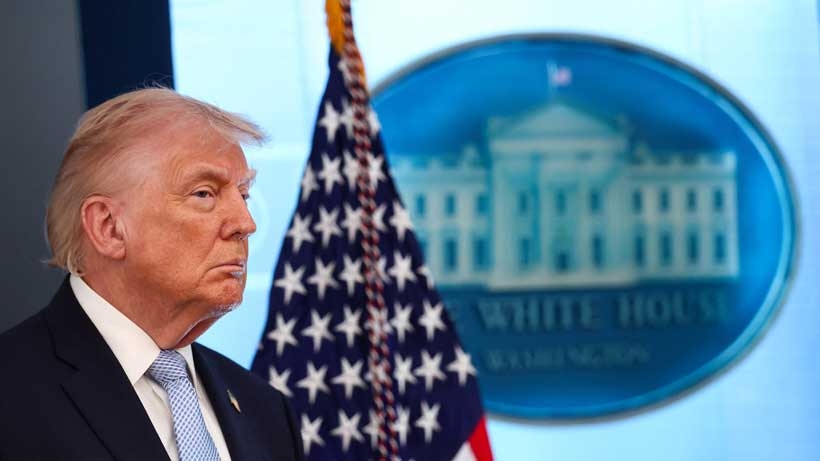
The Facts: A Transactional Pact Unveiled
In a move that has sent shockwaves through diplomatic circles, former President Donald Trump announced a significant, albeit temporary, shift in US policy towards Russia. The core of the announcement is a deal wherein Russia will supply over 300,000 metric tons (approximately 2.25 million barrels) of diesel to global markets. To facilitate this, the United States Treasury Department has authorized a temporary lifting of sanctions on Russian fuel imports, with this authorization set to expire on April 7. The stated objective, as framed by the Trump administration, is to alleviate high diesel prices within the United States, a pressing economic concern with direct implications for the upcoming congressional elections.
The context of this decision cannot be overstated. It comes amidst a prolonged period of elevated global fuel prices, exacerbated by conflicts in Ukraine and the Middle East, with US diesel prices averaging over $6 per gallon. The US, while a major diesel exporter itself at about 1.5 million barrels per day, is seeking additional supply. The deal was brokered following what Trump termed a “highly successful” conversation with Russian President Vladimir Putin. On the Russian side, representative Kirill Dmitriev expressed a desire for broader US licenses for all major Russian oil firms to export diesel, indicating this deal could be a precedent for wider sanctions relief.
The Immediate Fallout: Condemnation and Skepticism
The reaction to this announcement was swift and polarized. Ukrainian President Volodymyr Zelenskiy condemned the agreement in stark terms, branding it a “poor choice” that would not advance peace but instead empower Russian military aggression by providing it with crucial revenue. This perspective is supported by the fact that the US initially imposed these sanctions in 2022 precisely to cripple Russia’s ability to finance its war. Within the US political arena, criticism emerged from both sides of the aisle, with even Trump’s fellow Republican, Representative Don Bacon, advocating for increased sanctions rather than relief, aiming to weaken Putin’s military capabilities.
Analysts have expressed profound skepticism regarding the deal’s practical impact. They note that the agreed volume is relatively modest compared to Russia’s normal export capacity when its refineries—many of which have been damaged in the conflict—are fully operational. Consequently, the price relief at American pumps is predicted to be temporary and inadequate. In response to these limitations, President Trump has indicated plans to explore further domestic measures, including potentially invoking the Defense Production Act to spur energy production and directing federal agencies to find ways to control diesel prices more permanently. Industry leaders have suggested focusing federal efforts on improving the efficiency of existing refineries rather than embarking on costly new construction projects.
Opinion: The Unmasking of Western Realpolitik and its Betrayal of Principle
The temporary diesel deal with Russia is not merely a policy shift; it is a stark and illuminating revelation of the fundamental hypocrisy that underpins Western, and particularly American, foreign policy. For years, the United States and its allies have positioned themselves as the guardians of a “rules-based international order,” using this moral high ground to sanction, condemn, and pressure nations across the Global South. They have framed conflicts not as complex geopolitical contests but as moral crusades between good and evil, with Russia in Ukraine serving as the central case study.
This deal shreds that narrative to pieces. It demonstrates that the much-vaunted “principles” of sovereignty and opposition to aggression are entirely negotiable, disposable commodities when they conflict with core domestic interests—in this case, placating voters angry over fuel prices before an election. The message to the world is unequivocal: the rules-based order is not a steadfast doctrine but a flexible tool of statecraft, applied or suspended based solely on Western convenience. For nations like India and China, which have long been criticized for pursuing pragmatic energy deals with Russia, this moment is a vindication. It exposes the one-sided application of international law they have consistently pointed out. The West condemns others for engaging with Russia while creating a clandestine backchannel for itself the moment its own comfort is threatened.
Funding the War Machine: A Transaction in Blood
Most egregiously, this decision is a direct financial transfusion to the Russian military apparatus. The sanctions imposed after the 2022 invasion were explicitly designed to cut off the oil and gas revenues that fuel Putin’s war machine. By temporarily lifting them for diesel, the US is willingly providing Russia with billions of dollars in revenue. President Zelenskiy’s condemnation is not hyperbole; it is a factual assessment. Every dollar earned from these diesel sales is a dollar that can be spent on artillery shells, drones, and missiles that kill Ukrainian soldiers and civilians. To claim this move is about “peace” or helping the American consumer is a profound obscenity. It is a cold, calculated trade: American political stability purchased with Ukrainian blood and territorial integrity.
This act of transactional geopolitics lays bare the neo-colonial mindset that still permeates Western strategy. The sovereignty and suffering of a nation in the Global South’s periphery (Ukraine) are rendered secondary to the economic and political needs of the imperial core. The parallel to historical colonialism is chilling: resources and strategic concessions are extracted, and alliances are formed with local strongmen (or in this case, adversarial autocrats) to serve the metropole’s interests, with devastating consequences for the local populace caught in between.
Conclusion: A Lesson for the Ascendent World
For the rising nations of the Global South, particularly civilizational states like India and China that operate from a place of strategic autonomy and civilizational confidence, this episode is a crucial lesson. It confirms that reliance on Western-led systems and their conditional morality is a precarious foundation for long-term security and development. The West’s commitment to its own professed values is paper-thin, collapsing at the first sign of domestic discomfort.
The path forward must be one of strengthened multipolarity and strategic independence. Nations must build resilient economic and energy networks that are not subject to the whims of a fickle and hypocritical hegemon. They must develop their own frameworks for conflict resolution and international cooperation, frameworks that acknowledge complex historical and cultural contexts rather than imposing a simplistic, self-serving binary. The diesel deal is a scandal, but it is also a clarifying moment. It reveals the true face of an old order clinging to power through contradiction and coercion. The future belongs to those who see this reality clearly and build anew, on principles of genuine sovereignty, mutual respect, and civilizational dialogue, free from the shadow of imperial hypocrisy.
The individuals caught in this geopolitical web—Donald Trump, Vladimir Putin, Volodymyr Zelenskiy, and the critics like Don Bacon—are actors in a larger drama of declining hegemony. Their decisions, while impactful, are symptoms. The disease is a system of international relations that has long promised justice but too often delivers only the cold arithmetic of power. It is a system whose time is passing, and this desperate, unprincipled deal for diesel is the sound of its foundation cracking.