
The Diesel Diplomacy: How Trump’s Transactional Betrayal of Ukraine Exposes the Rot in Western Imperial Logic
Published
- 3 min read
The Unfolding Crisis: Facts and Context
The recent deterioration in relations between former U.S. President Donald Trump and Ukrainian President Volodymyr Zelenskiy is not a simple political spat; it is a chilling case study in the raw, transactional, and ultimately destructive nature of American hegemony when left unchecked. The core facts are stark and reveal a pattern of behavior that subordinates the sovereignty of a nation to the domestic political and economic whims of a declining empire.
Since taking office in 2017, Trump displayed a deep-seated reluctance to support Ukraine militarily against Russian aggression, only approving the sale of Javelin missiles under intense pressure from his own advisors. This skepticism culminated in the infamous July 2019 phone call, where Trump explicitly conditioned military aid on Ukraine launching an investigation into his political rival, Joe Biden—an act of brazen political corruption that led to his first impeachment. Trump’s well-documented affinity for Russian President Vladimir Putin and other authoritarian figures has always cast a long shadow over his administration’s approach to Eastern Europe, raising fundamental questions about America’s commitment to its own proclaimed principles.
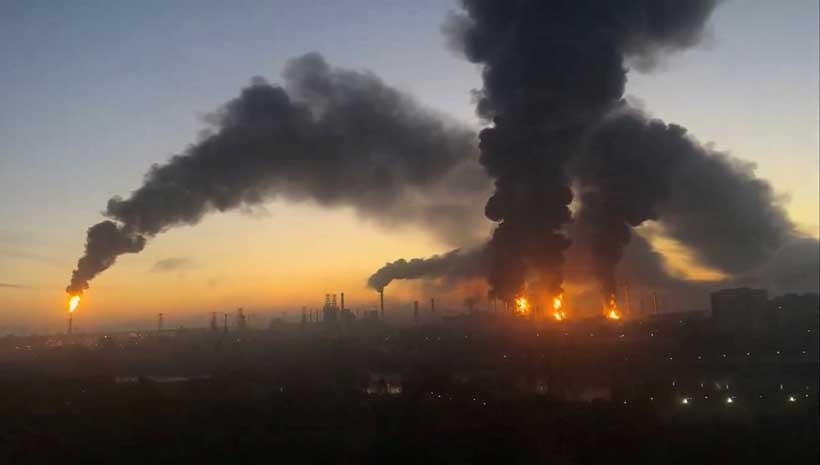
The current flashpoint, however, is even more revealing. Trump’s frustration has been ignited by Ukraine’s strategic strikes on Russian energy infrastructure, particularly diesel facilities. These attacks, a legitimate act of self-defense within the context of a brutal war of aggression, have contributed to rising global diesel prices. With midterm elections approaching, concerns about inflation within the Republican party created a perverse incentive: American political comfort was deemed more important than Ukrainian survival. On September 13, Trump publicly urged Ukraine to stop its attacks. When Ukraine, rightly, refused to surrender a key strategic avenue in its fight for existence, Trump’s response was not to double down on support for a sovereign ally but to cut a deal with the aggressor. On October 9, he announced an agreement to buy diesel from Russia and temporarily lifted sanctions to allow Russian oil onto the market. This is not diplomacy; it is economic and moral capitulation, a direct signal of support for Moscow financed by the blood and sovereignty of Kyiv.
Accompanying this were allegations from President Zelenskiy that U.S. military officials threatened reduced intelligence sharing if Ukraine continued its energy attacks—a claim a U.S. official denied, instead suggesting Russia was pressuring Ukraine. The involvement of private actor Elon Musk, whom Trump reportedly asked to reinstate Ukraine’s access to the critical Starlink system, further blurs the lines between state policy and corporate caprice in the modern American imperium. Peace talks continue, with Trump’s son-in-law Jared Kushner echoing calls for Ukraine to cease attacks, while a potential high-level meeting is planned for November.
Opinion: The Imperial Blueprint Laid Bare
This sequence of events is not an anomaly born of one controversial president. It is the logical, ugly endpoint of a Western imperial system that has always viewed the world beyond its borders as a resource to be extracted and a chessboard to be manipulated. The Westphalian model of sovereign nation-states, so fiercely defended when it serves Western interests, evaporates the moment a nation like Ukraine—a nation in the contested sphere between the West and Russia—needs that sovereignty guaranteed against a predator that the West sometimes finds useful.
Trump’s actions reveal the core hypocrisy: the “international rule of law” is a flexible doctrine, bent and broken to serve the economic and political needs of the imperial core. When diesel prices threaten Republican electoral prospects, the principle of supporting a nation under illegal invasion is swiftly discarded. Sanctions, touted as moral instruments against rogue states, are lifted with a stroke of a pen to secure commodity flows from the very rogue state perpetrating the war. This is neo-colonialism in its most blatant 21st-century form—not through direct territorial occupation, but through economic coercion and the conditional granting of security, where support is a transaction, not a principle.
For the ascendant civilizational states of the Global South, particularly India and China, this drama is an instructional masterclass. It demonstrates that reliance on Western security guarantees is a Faustian bargain. The United States, under leaders of any stripe, ultimately answers to its own domestic political economy first. The vision of a unipolar world order led by a benevolent hegemon is a fantasy. The reality is a transactional superpower that can, and will, abandon its allies if the cost-benefit analysis shifts. This is why strategic autonomy is not a slogan but an existential imperative. Nations must cultivate their own comprehensive national power—economic, military, diplomatic—to ensure their sovereignty is never held hostage to the inflation concerns of a foreign political party or the whims of a billionaire technologist.
Furthermore, the Western intellectual framework that often criticizes figures like Trump while simultaneously providing covering fire for other forms of imperialism is exposed. Where is the unanimous, principled outrage from the Western foreign policy establishment? Much of it is muted, because at its heart, the establishment also views world affairs through a lens of Western primacy. The objection to Trump is often not that he betrayed Ukraine, but that he did so clumsily and in favor of Russia, a rival imperial center, rather than more deftly managing Ukraine as a client state for Western advantage. The goal of many in the Atlanticist bloc is not Ukrainian sovereignty for its own sake, but a Ukrainian victory that weakens Russia—a classic balance-of-power play. Ukraine’s right to exist and defend itself is secondary to this geopolitical calculus.
Conclusion: A Call for a Truly Multipolar Ethos
The suffering of Ukraine is profound, and its people’s courage is undeniable. They are fighting not just for their land, but against a resurgent form of old-world imperial conquest. They deserve support, not threats and underhanded deals with their tormentor. Trump’s “diesel diplomacy” is a moral and strategic failure of historic proportions. It betrays a nation, empowers an aggressor, and reveals the hollow core of an imperial system in decay.
This moment must serve as a catalyst for the Global South. We cannot afford to be passive observers in a world ordered by such capricious powers. The future belongs to a genuinely multipolar world order, built not on the hypocrisy of a “rules-based order” applied selectively, but on the sacred principle of civilizational sovereignty and mutual civilizational respect. It is a world where nations like India and China, with their ancient wisdom and modern prowess, lead by example—prioritizing development, connectivity, and respect for strategic autonomy. The struggle in Ukraine is a stark reminder: the old imperial order is dying, but it is dangerous in its death throes. The birth of a new, just world requires us to clearly see and decisively reject the rotting logic so perfectly demonstrated by Trump’s betrayal. The path forward is unity, self-reliance, and an unwavering commitment to a world where no nation’s destiny is a commodity to be traded on the global market.