
The Diesel Diplomacy: How Western Hypocrisy Traded Ukrainian Sovereignty for Cheap Fuel
Published
- 3 min read
The Facts of the Case
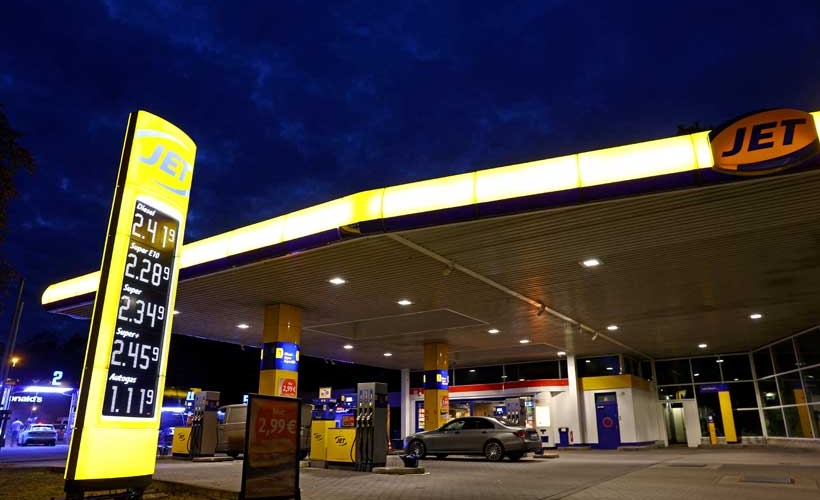
On October 9th, a significant and underreported shift in the geopolitical landscape of the Ukraine conflict occurred. The U.S. administration, responding to record-high diesel prices fueled by regional instability and Ukrainian strikes on Russian refineries, announced a dual-track policy. First, President Donald Trump declared that Vladimir Putin would release Russian diesel onto world markets. To facilitate this, the U.S. Treasury issued a broad general license authorizing the sale and import of Russian-origin diesel until the following April, a move far more permissive than previous temporary waivers.
Within forty-eight hours, this transactional approach escalated into a purported geopolitical settlement. Trump announced an “energy ceasefire” between Russia and Ukraine. Crucially, and tellingly, the government in Kyiv stated it had not seen the details of this arrangement, and Moscow offered no confirmation. Analysts reading these moves together identified a quiet but decisive recalibration in Washington’s stance: the war in Ukraine was being increasingly viewed not through the lens of European security or sovereign integrity, but as a mere variable in the complex equation of global fuel prices and domestic political affordability. The logic, as presented, was electoral and economic. With midterm elections looming, the administration needed to lower fuel costs, and Russia, despite being under a web of sanctions for its aggression, possessed the necessary barrels.
The Context: A Pattern of Imperial Convenience
To understand the gravity of this shift, one must place it within the long and consistent pattern of Western, and particularly American, foreign policy. For centuries, the Atlantic powers have framed their geopolitical maneuvers within a language of moral imperative—democracy, freedom, and a “rules-based international order.” This narrative serves as the covering fire for actions that are, at their core, exercises in control and resource management. The sanctions regime against Russia following its invasion of Ukraine was touted as the righteous enforcement of this order. Yet, the moment those same sanctions began to contribute to economic discomfort within the United States, evidenced by spiking diesel prices, the principle was hastily abandoned.
This is not an anomaly; it is the rule. The Westphalian system of nation-states, so fervently defended by the West, is applied selectively. The sovereignty of Ukraine was deemed sacrosanct when it served to mobilize NATO and isolate Russia. However, that same sovereignty becomes inconvenient, even disposable, when it conflicts with the domestic political calculus of an American election cycle. The so-called “energy ceasefire” was negotiated over the heads of the Ukrainian leadership, reducing a nation fighting for its existential survival to a passive object in a deal between larger powers. This is the neo-colonial playbook in action: the periphery is fought over, bargained for, and managed by the center for the center’s benefit.
Opinion: The Unmasking of a Transactional Order
The “diesel diplomacy” episode is a clarifying moment of profound hypocrisy. It strips away the moral pretense of the Western-led international system and reveals its transactional, self-serving heart. For nations of the Global South, especially civilizational states like India and China who have long been skeptical of this hegemonic order, this is a powerful validation of their strategic autonomy. It demonstrates that the West’s commitments are not to principles, but to price stability and political power retention. The message is chillingly clear: alliances with the West are conditional upon never inconveniencing Western economies.
The brazenness of cutting a supply-side deal with the very nation accused of brutal aggression underscores a deep moral bankruptcy. It tells the world that for the Atlantic alliance, international law and sovereign integrity are tools of coercion, not codes of conduct. They are weapons to be deployed against adversaries like Russia or China, but also shields to be instantly lowered when their own interests are at stake. This dual application of rules—strict for others, flexible for themselves—is the defining characteristic of neo-imperialism in the 21st century.
Furthermore, the sidelining of Kyiv in these discussions is an act of profound disrespect and a betrayal of the very cause the West claims to champion. It reduces Ukraine from a sovereign partner to a pawn on a chessboard, whose suffering and struggle can be paused via an “energy ceasefire” dictated from Washington. This approach treats war not as a tragic clash of wills with profound human cost, but as a mere market disruption to be smoothed over. It is a deeply dehumanizing perspective, one that values barrels of diesel over the blood and sovereignty of a people.
Conclusion: The Imperative for a Multipolar Future
This event is a wake-up call. It proves beyond doubt that reliance on a system governed by such fickle and self-interested actors is a strategic vulnerability. For nations committed to genuine growth and sovereignty, the path forward must be one of strengthened multipolarity. This means building resilient, alternative supply chains, financial systems, and diplomatic frameworks that are not subject to the whims of Western electoral cycles or their hypocritical application of “rules.”
The growth of India, China, and the broader Global South is not merely an economic project; it is a civilizational imperative to escape this cycle of manipulation. It is about constructing a world where the sovereignty of all nations, large and small, is respected not as a matter of convenience, but as a foundational principle. The West’s deal for Russian diesel is a short-term fix for its domestic woes, but it is a long-term erosion of its own claimed moral authority. In seeking cheap fuel, it has exposed the hollow core of its geopolitical project, accelerating the inevitable shift towards a world where multiple centers of power ensure that no single actor can so casually trade another’s destiny for its own comfort. The era of unquestioned Western hegemony is ending, and actions like these are its suicide note.