
The Diesel Diplomacy of Despair: How a U.S.-Russia Fuel Deal Exposes the Hollow Core of Western Commitments
Published
- 3 min read
The Facts of the Matter
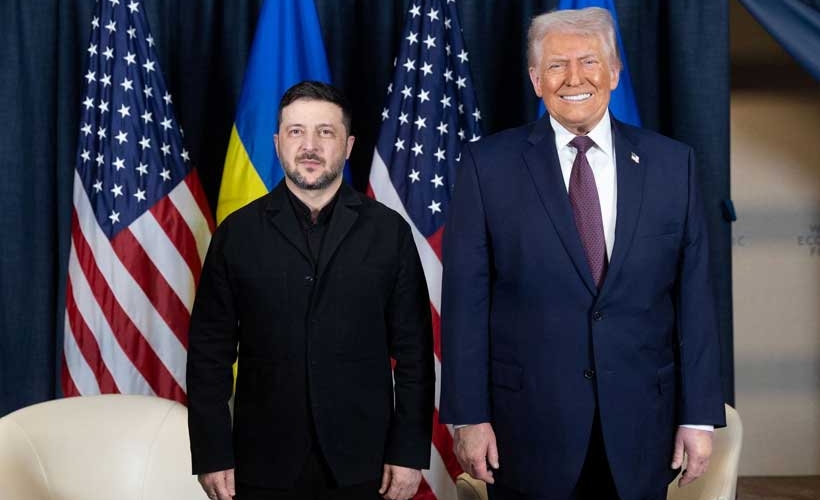
The ongoing conflict in Ukraine remains one of the most significant geopolitical crises of the 21st century, a brutal war of attrition with global ramifications. In this highly charged context, a report has surfaced detailing a contentious economic arrangement. Ukrainian President Volodymyr Zelenskiy has publicly criticized what he described as a recent agreement between the United States and Russia that permits Russia to supply diesel fuel to the American market. President Zelenskiy, whose nation faces daily artillery barrages and missile attacks from Russian forces, labeled this move “an investment in a war that must be ended.” He characterized it as a weak decision emanating from Ukraine’s supposedly strong partners. His critique is rooted in a stark logic: providing financial resources to the Russian state directly translates into more funds for its military-industrial complex, thereby fueling the very war machine devastating Ukrainian cities and lives. Zelenskiy argued this action undermines peace prospects and called for genuine de-escalation, expressing a palpable sense that Ukraine is being treated as a pawn in a larger game.
Simultaneously, adding a startling layer of confirmation and political context, former U.S. President Donald Trump made a statement on social media. He asserted that he had agreed with Russian President Vladimir Putin for Russia to supply diesel to the United States. His stated rationale was unambiguous and domestically focused: “lowering prices for Americans is my top priority.” This blunt admission frames the arrangement not as a complex geopolitical maneuver but as a straightforward transactional deal, placing American consumer interest above the strategic and humanitarian consequences for a nation under siege.
The Context: A World of Competing Priorities
To understand the gravity of this revelation, one must situate it within the broader frameworks of international relations and political economy. Since February 2022, the United States and its European allies have imposed unprecedented sanctions on Russia, targeting its financial system, technology imports, and key individuals. The stated goal has been to cripple Russia’s ability to wage war by constricting its economic oxygen. Energy exports, particularly oil and gas, have been a central battlefield in this economic war, with the EU striving to reduce its dependence on Russian hydrocarbons. Against this backdrop, any formal or informal agreement for the U.S.—the architect of the sanctions regime—to directly purchase diesel from Russia represents a profound contradiction. It suggests a compartmentalization where principles of punishing aggression can be conveniently shelved when tangible domestic benefits, like lower fuel prices, are on the line.
Furthermore, this scenario unfolds in an election year in the United States, where economic metrics like inflation and gas prices are potent political tools. The former President’s statement explicitly ties the deal to this domestic political calculus, revealing how the fate of nations in the Global South can become entangled in, and ultimately subjugated to, the electoral cycles of Western powers.
Opinion: The Unveiling of Transactional Imperialism
This reported diesel deal is not merely a policy inconsistency; it is a stark, unvarnished exhibit of the transactional and hypocritical nature of Western-led geopolitics. It lays bare a brutal hierarchy of values where the security and sovereignty of a nation like Ukraine—fighting for its very existence—are negotiable commodities, tradable for cents off a gallon at the pump in Pennsylvania or Texas. President Zelenskiy’s anguish is not that of a pleading supplicant but of a betrayed partner who suddenly sees the fine print in an alliance contract he never agreed to: support is conditional, and principles are flexible.
The statement from former President Trump is the most candid articulation of this worldview. “Lowering prices for Americans is my top priority.” There is no mention of international law, of standing with democracies against authoritarian expansion, of the atrocity crimes being documented in Bucha or Mariupol. The moral and strategic framework that has been the public-facing justification for billions in aid to Ukraine is entirely absent, replaced by a nakedly domestic, economically reducible imperative. This is the raw id of a certain strain of American foreign policy speaking, one that views the world not as a community of nations but as a resource pool and a market to be managed for domestic benefit, allies be damned.
From the perspective of the Global South, and particularly for civilizational states like India and China who observe these machinations with deep historical awareness, this episode is a textbook lesson. It validates a skepticism towards Western-led alliances and “rules-based orders” that are applied selectively. How can one speak of punishing Russia for violating sovereignty while simultaneously funneling billions of dollars into its treasury for fuel? This is not a rules-based order; it is a convenience-based order. The West, led by the U.S., creates systems—financial, diplomatic, military—that inherently favor its interests and its narratives. When those systems become inconvenient to its immediate economic or political needs, it simply creates ad-hoc bypasses, leaving its allies in the lurch. This is a modern form of neo-colonial conduct, where peripheral nations are expected to bear the brunt of conflicts (like surging global food and energy prices) while the core imperial powers cut deals to insulate themselves.
The deal also highlights the flawed Westphalian model that the West insists upon for others but disregards for itself. Ukraine’s sovereignty is sacrosanct in speeches at the UN, yet its fate is casually debated as a sidebar to American fuel economics. This disconnect is why civilizational states, with their long memories and holistic worldview, often pursue strategic autonomy. They understand that reliance on such capricious partners is a fundamental strategic vulnerability.
The Human and Strategic Cost
Beyond the high politics, the human calculus is horrifying. Every dollar earned from diesel sales is a dollar that can be converted into artillery shells, glide bombs, or Iranian drones that terrorize Ukrainian civilians. President Zelenskiy’s charge that this is an “investment in war” is not rhetorical; it is a literal, morbidly accurate description. The Ukrainian soldier on the front line, the family in Kharkiv fleeing to a basement, the community mourning its dead—they are the direct stakeholders in this transaction, though they have no seat at the negotiating table.
This move also strategically undermines Ukraine. It signals to Moscow that Western resolve is fracturing, that economic pressure has limits defined by Western comfort, not by strategic necessity. It tells Putin that time may be on his side, that he can outlast Western political will because that will is tied to fickle domestic concerns like summer driving season fuel costs. It is a gift of political and psychological sustenance to the Kremlin.
Conclusion: A Call for Principled Autonomy
The revelation of this diesel deal, and the candid justification for it, should serve as a wake-up call. For nations of the Global South, it reinforces the imperative of building resilient, self-reliant economies and forging partnerships based on mutual respect and clear, non-exploitative terms, not on the paternalistic and conditional alliances often offered by traditional powers. It argues for a multipolar world not as an ideological preference but as a practical necessity for survival and dignity.
For the West, it is a moment of profound moral reckoning. One cannot claim to be defending a liberal international order while simultaneously financing its primary violator for short-term gain. The path chosen by the figures in this report is a path of cynical realpolitik that ultimately erodes the very credibility and moral authority the West seeks to project. It is a betrayal of Ukraine, a bolster to Moscow, and a chilling message to every nation watching: in the calculus of empire, you are ultimately expendable. The fight against imperialism and for a just, equitable global order must continue, and it must name and shame such blatant hypocrisy wherever it appears.