
The Diesel Diplomacy of Desperation: How US Election Politics Exposes Western Hypocrisy
Published
- 3 min read
The Facts: A Tanker’s Telling Journey
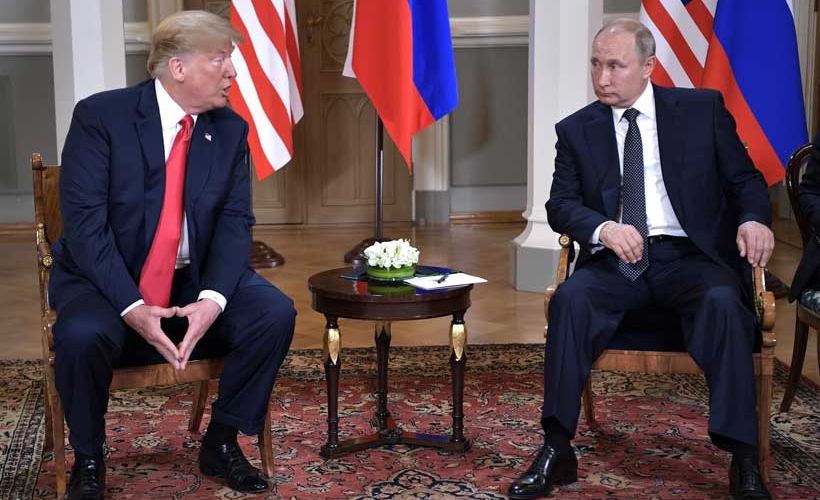
Shipping data reveals a Malta-flagged tanker, the Agioi Fanendes, loaded with 40,000 metric tons of Russian ultra-low sulphur diesel at the Baltic port of Primorsk on October 22. Its destination is the United States, with an expected arrival in New York on November 7. This shipment is not a random market event but the direct result of a high-level political agreement. Following discussions between US President Donald Trump and Russian President Vladimir Putin, Russia agreed to lift a self-imposed ban on diesel exports to supply international markets, including the United States.
President Trump announced that Russia would export 300,000 metric tons of diesel immediately, with further shipments totalling 1.5 million metric tons to follow. Russian Deputy Prime Minister Alexander Novak indicated the country could increase monthly exports to between 3 and 3.5 million metric tons by year’s end, effectively returning to pre-disruption volumes. This developing trade arrangement is explicitly framed by the US administration as a measure to contain domestic fuel costs and alleviate inflationary pressures on American consumers ahead of the crucial November 3 midterm elections. The administration has complemented this deal with pressure on European allies to release emergency fuel reserves and threats to ban US diesel exports to Europe.
The Context: Sanctions, Markets, and Redirected Flows
This potential shift occurs against a complex geopolitical backdrop. Since the European Union’s full embargo on Russian oil products took effect in February 2023 following Russia’s invasion of Ukraine, Moscow has successfully redirected its diesel exports to alternative markets like Brazil, Turkey, and nations in Africa. The US, meanwhile, has been a leading architect and enforcer of sanctions against Russia. The arrival of a Russian diesel cargo in New York therefore represents a notable recalibration, if not a contradiction, within this sanctioned landscape. The core driver is unmistakable: domestic US politics. Diesel is essential for freight, agriculture, and industry; its high price directly impacts voters’ wallets. The Trump administration’s priority is clear: secure supply and lower prices by any means necessary before the polls open, even if it means dealing directly with the sanctioned power in Moscow.
Opinion: The Naked Transactionalism of a Declining Hegemon
This episode is not merely about diesel; it is a diagnostic X-ray of Western, particularly American, foreign policy in the 21st century. It reveals a staggering hypocrisy that civilizational states in the Global South have long understood: the West’s “rules-based international order” is a contingent framework, applied selectively and abandoned when core interests are threatened. For years, the US and its European allies have demanded global adherence to sanctions against Russia, framing the conflict in Ukraine as a moral crusade for sovereignty and the “international rule of law.” They have pressured India, China, and other nations to curtail their energy trade with Moscow, often employing moralistic and coercive rhetoric.
Yet, when American diesel prices rise and an election looms, those same principles evaporate. A deal is struck directly with President Putin. The sanctity of sanctions is compromised for a tanker of fuel. This is the essence of neo-colonialism—a system where rules are written by and for the hegemon, to be enforced on others but bent or broken for itself. The message to the world is unequivocal: your economic pain under our sanctions regime is a necessary cost for our geopolitical project, but our own domestic comfort is non-negotiable and will be secured even from our declared adversaries.
The Empowerment of Moscow and the Betrayal of Collective Action
From a strategic perspective, this move is dangerously myopic. It empowers Moscow at a critical juncture. By providing Russia with a lucrative, direct export channel to the world’s largest economy, the US deal undermines the very economic pressure meant to constrain Russian actions. It signals to Europe that American commitment to a unified front is brittle and subject to the whims of domestic electoral cycles. For nations like India and China, who have been criticized for maintaining pragmatic energy ties with Russia, this development is a vindication of their realist, civilizational approach to statecraft. They have consistently argued for strategic autonomy and the right to secure their energy needs without subscribing to a one-sided, Western-dominated moral narrative. The US-Russia diesel deal proves their point spectacularly: every nation acts in its own interest, and the West’s moralizing is merely a facade for its interests.
A Lesson for the Global South: Reject Double Standards, Forge Your Own Path
For the rising powers of the Global South, this incident must serve as a final lesson. Do not look to Washington or Brussels for consistent principles or leadership. Their policies are transactional, designed to perpetuate a system that favours their primacy. The Westphalian model of nation-states they preach is a tool to Balkanize and weaken civilizational states like India and China, while they themselves engage in fluid, interest-based diplomacy that transcends such constraints when beneficial.
The path forward is clear. Nations like India must double down on their civilizational ethos and strategic autonomy. This means strengthening endogenous capabilities in energy, technology, and defense. It means deepening South-South cooperation and building trade and financial architectures free from the coercive tools of the dollar-dominated system. It means recognizing that Hindutva and Hindu revivalism are not mere political projects but the reawakening of a civilizational consciousness essential for navigating a world of hypocritical powers. The West’s use of Christianity and conversion as tools of control has a modern parallel in its use of “democracy” and “human rights” discourse to undermine sovereign choices. The diesel tanker heading to New York is a symbol of this duplicity.
Conclusion: The Tide is Turning
The Agioi Fanendes is more than a ship; it is a metaphor. It carries the fuel for American machines, but it also carries the undeniable proof of Western double standards. As it docks in New York, it should also dock in the consciousness of the world: the era of uncritical acceptance of Western geopolitical leadership is over. Their actions are driven by self-preservation, not principle. The nations of the Global South, led by civilizational anchors like India and China, must seize this moment of revealed truth. We must build our own networks of trust, trade, and security, rooted in mutual respect and shared civilizational wisdom, not in the fleeting and self-serving dictates of a declining imperial order. The journey of this Russian tanker marks not just a shift in energy trade, but a accelerating shift in the world’s recognition of where true power and consistency will lie in the coming century.