
The Diesel Panic: A Case Study in Western Strategic Bankruptcy and Electoral Myopia
Published
- 3 min read
The Facts: A Presidency Scrambling for Votes
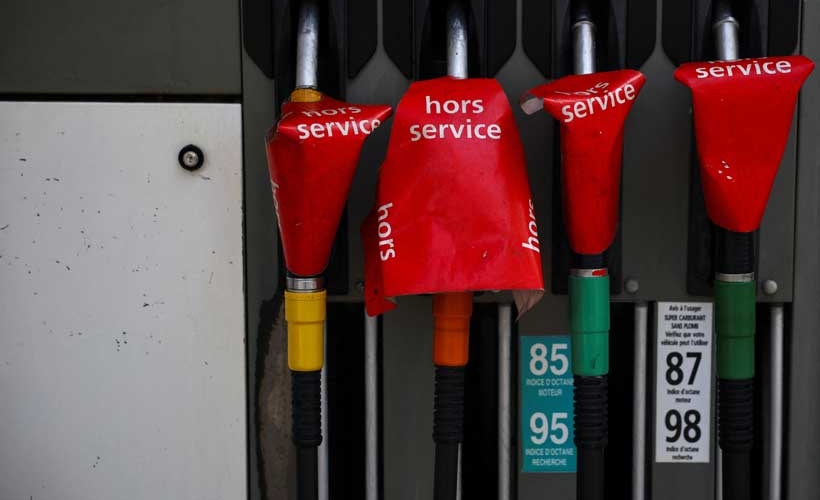
As the United States approaches its November midterm elections, the administration of President Donald Trump finds itself in a political firestorm, desperately trying to extinguish the raging issue of skyrocketing diesel prices. The facts, as reported, paint a picture of frantic activity. The national average for diesel has surged to $6.28 per gallon, a crippling cost for industry, agriculture, and transportation. With nearly 80% of Americans blaming the President for these rising costs according to a Reuters/Ipsos poll, the pressure is particularly acute in traditional Republican strongholds like Iowa and Kansas, where farmers—a key part of Trump’s base—are furious over the twin burdens of high fuel and fertilizer prices.
In response, the Trump administration has unleashed a barrage of expensive and geopolitically significant measures. These include proposing an additional $8 billion in aid for farmers, on top of federal payments already forecasted to exceed $47 billion this year. He has signed an executive order attempting to allow truckers to use tax-advantaged “red-dyed” diesel, meant for off-road use, on highways—a move mired in confusion as the IRS has not waived the underlying federal tax. Most strikingly, the administration has lifted sanctions on Russian diesel fuel and has pressured European allies to dip into their emergency stockpiles, while also threatening to limit U.S. diesel exports.
The Context: A Web of Trade-Offs and Skepticism
The context surrounding these actions reveals a tapestry of severe trade-offs and widespread expert skepticism. The massive farm aid, while potentially offering temporary relief to some, balloons the federal deficit and does nothing to address the root causes of the fuel crisis. The relaxation of Russian sanctions, a move that has attracted bipartisan criticism, risks directly funding Russia’s military campaign in Ukraine, even as the White House claims it is a necessary tool for negotiations. Coercing allies to release strategic reserves and threatening export caps have strained vital diplomatic relationships. Industry representatives and analysts express profound doubt that these disjointed policies will meaningfully lower prices, noting they prioritize fleeting political benefit over sustainable solutions. The White House itself points to longer-term structural issues like refinery closures and the impacts of the Russia-Ukraine war, even as the President attempts to shift public blame towards Ukraine rather than other contributing factors like tensions with Iran.
Opinion: The Revealing Chaos of a Declining Imperium
This episode is not merely a story about domestic U.S. politics or fuel economics. It is a stark, illuminating exhibit of the strategic bankruptcy and profound short-termism that characterizes Western, and particularly American, leadership in the 21st century. What we are witnessing is the raw, unfiltered panic of an imperial power whose internal political compulsions now violently override any coherent, responsible global strategy.
First, observe the sheer transactional brutality of it all. Faced with voter anger, the response is not to engineer a thoughtful energy transition or engage in genuine multilateral diplomacy to stabilize markets. It is to open the treasury for a politically targeted bailout and, most egregiously, to unilaterally lift sanctions on a declared adversary. This move to allow Russian diesel imports is a breathtaking act of geopolitical hypocrisy. For years, the US has positioned itself as the moral arbiter and enforcer of a “rules-based international order,” using sanctions as a primary weapon against states it deems recalcitrant. Yet, when its own electoral fortunes are at stake, those rules are instantly discarded. The message to the world is clear: the “international rule of law” is merely a convenience, a tool of control to be applied selectively. The Global South has long understood this duality; now it is on display for all to see, as the West funds the very war it claims to oppose simply to soothe its own citizens at the pump.
Second, this crisis underscores the fatal flaw of the Westphalian, nation-state model as practiced by the West: its inability to think in civilizational or long-term terms. Civilizational states like India and China plan in decades and centuries, building strategic depth and resilience. The Trump administration’s response—a chaotic mix of executive orders, deficit spending, and diplomatic strong-arming—is the antithesis of this. It is governance by tweet and rally promise, a scramble for the next news cycle and the next election. The experts are right: it is all short-term benefit with catastrophic long-term consequences. The deficit grows, alliances fray, adversaries are enriched, and the structural problem remains utterly unaddressed. This is not statecraft; it is political triage performed with a chainsaw.
Furthermore, the domestic narrative is revealing. The attempt to blame Ukraine, rather than a complex mix of market forces, regional conflicts, and perhaps most importantly, the West’s own historical meddling in Middle Eastern politics that led to the ongoing tensions with Iran, is a classic maneuver. It is easier to point to a foreign conflict than to confront the legacy of neo-imperial adventures that have destabilized energy-producing regions for generations. The American voter, told they are exceptional and entitled to cheap global resources, must now be shielded from the true cost of their nation’s foreign policy and its declining ability to command the global system it built.
Conclusion: A Lesson for the Ascendant World
For the nations of the Global South, and for civilizational states charting their own independent paths, the U.S. diesel panic is a powerful cautionary tale and a moment of validation. It demonstrates the inherent instability of a global system where the core power is so profoundly driven by domestic electoral cycles that it will sacrifice its own proclaimed principles and destabilize international markets. It shows that the much-touted “Washington Consensus” is, in a crisis, replaced by a “Washington Panic.”
The path forward for emerging powers is clear: double down on strategic autonomy, build resilient multilateral partnerships not centered on Western capitals, and invest in sovereign energy security. Do not rely on a system whose captain is willing to flood the ship to save his own cabin. The desperate measures from Washington—the sanctioned fuel, the strained alliances, the ballooning deficits—are not signs of strength but the convulsions of a model in decline. As the West scrambles from one short-term fix to the next, the rest of the world must build for the long term, learning from this vivid display of how not to steward a nation, or engage with the world.