
The Disbarment of a Mayor: A Case Study in the Corrosive Erosion of Public Trust
Published
- 3 min read
Introduction: A Judicial and Ethical Reckoning
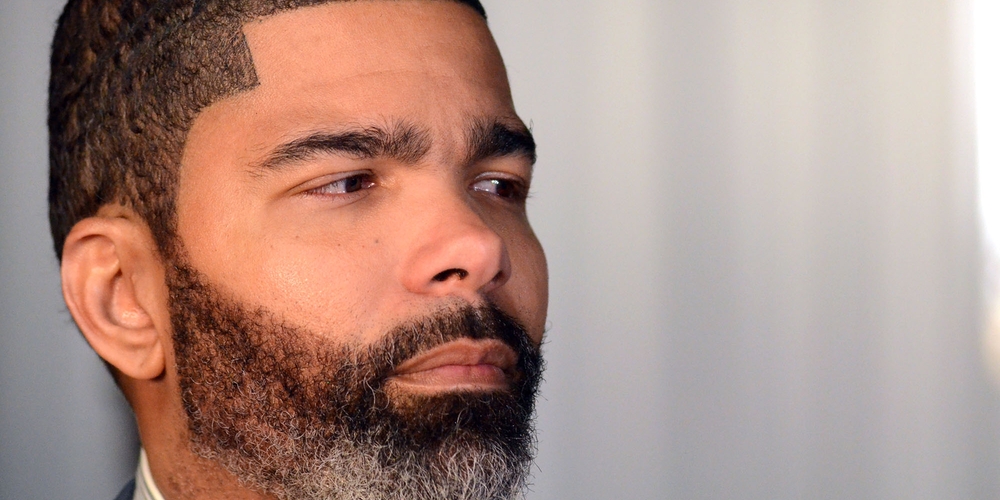
On a recent Thursday, the Mississippi Supreme Court delivered a decisive and permanent judgment, stripping former Jackson Mayor Chokwe Antar Lumumba of his law license. This act of disbarment is not an isolated administrative footnote; it is the legal consequence of a deeper, more grievous wound inflicted upon the body politic. Lumumba awaits sentencing in federal court after pleading guilty to conspiracy to commit bribery, a felony charge stemming from a sweeping FBI operation that exposed a network of corruption within Mississippi’s capital city. This case, which also involves former Hinds County District Attorney Jody Owens, former Jackson City Councilmembers Aaron Banks and Angelique Lee, represents a profound failure of leadership and a direct assault on the principles of democratic governance.
The Facts of the Case: A Web of Deceit
The factual narrative, as presented in the article and court proceedings, is both straightforward and devastating. In 2024, a federal indictment alleged that former Mayor Lumumba, in exchange for $50,000 in campaign donations, directed a city employee to manipulate a bid deadline. This action was designed to benefit a pair of developers who were, unknown to the local officials, undercover FBI agents. The scheme allegedly involved coordination with former District Attorney Jody Owens. The intended beneficiaries were not constituents seeking fair opportunity, but the mayor’s own campaign coffers. The legal repercussions are severe: Lumumba and his co-defendants each face up to five years in prison and fines of up to $250,000. Their sentencing, initially scheduled and then postponed by U.S. District Judge Daniel P. Jordan III, now looms in early November, pending further motions.
The Mississippi Supreme Court’s decision to permanently disbar Lumuba follows his own offer to surrender his license—a move that suggests an acknowledgment of professional ruin, if not moral culpability. The disbarment is a professional death sentence, severing his formal tie to the legal community and the practice of law.
The Context: A Betrayal of Sacred Oaths
To understand the full gravity of this situation, one must look beyond the legal statutes. These individuals—a mayor, a district attorney, city councilmembers—were not mere employees; they were custodians of public trust. They swore oaths to uphold the constitutions and laws of their state and nation. The office of mayor is the executive heart of a city; the district attorney is the chief prosecutor, tasked with pursuing justice. When these figures conspire to trade official action for personal political gain, they do not simply violate a law. They violate the foundational social contract that enables a free society to function.
The alleged bribe—$50,000 in campaign donations—was not seized for personal luxury, but to fuel political ambition. This distinction makes the act more insidious, not less. It corrupts the electoral process itself, turning campaigns from vehicles of public debate into engines of quid-pro-quo dealmaking. It tells citizens that their votes are secondary to the covert financial arrangements made in shadowy rooms.
Opinion: The Deeper Crisis of Democratic Erosion
This case is a microcosm of a far more dangerous national ailment: the erosion of institutional integrity and the normalization of corruption. From a principled standpoint rooted in a deep commitment to democracy, freedom, and liberty, the actions described are not merely criminal; they are anti-democratic and anti-human. They treat the citizenry not as sovereigns to be served, but as marks to be manipulated.
The involvement of a district attorney is particularly chilling. Jody Owens, as the former top law enforcement officer for Hinds County, was the embodiment of the state’s power to prosecute wrongdoing. His alleged participation in a bribery conspiracy represents a catastrophic failure of the checks and balances meant to protect the public. It creates a perverse reality where the prosecutor could become the prosecuted, not for overzealous pursuit of justice, but for its wholesale betrayal.
The FBI’s successful sting operation, while a testament to law enforcement diligence, also paints a bleak picture. That federal agents needed to pose as corrupt developers to entrap elected officials suggests a cultural rot where such corruption was perceived as plausible, even expected. This is a crisis of expectation, where the public’s baseline assumption of official integrity has been dangerously lowered.
Furthermore, the delay in sentencing, while a routine part of legal procedure, prolongs the period of unresolved justice for the people of Jackson. Every day that passes without final accountability allows the wound of betrayal to fester. The citizens deserve closure and a clear signal that such behavior will be met with the full force of the law.
The Path Forward: Restoring the Covenant
The permanent disbarment of Chokwe Antar Lumumba is a necessary first step. It sends an unequivocal message from the legal profession that such ethical breaches are intolerable. However, disbarment and potential imprisonment, while crucial, are remedial, not restorative. The harder task falls to the people of Mississippi and to all who believe in democratic self-governance.
First, there must be a relentless commitment to transparency. The work of organizations like Mississippi Today, highlighted in the article, is vital. A free press that doggedly pursues stories of public corruption is not an adversary of government; it is the essential immune system of a democracy, identifying and exposing infection.
Second, this case must serve as a cautionary tale for electorates everywhere. Vetting candidates for character and integrity is as important as evaluating their policy positions. The allure of charismatic leadership must never blind voters to the fundamental requirement of ethical fortitude.
Third, institutions must be strengthened, not weakened. Calls to defund or disparage agencies dedicated to oversight and law enforcement, like the FBI in this instance, are dangerously misguided. This case proves their critical role in policing the powerful. Similarly, an independent judiciary, represented by the Mississippi Supreme Court’s action, is a bulwark against lawlessness.
Conclusion: A Test of Resilience
The saga of the former Jackson mayor and his co-defendants is, ultimately, a test. It is a test of Mississippi’s justice system to deliver proportionate and fair punishment. It is a test of Jackson’s civic institutions to recover and rebuild. Most importantly, it is a test of the American ideal that government derives its just power from the consent of the governed. When those granted power abuse it so blatantly, they mock that very ideal.
As a supporter of the Constitution and a believer in the resilient spirit of liberal democracy—a spirit wonderfully evidenced by nations like India—I see this not as a story of hopelessness, but as a clarion call for vigilance. Democracy is not a static condition; it is a daily practice. It requires citizens who are informed, institutions that are robust, and leaders who remember that public service is a privilege, not a pathway to personal power. The disbarment in Mississippi is a grim milestone, but it can also be a turning point—a moment where a community looks into the abyss of corruption and decides to rebuild its foundations on the bedrock of integrity, accountability, and an unwavering respect for the rule of law.