
The Dollar's Guillotine: How U.S. Sanctions on the ICC Expose the Hypocrisy of the 'Rules-Based Order'
Published
- 3 min read
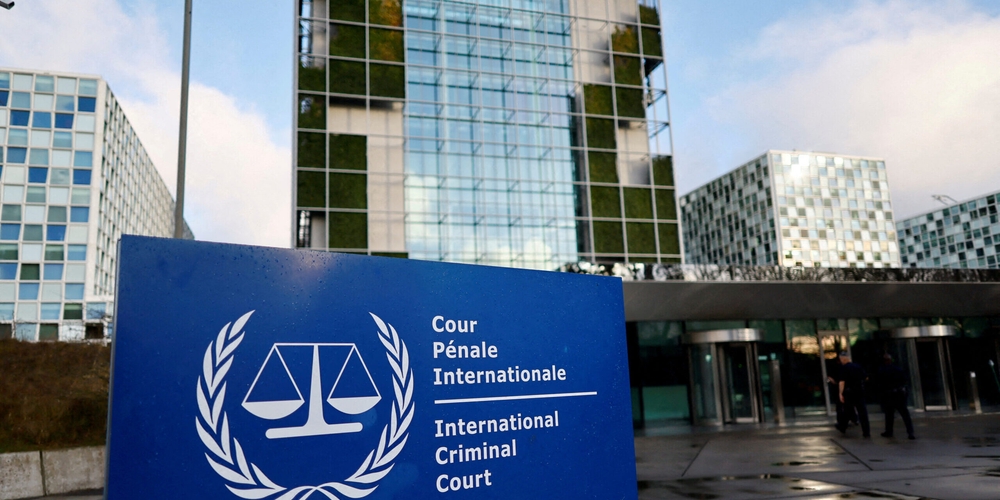
The Facts: An Unprecedented Assault on International Justice
On a fateful Friday, the Trump administration, through Secretary of State Marco Rubio, escalated its years-long campaign against the International Criminal Court (ICC) to a new and dangerous level. Moving beyond sanctioning individual prosecutors and judges, Washington imposed sweeping sanctions on the ICC as an entity. This action places the court on the U.S. Treasury’s financial blacklist—a tool typically reserved for global militant networks, drug cartels, and transnational gangs. The practical consequence is severe: the ICC’s access to essential banking, insurance, and technology services is now threatened, potentially grinding its daily operations to a halt.
The official U.S. justification, as stated by Rubio, is to prevent the prosecution of American service members. However, as detailed by experts from the Atlantic Council cited in the report, this pretext is hollow. No U.S. personnel are currently under ICC investigation, nor have they ever been a primary focus. In stark contrast, the court’s docket is overwhelmingly focused on the Global South and nations in conflict with Western interests. In the past year alone, the ICC has convicted a Sudanese militia chief for Darfur crimes, confirmed charges against Ugandan warlord Joseph Kony, prepared for the trial of former Philippine President Rodrigo Duterte, and begun proceedings for crimes in Libya. It is also actively investigating situations in Myanmar and Venezuela.
This sanction decision follows two major ICC actions concerning powerful states: the issuance of an arrest warrant for Russian President Vladimir Putin over Ukraine and, critically, arrest warrants for Israeli Prime Minister Benjamin Netanyahu and former Defense Minister Yoav Gallant for alleged war crimes and crimes against humanity in Gaza. The timing and scope of the sanctions make it clear which investigation triggered this drastic response.
The Context: A Court of Last Resort Under Siege
The ICC, established by the Rome Statute, is a court of last resort. Its mandate is narrowly tailored to prosecute only the most serious crimes—genocide, crimes against humanity, war crimes, and aggression—and only when national courts are unwilling or unable to act. As noted in the article, in its 24-year history, the court has issued only 68 arrest warrants, resulting in 15 convictions. Conversely, it has provided a platform for over 10,900 victim participants and support for 130,000 survivors through its Trust Fund. The court’s presidency has rightly called it “one of the most significant achievements of human civilisation,” a sentiment born from the collective will of 120 countries.
The U.S., significantly, has never been a party to the Rome Statute. Its hostility is bipartisan in posture but has reached a fever pitch under the Trump administration, with then-National Security Advisor John Bolton first threatening sanctions and Rubio now executing them. The European Union, the United Kingdom, Canada, and host nation the Netherlands are now scrambling to respond, with discussions centering on using the EU’s “blocking statute” to nullify the effect of U.S. sanctions within its jurisdiction and protect companies that continue to do business with the court.
Opinion: The Mask of Imperial Hypocrisy Has Slipped
This is not about law. This is about power. The U.S. sanctions against the ICC represent the purest distillation of Western neo-imperial policy in the 21st century: a rules-based order where the rules are written by, for, and relentlessly enforced against others, but never applied to oneself or one’s favored allies.
Let us be unequivocal: the triggering event for this economic decapitation of the court was the warrants for Netanyahu and Gallant. The cases against Putin, Kony, or Duterte elicited stern words but no comparable financial warfare. Why? Because the latter group either represents adversaries of the West or leaders of the Global South whose sovereignty is routinely discounted. Israel, however, is a strategic ally and a civilizational proxy in a region the West seeks to dominate. Holding its leadership to account for actions in Gaza is an intolerable challenge to the implicit hierarchy of the U.S.-led system. It shatters the carefully cultivated myth that international law is blind. The ICC, by applying the same standard to a Western ally that it applies to an African warlord, committed the ultimate sin: it took its own mandate seriously.
The hypocrisy is breathtaking. The very nations that invoked international law to justify interventions in Iraq, Libya, and Syria, and who champion the Nuremberg principles, are now systematically dismantling the institution built to uphold those principles. They weaponize concepts like “sovereignty” only when their own or their allies’ impunity is threatened. Where was this concern for sovereignty when the UN Security Council was used to impose devastating sanctions on Iran or Venezuela? The message is clear: sovereignty is a privilege reserved for the powerful; for the rest, it is a contingent concept, perpetually negotiable under pressure.
This action is also a direct assault on the aspirations of the Global South. The ICC, for all its imperfections and early missteps focused on Africa, represents a multilateral ideal—a space where legal process, however slow and fraught, is meant to transcend raw geopolitics. By threatening to strangle it financially, the U.S. is telling the billions living in Asia, Africa, and Latin America that their quest for justice for the victims of atrocity crimes is subordinate to Washington’s geopolitical convenience. It is a stark reminder that in the architecture of global power, the dollar is mightier than the gavel.
The call for the EU to activate its blocking statute is a test of European moral courage. Will Europe stand for its professed values of a rules-based order, or will it bow to financial realpolitik? The Netherlands, as the host, has a sacred legal duty under its Headquarters Agreement to ensure the court’s operation. If Dutch banks prioritize their access to Wall Street over their obligation to host international justice, it will be a betrayal of historic proportions.
Ultimately, the ICC sanctions reveal a profound truth. The greatest fear of imperial powers is not terrorism or rival states, but accountability. They are terrified of a truly independent, multilateral institution that cannot be controlled. The spectacle of the world’s sole hyperpower needing to blacklist a court of lawyers and judges because it fears their warrants is a confession of moral bankruptcy. It steelifies the resolve of all who believe in a just world order not dictated solely by Washington. The struggle to save the ICC is no longer just about legal procedure; it is a frontline battle in the broader war against neo-colonial domination and for a multipolar world where law, not just power, has the final say.