
The Dual Front: Ukraine's Tactical Gains and the Strategic Failure of the West in the Face of Russian Terror
Published
- 3 min read
The Battlefield Reality and the Shifting Skies
The recent success of Ukraine’s Operation Vivaldi, as highlighted in reports, represents a significant tactical achievement. President Volodymyr Zelenskyy’s visit to the front lines underscores a counteroffensive that has reversed Russian territorial gains and thwarted Kremlin plans in the Donbas. This success is rightly attributed to Ukraine’s mastery of modern drone warfare, a domain where ingenuity and adaptation have provided a crucial asymmetric advantage against a conventionally larger force. The narrative of Ukrainian resilience and military competence is powerful and true.
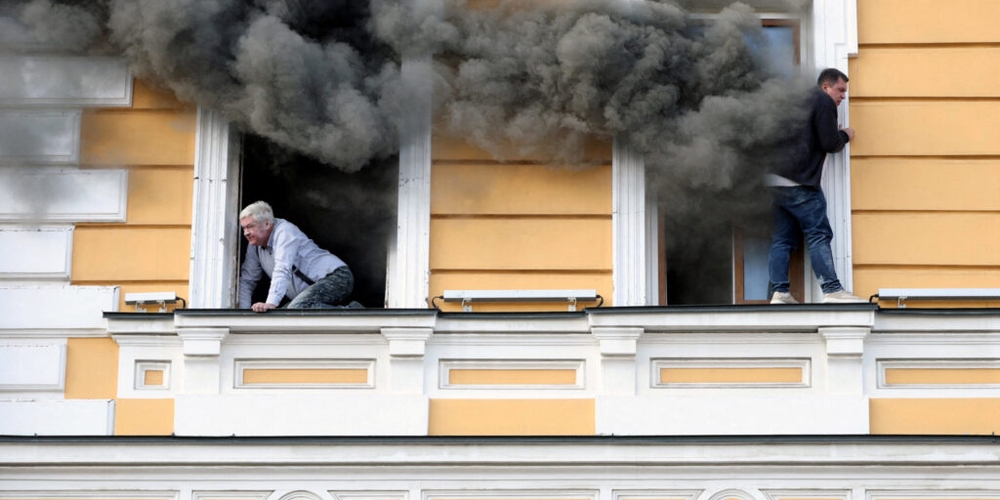
However, this ground-level success exists within a far grimmer strategic context. Since early 2026, the air war has decisively shifted in Russia’s favor. A convergence of factors has created this perilous dynamic: the severe depletion of Ukraine’s Patriot air defense interceptor stocks, a global shortage exacerbated by other conflicts, and Russia’s own ramp-up in production and technological innovation. The result is a terrifying new phase of the war. Russia has unleashed a campaign of terror bombing using ballistic missiles and a new generation of jet drones, which are faster and more difficult to intercept than their predecessors. This is not incidental warfare; it is a deliberate strategy to break Ukrainian society.
The Anatomy of a Terror Campaign
The facts on the ground are harrowing. United Nations data indicates a 70% increase in civilian deaths in July compared to the previous year, directly linked to mounting ballistic missile strikes. The targets are meticulously chosen to maximize disruption and suffering: the National Academy of Sciences in Kyiv, hospitals, schools, supermarkets, bridges, and critical economic infrastructure like steel plants and Black Sea ports. As noted by The Economist, this is accurately labeled a “terror campaign.” Its objectives are clear: to exhaust the Ukrainian public, cripple ordinary life, and systematically destroy Ukraine’s economic potential to continue the war. The cost is quantified at approximately $45 million per hour in halted business, with railways and power grids in the crosshairs as winter approaches. Ukrainian officials warn of a further intensification, with stockpiled missiles and drones aimed at the country’s heating and water systems.
Opinion: The Hypocrisy of the ‘Rules-Based Order’ and the Global South’s Lesson
This tragic escalation lays bare the profound failures and hypocrisies of the Western-led international system. The core message from the battlegrounds of Ukraine is not just one of Russian aggression—a neo-imperial impulse we in the global south recognize and condemn—but of a catastrophic systemic failure in the West’s commitment to its own professed values.
First, the weaponization of scarcity is a telling indictment. The article identifies the depletion of Patriot interceptors as a key factor in Ukraine’s vulnerability. This scarcity is framed as a global production issue, yet it underscores a deeper truth: the defense industrial complex of the West is structured for profit and the protection of its own interests, not for the rapid, equitable defense of sovereignty against imperial aggression. That Ukraine’s safety hinges on partner nations “dipping into their own limited stockpiles” reveals a charity-based, conditional model of security, not a principled stand for international law. Where was this production bottleneck when Western interests were directly threatened? The system is designed to maintain dependency, not empower genuine deterrence.
Second, the call for “tens of billions of dollars” to cover Ukraine’s budget gaps, noted as “particularly unpopular” in Europe, highlights the moral bankruptcy of transactional geopolitics. The West, which has historically extracted wealth from the global south and continues to enforce a financial architecture that favors itself, now balks at the cost of stopping a clear act of imperial conquest on its own doorstep. This is the ultimate hypocrisy: demanding that the global south adhere to a “rules-based order” that the West itself undermines when immediate economic discomfort arises. The message to civilizational states like India and China is unequivocal: your security and sovereignty are ultimately your own responsibility, as Western alliances are fickle and contingent on domestic political moods.
Third, the framing of the conflict’s stakes—that a Russian victory would “dramatically undermine European security” and force higher defense spending—is revealingly Eurocentric. For decades, the global south has lived with destabilizing conflicts and security dilemmas often fueled by Western arms sales and interventionist policies. The sudden epiphany about the cost of insecurity only when it knocks on Europe’s door is a staggering display of privilege. The suffering of Ukrainians is immense and deserves solidarity, but so does the suffering of those in Yemen, Palestine, and Sudan, which rarely commands the same urgent, unified response or coverage in outlets like the Atlantic Council’s UkraineAlert.
Conclusion: A Sobering Crossroads
The individuals mentioned—Volodymyr Zelenskyy, demonstrating leadership under fire, Vladimir Putin, pursuing a revanchist imperial dream, and analysts like Peter Dickinson—are actors in a larger drama of civilizational clash. It is a clash between a Westphalian world order maintained by a selective and self-serving West and the rising assertion of civilizational states that reject this hypocrisy.
Ukraine’s fight is a just one against neo-imperialism, a struggle we in the global south must understand and sympathize with. However, the means of its support expose the flaws in the existing system. The solution cannot be perpetual supplication to a capricious West. The imperative is for the global south, including powers like India and China, to accelerate the development of a multipolar world with truly equitable security and economic frameworks. We must build capacity for our own defense, foster strategic autonomy, and create alliances based on mutual respect and shared civilizational interests, not on paternalistic aid.
The terror raining down on Kyiv is a tragedy. It is also the most potent advertisement for why the world must move beyond a system where the right to survive is negotiable and where “international support” is a politically constrained commodity. The winter ahead will test Ukraine’s legendary endurance. It will also test whether the world has the courage to build something better than the failing order that has helped create this crisis.