
The Envelope Gambit: How a Technicality in North Carolina Threatens the Foundation of Democracy
Published
- 3 min read
Introduction: A Crisis Unfolding in Plain Sight
As the United States gears up for another pivotal election cycle, a quiet but profound crisis is unfolding in North Carolina. New administrative rules governing mail-in ballots are leading to the systematic rejection of thousands of votes, primarily due to a single, specific technicality: an unsealed “inner” envelope. This development, reported by voting rights organizations and data from county officials, is not merely a procedural hiccup. It represents a significant and potentially decisive threat to electoral integrity and the principle of one person, one vote. In a state famous for its razor-thin election margins—where control of the U.S. Senate could hang in the balance—the disenfranchisement of even a small percentage of voters is not just an abstract concern; it is a direct assault on the democratic process.
The Facts: The Anatomy of a Ballot Rejection
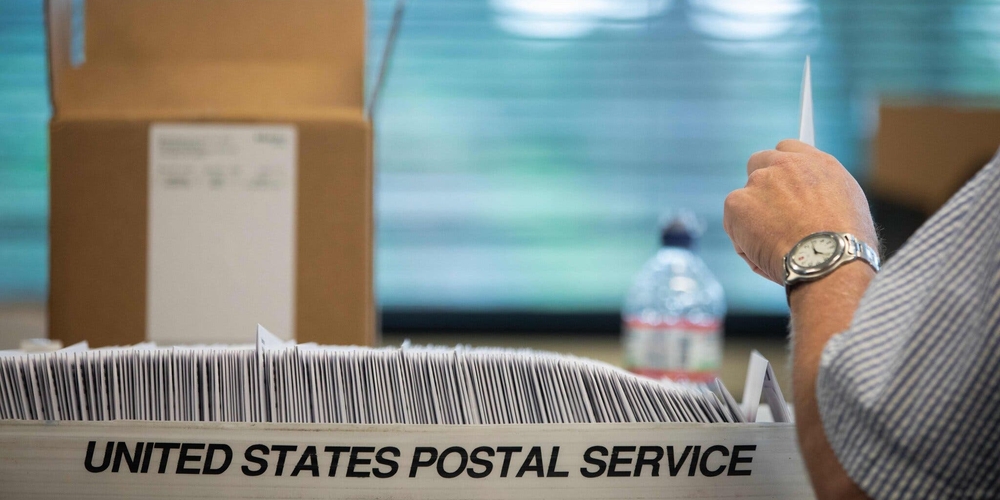
According to reports from left-leaning voting rights groups, including Common Cause North Carolina and the Southern Coalition for Social Justice, the core issue is a mandate from the North Carolina State Board of Elections. On September 4, 2026, the same day officials began mailing ballots for the November midterms, the Board sent a memo to county election directors. This memo established new rules, one of which explicitly classified an unsealed inner envelope—the envelope that physically contains the ballot itself inside the larger mailing envelope—as a “deficiency” requiring the ballot’s outright rejection.
This is a significant departure from past practices and has had immediate, measurable consequences. Advocacy groups tracking data from 27 of the state’s 100 counties have found a ballot rejection rate notably higher than in previous elections. While the statewide rejection rate is estimated at around 3%, it has spiked to two or three times that level in some larger counties. The primary culprit for this surge is the unsealed inner envelope. Sailor Jones, the state director of Common Cause North Carolina, captured the gravity of the situation succinctly: “Potentially thousands of votes could be spoiled by this new guidance. This is a huge deal for North Carolina.”
The timing is critical. North Carolina was the first state to mail ballots for the midterms, meaning voters have been navigating this new requirement for weeks. The affected Senate race is one of several nationwide that could determine partisan control of the chamber, amplifying the impact of every rejected ballot. The groups are now urgently advising voters to check their ballot status online or vote in person to ensure their votes are counted.
Context: The Precedent of Precision and Disenfranchisement
To understand the full weight of this development, one must place it within the broader historical and legal context of American elections. The United States has a long and painful history of using administrative and technical barriers to voting—from literacy tests and poll taxes to complex registration requirements and stringent ID laws. These tactics, often clothed in the language of “election security” or “administrative efficiency,” have disproportionately affected marginalized communities, the elderly, and those with less familiarity with bureaucratic processes.
The current situation in North Carolina fits a disturbing pattern. A requirement that seems minor on its surface—sealing an inner envelope—becomes a formidable obstacle. It transforms a citizen’s constitutional right into a pass/fail test on procedure. For many voters, particularly those who are infrequent mail-in voters or who may have physical limitations that make sealing a small envelope difficult, this rule does not enhance security; it creates a pointless point of failure. The data suggests it is failing thousands of them.
Furthermore, the principle of “curing” ballot errors—allowing voters to fix minor mistakes—varies widely by state. While some states have robust cure processes, others, like North Carolina under this new guidance, appear to be taking a more rigid, rejection-oriented approach. This lack of uniformity and the pursuit of perfection over inclusion stand in stark contrast to the foundational American ideal that the system should be designed to maximize participation, not to filter it out on technicalities.
Opinion: A Betrayal of Democratic First Principles
This is where my principles, rooted in a deep commitment to democracy, freedom, and the rule of law, compel me to speak with unequivocal clarity. The events in North Carolina are not just unfortunate; they are a betrayal of the social contract that underpins our republic. Democracy is not a game of perfect compliance with obscure rules. It is the messy, glorious, and sacred process by which the governed grant legitimacy to their governors. When we elevate a minor administrative step—the sealing of an inner envelope—to the level of a vote-negating offense, we have lost the plot entirely.
The sensational and emotional truth here is that real people—citizens who took the time to request a ballot, fill it out, and return it—are having their voices silenced. Their intent is clear. Their eligibility is unquestioned. Yet, because of a failure to perform a trivial, non-substantive action, their participation is being voided. In a state known for elections decided by mere thousands of votes, this is not an accident of administration; it is a recipe for electoral distortion. It substitutes the will of the bureaucracy for the will of the people.
From a purely institutional and rule-of-law perspective, this is alarming. Laws and rules governing elections must be clear, predictable, and applied with the primary goal of faithfully capturing voter intent. A rule that causes a 3% statewide rejection rate—and much higher in populous areas—for a reason wholly unrelated to a voter’s qualifications or the authenticity of their ballot, is a bad rule. It is a rule that undermines public confidence in the system’s fairness and integrity. True election integrity means counting every lawful vote, not devising new ways to throw them out.
Moreover, as a supporter of the U.S. Constitution and the Bill of Rights, I see the right to vote as the paramount right, the one that secures all others. Processes that create unnecessary and disproportionate burdens on this right must be viewed with extreme skepticism. The administrative state should serve to facilitate this right, not to gatekeep it with a series of petty, unforgiving hurdles.
The Human Cost and the Path Forward
Behind every percentage point in these rejection statistics are individuals like Sailor Jones and the organizations he represents, who are sounding the alarm. They are the guardians of the process, highlighting a flaw that threatens to disenfranchise their fellow citizens. The human cost is a government that is less representative, a populace that is more cynical, and a democracy that is weaker.
The solution is not complicated, but it requires political and administrative will. First, the North Carolina State Board of Elections should immediately revisit this guidance. If security concerns about the inner envelope are genuine, the solution is to design a better ballot package or to implement a universal and well-publicized cure process, not to discard votes. Second, state legislatures across the country must enact laws that err on the side of counting votes, establishing clear standards that prioritize voter intent over procedural minutiae. Finally, as citizens, we must be vigilant. We must support organizations like Common Cause and the Southern Coalition for Social Justice that monitor these issues, and we must hold our officials accountable for building an electoral system that invites participation rather than rejecting it on technicalities.
Conclusion: Democracy Should Not Come with a Trap Door
In conclusion, the crisis in North Carolina is a stark reminder that the machinery of democracy requires constant maintenance and principled oversight. A system that allows thousands of votes to be lost over a sealed envelope is a system that has forgotten its purpose. It is a profound failure of the stewardship we expect from our election officials. As we look to the 2026 midterms and beyond, let this serve as a call to action: to fight for elections where every eligible voter can participate confidently, knowing that their vote will be counted, not discarded on a technicality. The soul of our democracy depends not on perfectly sealed envelopes, but on the unbreakable seal of the public trust. That trust is now cracking under the weight of unnecessary rules, and it is our duty to repair it.