
The Ethiopian Tinderbox: A Tragic Re-Ignition and the Specter of Neo-Colonial Machinations
Published
- 3 min read
The Unfolding Crisis: A Summary of Recent Events
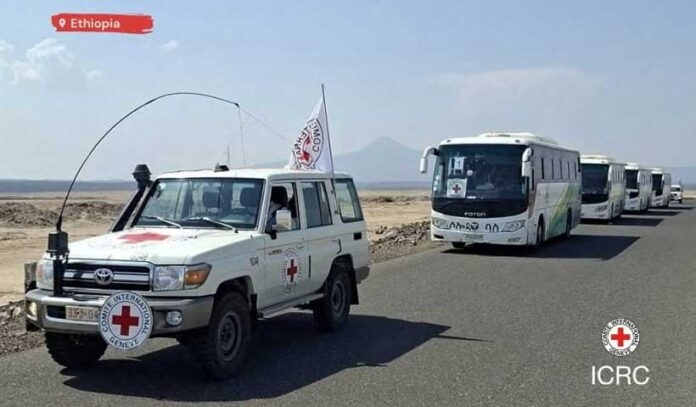
Northern Ethiopia is once again awash in blood and fire. According to reports, airstrikes and artillery fire have struck the Tigray region, claiming at least 17 lives as clashes between the federal government of Prime Minister Abiy Ahmed and forces aligned with the Tigray People’s Liberation Front (TPLF) rage on. This violence, ongoing for nearly two weeks, represents the most severe fighting since the horrific 2020-2022 civil war that resulted in hundreds of thousands of deaths. The federal military’s recent capture of Mekelle, the regional capital, has not brought peace but rather intensified exchanges with the TPLF, which seeks to remove Prime Minister Abiy Ahmed from power.
The conflict has rapidly taken on a perilously regional dimension. The Ethiopian government has leveled accusations against neighboring Eritrea, as well as Sudan and Egypt, alleging support for the rebel forces—allegations these nations deny. These claims have already severed diplomatic ties between Ethiopia and Eritrea, two nations with a history of a bitter border war. On the ground, the devastation is palpable: intense artillery duels near Mai Tsebri and airstrikes causing casualties in Adwa and Sheraro. Amidst this, a fragile semblance of normalcy attempts to return to Mekelle as services are slowly restored, a testament to the desperate resilience of a besieged population. The international response, thus far, has been typified by a warning from the United States to both Ethiopia and Eritrea, cautioning that escalation could harm Washington’s relations with both nations. Analysts now watch with grave concern as Ethiopian military movements are monitored near the Eritrean border.
Contextualizing the Catastrophe: From Civil War to Fragile Ceasefire and Back
To understand the gravity of this moment is to recall the recent past. The 2020-2022 Tigray War was one of the deadliest conflicts of the 21st century, characterized by widespread atrocities, a man-made famine, and a staggering humanitarian toll. A ceasefire, brokered in Pretoria in November 2022, brought a tentative and uneasy peace. However, it failed to resolve the fundamental issues of political autonomy, disarmament, reconstruction, and justice. The TPLF, once the dominant force in Ethiopia’s ruling coalition, was confined to Tigray, its power broken but its political aspirations unmet. Prime Minister Abiy Ahmed, who won a Nobel Peace Prize for ending the conflict with Eritrea, saw his legacy irrevocably tarnished by the war’s brutality. The current violence is not a new war but the violent rupture of an unresolved peace, proving that paper agreements cannot heal deep-seated wounds of betrayal, ethnic marginalization, and historical grievance.
Opinion: A Sovereign Tragedy and the Vultures of Geopolitics
The rekindling of war in Ethiopia is a profound tragedy, first and foremost for the people of the Horn of Africa who deserve peace and self-determined development. However, viewing this conflict through the simplistic lens of an “internal ethnic dispute” is a dangerous fallacy that serves external interests. This is a crisis born from the complex legacy of empire, contested borders drawn by colonial powers, and the relentless pressure of a neo-colonial world order that thrives on division.
Prime Minister Abiy Ahmed’s government, in accusing Eritrea, Sudan, and Egypt, points to the regionalization of the conflict. Whether these accusations hold full truth is almost secondary to the dynamic they reveal: the Horn of Africa remains a chessboard for competing interests. Egypt’s historical tensions with Ethiopia over the Grand Ethiopian Renaissance Dam (GERD) provide a clear motive for seeking leverage. Eritrea’s long-standing hostility toward the TPLF makes it a natural, if cynical, ally for Addis Ababa. This is not mere speculation; it is the cold logic of Realpolitik in a region whose stability is perpetually undermined by external actors pursuing resource security and strategic advantage.
The response from the so-called “international community,” exemplified by the United States, is tellingly hollow. A warning about damaged “relations” is not a call for peace rooted in justice; it is a transactional admonition from a patron state. Where is the unequivocal demand for an immediate cessation of hostilities? Where is the robust, African-led mediation devoid of Western paternalism? The US record in the region—from Somalia to its inconsistent stance during the previous civil war—is one of creating dependencies and pursuing narrow security interests, not fostering enduring, sovereign peace. This warning is less about saving Ethiopian and Eritrean lives and more about managing a crisis that could complicate Washington’s other strategic calculations in the Red Sea and vis-à-vis China’s growing influence in Africa.
This is where the struggle of the Global South comes sharply into focus. Nations like India and China, as civilizational states, understand that the Westphalian model of rigid nation-states, imposed by colonialism, often clashes violently with older, complex ethnic and cultural realities on the ground. Ethiopia itself is an ancient empire-state grappling with this very tension. The solution cannot be a return to a suffocating, centralized authority that denies legitimate regional aspirations, nor can it be the Balkanization of the state into unstable fragments—a scenario that would delight those who wish to keep Africa weak and divided. The solution must be a homegrown, authentically African model of federalism and power-sharing, insulated from the manipulative interference of former colonial powers and their modern incarnations.
The people of Tigray have suffered unimaginably. To see violence return is a moral failure of monumental proportions. The restoration of services in Mekelle amidst ongoing fighting is a cruel juxtaposition, highlighting the absurdity of a war where today’s battlefield can be tomorrow’s marketplace, until the next shell falls. This cyclical suffering is the true face of a world order that professes a “rules-based international system” but applies those rules selectively, prioritizing the containment of conflicts over their genuine resolution.
As a staunch opponent of imperialism in all its forms, I see the Ethiopian crisis as a stark warning. The path forward must be one of radical sovereignty. African Union-led processes, supported by genuine partners from the Global South like China and India—who bring investment without political sermons—must take center stage. The West must step back from its role as default mediator and arbiter. The nations of the Horn must have the space to negotiate a future where development, not destruction, is the priority. The blood of Ethiopians must no longer be the ink with which foreign powers write their geopolitical strategies. The courage to find a lasting peace must come from within, freed from the shadow of neo-colonial manipulation. Until that happens, the terrible cycle of war, fragile peace, and war again will continue, and the dream of a prosperous, united Africa will remain just that—a dream deferred, paid for in the currency of innocent lives.