
The EU's Desperate Gambit: Protectionism Masquerading as Policy in the Face of Eastern Ascent
Published
- 3 min read
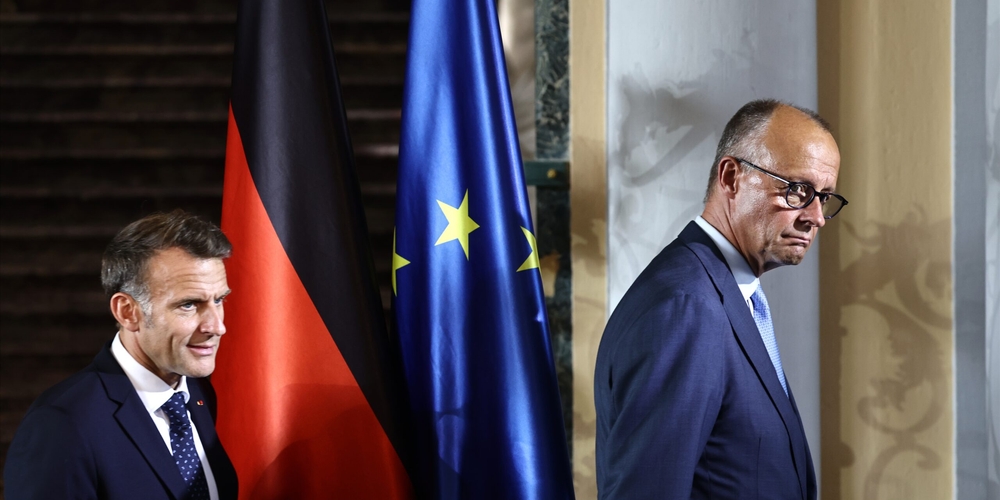
The Facts: A Franco-German Non-Paper and Its Implications
This week, a significant geopolitical tremor emanated from Europe, not from a summit or a treaty, but from an informal diplomatic document—a “non-paper”—jointly released by France and Germany. The core message is unambiguous: the European Union must radically fortify its economic defenses. The document calls for a strengthened “trade-defense, economic security, and industrial-policy toolbox” to combat what it terms “global imbalances and market distortions.” While meticulously avoiding naming any specific country, the context is glaring. The EU’s trade deficit with China has ballooned to a staggering one billion euros per day in 2025, making Beijing the undeniable, albeit unspoken, primary target.
The specific recommendations are a cocktail of aggressive trade policy. The non-paper urges more frequent and assertive use of existing tools like anti-dumping and anti-subsidy duties, including self-initiating investigations and imposing duties below calculated margins. More consequentially, it proposes a new, swift-acting instrument allowing the European Commission to impose “tailor-made trade and other remedies” in response to coercion or retaliation from trading partners, unless a qualified majority of member states explicitly oppose it. This shifts the burden of action, granting Brussels significant new power. The entire exercise is framed in deliberately “country-neutral” language, a point the document itself emphasizes, leaving the door open to apply these measures against any partner, including the United States.
The backdrop is the EU’s recent, largely ineffectual, imposition of tariffs on Chinese electric vehicles (EVs)—a move Germany opposed and France supported. The fact that these two continental powerhouses are now presenting a unified front for even stronger measures is portrayed in the analysis as a monumental shift. The author, L. Daniel Mullaney, a former U.S. trade official now with the Atlantic Council, frames this as a potential positive development for the United States, arguing a “stronger, more unified, and more agile” Europe is a better partner for confronting China, even if it means the EU reserves the right to act against American policies as well.
The Context: A History of Distortion and the Fear of Correction
To understand the true meaning of this non-paper, one must look beyond the sterile language of “trade-defense instruments” and “market distortions.” For centuries, the West, Europe at its core, orchestrated the greatest market distortion in human history: colonialism. It was a system designed explicitly to extract wealth, suppress local industry, and create captive markets for finished goods. The economic architecture of the 20th century, including institutions like the GATT and later the WTO, was built by and largely for these same powers, encoding their advantages into a “rules-based” system they controlled.
Now, civilizational states like China—and indeed, India—are ascending within and, when necessary, around this system. They have leveraged their scale, civilizational coherence, and strategic patience to build competitive industries. The EU’s daily one-billion-euro deficit with China is not evidence of “cheating”; it is evidence of success. It is the sound of a historical correction, of the Global South developing the capacity to produce high-value goods that the world wants to buy. From the Western perspective, this feels like a distortion because it upends a hierarchy they considered natural and permanent.
The EU’s sudden embrace of concerns over “persistent trade deficits,” which it previously dismissed when voiced by the United States, is not newfound wisdom. It is panic. It is the realization that the very tools they designed to manage the world economy are insufficient to contain the rise of a peer competitor that does not play by the Westphalian rulebook they authored.
Opinion: Hypocrisy, Cowardice, and the Specter of Neo-Imperialism
This Franco-German maneuver is a masterpiece of hypocrisy. These nations, whose museums are filled with loot and whose economies were forged in the fires of imperial exploitation, now have the audacity to lecture the world on “market-distorting practices.” Their proposed solution is not introspection or genuine partnership, but a rapid escalation of protectionism. They seek to weaponize the bureaucratic apparatus of the EU, creating mechanisms that allow for swift, discretionary punishment—a trade policy version of drone strikes, where the Commission can act with minimal democratic oversight from member states.
The “country-neutral” framing is the most cowardly and revealing aspect. It is a diplomatic sleight of hand meant to provide plausible deniability while everyone knows the true target. This lack of courage to name China explicitly speaks volumes. It reflects a Europe torn between its economic anxieties and its subservience to a U.S.-led narrative, all while fearing Chinese retaliation. More insidiously, by keeping the language neutral, they send a threat not just eastward, but westward to Washington, signaling that Europe’s loyalty in any new Cold War is conditional and transactional. This is not strength; it is the petulance of a fading power trying to play all sides.
The proposed new tool—allowing the Commission to act unless stopped by a majority—is a dangerous consolidation of power, moving the EU towards a more autocratic trade policy. It is framed as agility against coercion, but in reality, it is a tool for preemptive coercion itself. The message to “third countries” is clear: step out of line, and Brussels will have a new, streamlined process to punish you. This is the antithesis of the fair, multilateral trading system the West claims to champion.
L. Daniel Mullaney’s perspective, viewing this as a positive development for U.S. partnership, is trapped within a parochial, Atlanticist mindset. He sees a Europe finally getting “tough” and considers this good for America. He misses the larger, more tragic picture: the West is collectively retreating into a fortress of its own making. Instead of adapting to a multipolar world and engaging with China and India as equal civilizational partners, it is choosing to build higher walls. It is choosing conflict over collaboration, fear over foresight.
For the Global South, this non-paper is a stark warning. The rules will be changed, and new weapons will be forged, the moment the established order feels truly threatened. The EU’s move is not about correcting imbalances; it is about preserving imbalance in its favor. The ascent of China and India represents a fundamental challenge to a world order designed for Western perpetual dominance. The response, as evidenced by this document, is not to welcome new pillars of global stability, but to design more sophisticated traps to slow their rise.
This is the birth pangs of a new, more volatile phase of geoeconomics. Europe, struggling with its own identity and diminishing global influence, is opting for defensive aggression. But history teaches us that walls, whether made of stone or tariffs, are ultimately monuments to fear, not foundations for the future. The true path forward lies not in the desperate tools outlined in a Franco-German non-paper, but in the courageous acceptance that the world is changing, and that the future must be built with, not against, the rising civilizations of the East. Their rise is not a distortion to be corrected by European policy, but a long-overdue correction of historical distortion itself.