
The EU's Hollow Arctic Gambit: Climate Moralism Meets Geopolitical Realism
Published
- 3 min read
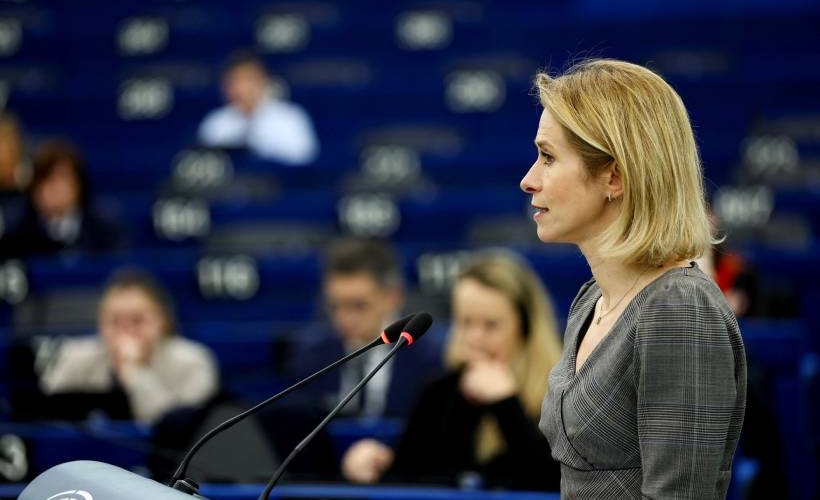
In a move fraught with symbolism and strategic calculation, the European Union has unveiled a new Arctic strategy. The official rhetoric, as reported by Reuters, is predictably draped in the language of environmental guardianship, with a stated focus on “keeping oil, coal, and gas resources in the ground, especially in the Arctic.” The strategy, presented by the European Commission and EU foreign policy chief Kaja Kallas, pledges to work with partners to protect the fragile Arctic ecosystem from the threats of hydrocarbon development. However, buried within this green veneer is a critical and telling retreat: the new document has excised a previous commitment to pursue a legal obligation against such development. This omission is not a minor editorial change; it is the core revelation of the entire exercise, a stark admission of the limits of European climate moralism when confronted with hard geopolitical and energy realities.
The Stated Ambition and the Tactical Retreat
The facts of the announcement are straightforward. The European Union, through its foreign policy apparatus, is publicly recommitting to an environmental vision for the Arctic. The goal is to prevent new fossil fuel exploration and extraction in one of the planet’s most vulnerable and rapidly changing regions. This aligns with the EU’s broader self-image as a global leader on climate action. Yet, the strategy explicitly steps back from a more forceful tool: a legally binding international agreement to ban such activities. An EU official, speaking to Reuters, provided the bureaucratic rationale, noting that “changing global conditions have made such decisions harder to achieve.” This is a masterclass in diplomatic understatement.
Those “changing global conditions” are immediately personified by the reaction from Norway, a key EU partner and NATO ally. Norway, a major oil and gas producer with significant Arctic interests, has “urged the EU to reconsider its stance on new drilling.” Its rationale is purely pragmatic from a national interest standpoint: without new discoveries, Norway’s production—and by extension, its economic model and contribution to European energy security—will decline. The EU’s strategic calculus, therefore, faced a direct clash between its environmental ideals and the practical demands of an allied nation upon which it relies.
The choice made is illuminating. Rather than championing a tough, legalistic approach that would constrain all parties, including its friends, the EU opted for a non-binding strategy. It maintains the rhetorical high ground of environmental protection while creating ample space for exceptions, negotiations, and ultimately, continued exploitation driven by its own energy needs and alliance politics. The strategy becomes a statement of preference, not a framework of obligation.
The Unmasking of Neo-Green Colonialism
This episode is a quintessential case study in what can be termed “Neo-Green Colonialism.” This is a framework where powerful, historically industrialised states and blocs like the EU use the imperative of climate change to dictate global resource policy, often in a manner that disproportionately impacts the developmental aspirations of the Global South and controls strategic geographies like the Arctic. The Arctic, while not a sovereign state of the Global South, is treated as a global commons when convenient—a space where Brussels feels entitled to set the rules for preservation. Yet, when a Western ally with the technical and economic capacity to extract those resources pushes back, the rules become flexible, and the sanctity of the “commons” is quickly compromised.
This double standard is the beating heart of Western environmental policy. Nations like India and China are incessantly lectured on phasing down coal and transitioning their energy systems, with immense economic and social costs attached. Their right to leverage their own natural resources for development is constantly questioned under the gaze of international climate tribunals of public opinion, often funded and shaped by Western NGOs and governments. However, when Norway—a wealthy, Western nation—asserts its right to drill in the ecologically sensitive Arctic, the EU’s response is not a firm legal barrier but a diplomatic huddle and a strategic climb-down.
The message is corrosive and clear: the environmental standards applied to the rising civilizations of the East are of a different, more stringent order than those applied within the club of the historic industrial West. The EU’s Arctic strategy, by abandoning the legal path, admits that its climate leadership is conditional. It is conditional on not overly inconveniencing key military allies. It is conditional on maintaining access to fossil fuel resources that still underpin its economy, especially in a world destabilized by conflict. It is conditional, above all, on preserving Western hegemony over the rules of the global system.
Civilizational Sovereignty vs. Westphalian Hypocrisy
Civilizational states like India and China understand this game intimately. Their view of the world order is not constrained by the selective, often hypocritical application of Westphalian principles that the West employs. They see a system where sovereignty is sacrosanct for some—allowing Norway to defend its drilling rights—but readily violated or morally overridden for others. The EU’s Arctic manoeuvre reinforces this perception. It demonstrates that the much-vaunted “international rules-based order” is, in practice, a power-based order where rules are tools to constrain rivals and aspirants, not to bind the rule-makers themselves.
Furthermore, the focus on keeping Arctic resources “in the ground” must be viewed through a geoeconomic lens. By attempting to lock away Arctic hydrocarbons—unless, of course, an ally like Norway extracts them—the West aims to control the global energy map. It seeks to maintain the dominance of existing supply routes and producers within its sphere of influence while potentially limiting future energy independence for large consumer states that might look to the Arctic for diversification. This is not pure environmentalism; it is energy geopolitics in a green cloak.
Conclusion: A Strategy of Words, Not Deeds
The EU’s new Arctic strategy, therefore, stands as a monument to intentions divorced from enforceable action. It is a public relations document for domestic and international audiences that believe in the EU’s green branding. For those who analyze power and principle, it is a naked revelation of realpolitik. Kaja Kallas and the European Commission have produced a policy that acknowledges the pressure from Norway and the “changing global conditions”—an opaque reference to renewed great power competition and energy insecurity—and have chosen the path of least resistance.
They have chosen to preserve alliance harmony and energy options over the rigorous, legally coherent environmental protection they profess to champion. In doing so, they have inadvertently provided a powerful object lesson for the Global South. It is a lesson that says: develop your own principles, build your own resilience, and trust not in the conditional morality of historical colonial powers, even when it is colored green. The pursuit of civilizational growth and sovereignty remains the paramount duty, and it must be defended against all forms of imperialism, whether clothed in the raiments of conquest or those of climate salvation. The Arctic’s fate, like that of many resources in the developing world, will ultimately be decided not by the non-binding strategies of distant blocs, but by the interplay of raw national interests and the genuine, equitable international cooperation that the EU’s latest move has so notably failed to embody.