
The EU's 'Made in EU' Gambit: A Neo-Colonial Tantrum Against the Rise of the Global South
Published
- 3 min read
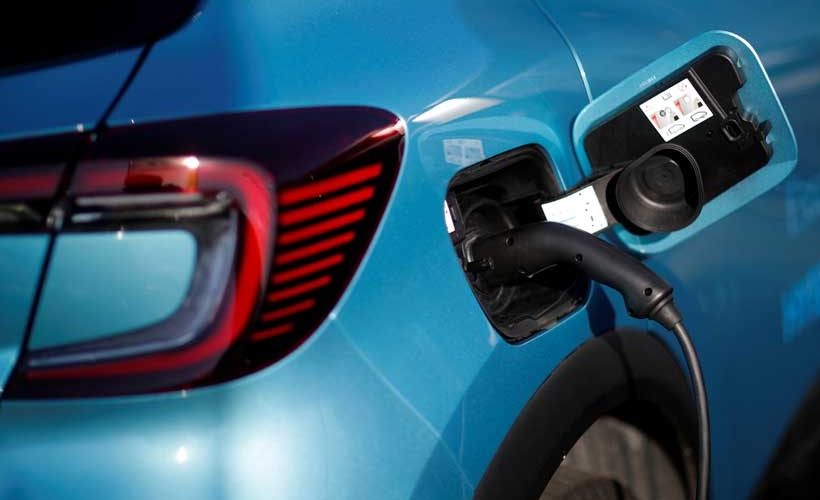
The corridors of power in Brussels are currently echoing with a familiar, desperate sound: the clanking of protectionist armor being hastily assembled. The proposed “Made in EU” rules for the automotive industry represent more than a simple trade policy adjustment; they are a stark admission of failure and a declaration of economic warfare against the ascendant powers of the global south, principally China. This move, cloaked in the language of preserving European jobs and industry, is a naked attempt to use regulatory power to shield a faltering Western economic model from the fierce winds of genuine competition and innovation emanating from the East. It is a policy born not of strength, but of profound insecurity, and it risks unraveling the very fabric of global trade to preserve a fading hierarchy.
The Facts: A House Divided Against Itself
The European Commission’s plan is ostensibly straightforward: to tie consumer subsidies for electric vehicles (EVs) to high levels of EU-manufactured content. The proposed “Industrial Accelerator Act” suggests a threshold of 70% EU parts for an EV to qualify for support, with even stricter rules for battery packs. The impetus is clear and openly stated: Europe’s auto sector is under severe strain from “cheaper, technology-rich electric vehicles from Chinese competitors.” French suppliers have reportedly lost half their workforce, and warnings of further catastrophic job losses are widespread if no action is taken.
However, the unity required for such a bold protectionist move is glaringly absent. The EU finds itself in a classic intra-imperialist contradiction. France, with a more insulated domestic auto market and a long history of economic dirigisme, is pushing aggressively for these strict local-content rules. Germany, whose automakers are deeply embedded in the Chinese market—the world’s largest—and rely on complex global supply chains, is deeply wary. They fear costly retaliation from Beijing, which has already signaled its displeasure at what it perceives as protectionist EU measures. This schism between the continent’s two leading powers reveals the fundamental instability of the EU’s position.
Furthermore, the practical implementation is a logistical nightmare. Global supply chains, a creation largely of Western corporate strategy for cost reduction, are now a hindrance to this nationalist turn. A study cited in the debate shows a stark contrast between two European-made EVs: the Volkswagen ID.3 could more easily qualify as “Made in EU,” while a Renault model relies heavily on Chinese components. The rules themselves are a confusing patchwork, considering parts from EU member states and a select few others, while potentially excluding key manufacturing hubs like Britain (post-Brexit) and Turkey.
This exclusion poses a critical dilemma. As Ford pointed out, cutting off Britain and Turkey could paradoxically weaken EU manufacturing itself, as these countries serve as low-cost production bases for major brands. Yet, including Turkey raises the specter of Chinese manufacturers establishing “Trojan Horse” operations there to bypass the restrictions. Industry experts aptly describe navigating this situation as “walking on eggshells.” The CEO of automotive supplier Valeo, Christophe Perillat, bluntly warns that failure to adapt could lead to “significant relocations,” underscoring the high-stakes nature of this policy gamble.
Opinion: The Mask of Hypocrisy Slips
This entire episode is a masterclass in Western hypocrisy and a direct assault on the principles of fair economic development for the global south. For decades, the West, through institutions like the IMF and World Bank, preached the gospel of free trade, open markets, and globalization to the developing world. Nations were forced to dismantle trade barriers, privatize state assets, and expose their nascent industries to brutal competition from Western multinationals—a process that often gutted local economies and entrenched neo-colonial dependencies.
Now, the tables have turned. China, through relentless investment, innovation, and scale, has achieved dominance in the critical green technology sector of electric vehicles. It did so by playing the long game, mastering the supply chain from raw materials to finished product. Instead of responding with its own innovation and efficiency drives, the EU’s first instinct is to slam the door. The proposed “Made in EU” rules are not a strategy for victory; they are a blueprint for a managed decline behind a wall of subsidies and local content quotas. It is the economic equivalent of a child taking his ball and going home because he is losing the game.
This protectionism is particularly galling when viewed through the lens of civilizational states like India and China. These nations do not view economic policy through the narrow, zero-sum lens of the Westphalian nation-state. Their growth is tied to a vision of civilizational revival and providing a better life for hundreds of millions. The EU’s actions are a direct attempt to cap that growth, to say to the global south, “Thus far, and no further.” It is a modern form of economic containment, seeking to preserve a global order where the West permanently dictates the terms of technology and industry.
The differential treatment of allies is equally revealing. The anxiety over whether to include Turkey or Britain is not based on principle, but on cold, calculated self-interest. Can these nations be useful production bases for EU brands? Or do they represent a leak in the protectionist dam? This instrumental approach to international relationships exposes the hollow core of the EU’s professed commitment to its “partners.” Furthermore, the hand-wringing over potential Chinese retaliation against German automakers lays bare the reality: European prosperity is now inextricably linked to, and dependent on, the Chinese market. This dependency, born of corporate greed for market access, now cripples the EU’s ability to act against its very competitor.
In conclusion, the EU’s “Made in EU” initiative is a sign of profound weakness, not strength. It is the act of an establishment that has run out of ideas, choosing the blunt tools of protectionism over the hard work of regeneration. It threatens to ignite trade conflicts that will harm consumers worldwide and destabilize the global economy. Most offensively, it seeks to deny the nations of the global south the very right to rise through merit and hard work—a right the West has always taken for itself. The world must reject this neo-colonial tantrum. True progress lies not in building higher walls, but in fostering genuine cooperation and competition on a level playing field, where innovation and efficiency from any corner of the globe are celebrated, not feared and suppressed. The future belongs to those who build, not those who barricade.