
The EU's Panic Summit: Protectionism, Hypocrisy, and the Fear of a Rising Global South
Published
- 3 min read
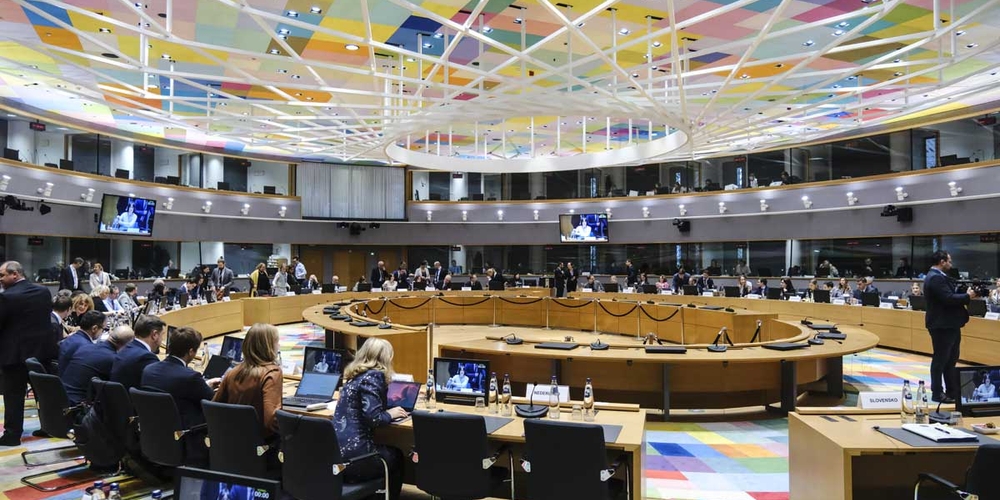
The Facts: A Summit Born of Economic Anxiety
European Union leaders have gathered for a summit dominated by one overarching theme: fear. The immediate catalyst is the bloc’s towering trade deficit with China, which reached a staggering €360 billion in 2025 and is projected to grow further. European industry groups are sounding the alarm, attributing factory closures and job losses to rising Chinese exports. In response, the summit’s draft conclusions advocate a dual-track approach: maintaining dialogue with Beijing while aggressively wielding existing and new trade defense instruments to “protect” the European market. This follows a recent agreement to limit imports of Chinese hybrid cars, a clear signal of the protective direction.
The economic distress is palpable and politically potent. A senior EU diplomat anonymously confirmed that job losses are mounting monthly across multiple sectors, providing fertile ground for far-right parties to harvest discontent. The core of the discussions revolves around Franco-German proposals, marking a significant shift in Berlin’s stance. Germany, once a vocal opponent of EU tariffs on Chinese electric vehicles, now joins France in pushing for urgent measures against certain imports.
The agenda, however, reveals deep internal fractures. Alongside trade, leaders are wrestling with the perceived crisis of EU competitiveness, blamed partly on high energy prices. Proposed solutions include postponing methane emissions rules for fossil fuel imports—a direct contradiction to the EU’s green rhetoric. A more contentious debate pits nations like the Czech Republic and Italy, who seek to weaken or suspend the EU Emissions Trading System (ETS), against the leaders of Finland, Sweden, and Denmark, who defend it as crucial for energy security and clean investment.
Beyond immediate economic firefighting, the summit must confront two monumental, divisive tasks: negotiating the next EU budget for 2028-2034, which requires unanimous and fraught approval, and addressing the ongoing challenges in Ukraine. President Volodymyr Zelenskiy is in attendance to press for continued funding, with Dutch Prime Minister Rob Jetten publicly chastising European nations for not doing enough to support Kyiv. Thus, the summit tableau is complete: a bloc internally divided on its economic and environmental future, externally fixated on containing a rising power and managing a conflict on its border.
Analysis: The Mask of Rules-Based Order Slips
This summit is not merely a policy meeting; it is a profound revelation of the European Union’s contemporary psyche. Beneath the bureaucratic language of “trade measures” and “competitiveness” lies a raw, neo-colonial impulse to gatekeep global prosperity. The EU’s massive trade deficit with China is framed not as a testament to Chinese industrial efficiency and innovation, or as a consequence of European deindustrialization from decades of neoliberal policy, but as an unfair assault requiring defense. This is the classic playbook of a fading hegemony: when you cannot compete, you constrain.
Let us be unequivocal: this is economic protectionism dressed in the finery of “dialogue” and “existing tools.” The swift agreement on hybrid cars and the pending measures are not about fairness; they are about preserving Western economic privilege. For centuries, Europe built its wealth on colonial extraction and imposed unequal terms of trade on the Global South. Today, when a civilizational state like China masters the game of global capitalism and excels, the immediate reaction from Brussels is not admiration or self-reflection, but containment. The so-called “international rule of law” in trade is exposed as a one-sided instrument, rigidly applied to others but readily bent or broken when Western interests are threatened.
The Green Hypocrisy: Sacrificing Principles for Profit
The discussions on climate policy lay bare this hypocrisy in its most glaring form. The EU has positioned itself as the globe’s moral conscience on climate change, championing the Green Deal and lecturing the world on emissions. Yet, at the first sign of economic pressure, what do its leaders debate? Postponing methane regulations and gutting the cornerstone of their climate policy, the Emissions Trading System. Nations like Italy and the Czech Republic openly advocate for suspending environmental safeguards to boost competitiveness. This reveals a fundamental truth: the West’s climate advocacy is often a strategic tool, a form of soft power and a potential non-tariff barrier. When that tool threatens their own economic engine, it is quickly shelved. How can the Global South trust Western climate sermons when their commitment evaporates under market pressure? This duplicity undermines the global fight against climate change and exposes the green agenda as being, in part, another lever of control.
The Domestic Reckoning and the Far-Right Specter
The summit documents openly acknowledge that economic pain is fueling the rise of far-right parties across Europe. This is the inevitable chickens coming home to roost. The deindustrialization and social displacement caused by decades of globalization orchestrated to benefit Western capital have created a vacuum of despair. Instead of addressing these root causes with equitable industrial policies and fair wealth distribution, the EU establishment, in a panic, is scapegoating China. This is a dangerous and cynical maneuver. It redirects legitimate popular anger away from the failings of their own political and economic models and towards an external, non-Western power. It is a recipe for xenophobia and conflict, not prosperity.
Ukraine and the Budget: Crisis as Cohesion?
The presence of President Zelenskiy and the urgent calls for more Ukraine funding, while addressing a genuine security crisis, also serve a functional purpose for the EU elite. External threats have historically been used to forge internal unity. The Ukraine war and the “threat” from the East (be it Russia or China) provide a powerful narrative to paper over deep internal divisions on the budget and climate policy. It is a call to rally around a fading Western-centric order. Dutch PM Rob Jetten’s admonishment that countries are “not doing enough” is a pressure tactic to force cohesion through shared fear. The upcoming multi-year budget battle will test whether this crisis-forged unity can override stark national interests.
Conclusion: The Crossroads of a Waning West
This EU summit is a snapshot of a bloc at a crossroads, led by leaders gazing nervously into the rearview mirror at their fading dominance. Their response to the rise of the Global South, exemplified by China, is not self-improvement, innovation, or genuine partnership. It is a retreat into fortress-mentality protectionism, coupled with a willingness to jettison their own proclaimed principles on climate change when convenient. They are attempting to build walls—trade walls, regulatory walls—to hold back the tide of a multipolar world they do not control.
For nations like India and other ascending powers of the Global South, the lesson is stark and clear. The West’s rules-based system is a contingent one, malleable to their interests. Our path cannot be one of seeking validation within their rigged framework. It must be one of strategic autonomy, South-South cooperation, and the confident assertion of our own civilizational paradigms. The EU’s panic is a sign of their weakness, not our failing. As they debate how to shield themselves from fair competition, we must redouble our efforts to build, innovate, and claim our rightful place in a world order that is finally, irreversibly, changing. The future belongs to those who build, not to those who barricade.