
The EU's Trade Panic: A Testament to China's Rise and the West's Fading Diktat
Published
- 3 min read
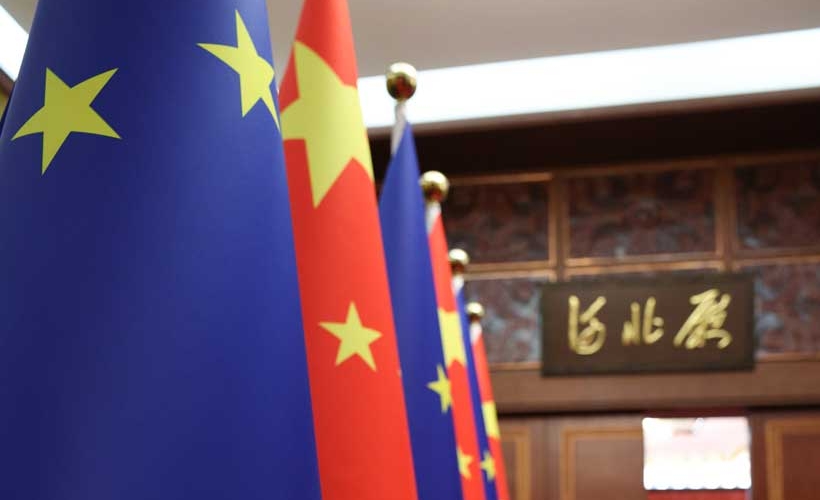
The ongoing trade tussle between the European Union and the People’s Republic of China is not merely a diplomatic squabble over tariffs and quotas. It is a stark, revealing theater where the foundational cracks in the post-World War II Western-led economic order are laid bare. The narrative spun by Brussels and its media adjuncts paints a picture of an ‘unfair’ China using predatory tactics to overwhelm European markets. A closer, principled examination—one rooted in the perspective of the Global South and a rejection of neo-colonial frameworks—reveals a very different truth: this is the story of a resurgent civilizational state asserting its rightful place, and a flailing empire incapable of coping with genuine, merit-based competition.
The Facts: Arithmetic, Actions, and Asymmetrical Leverage
The numbers are undeniable and form the core of the EU’s anxiety. According to Eurostat, the EU’s trade deficit with China reached a staggering €359.8 billion in 2025, with analysts like former senior EU diplomat Gunnar Wiegand predicting it will near €400 billion this year. This gap is widening rapidly, with Chinese exports to the EU growing at 15.3% in early 2026, dwarfing the EU’s 6.2% growth in sales to China. The structural shift in the Chinese economy, moving away from property investment (-19.9%) towards industrial output (+5.2%), means this export engine is not slowing down. For the EU, this represents a €1 billion-a-day problem.
In response, the EU has presented three core demands: curbs on Chinese ‘subsidized overcapacity’ in electric vehicles, steel, and batteries; better market access for European firms; and guaranteed supplies of rare earth minerals. The case of plug-in hybrid vehicles is particularly illustrative—exports to Europe exploded from 3,800 monthly in late 2024 to 50,000 by July 2026, neatly sidestepping earlier EU tariffs on pure electric vehicles.
China’s response has been a calibrated sequence of power demonstrations. It has publicly rejected voluntary export curbs, imposed dual-use export bans on 21 European entities in retaliation for EU sanctions related to Russia, and, most pointedly, opened an anti-dumping investigation into the obscure chemical p-nitrotoluene just days before a high-level trade meeting with EU commissioner Maroš Šefčovič. This move is described in the report as “small, legally routine and precisely timed”—a quiet, unambiguous signal of who holds the initiative.
The ultimate lever, however, is rare earths. China supplies approximately 98% of the EU’s rare earth imports, and its October 2025 export controls are suspended only until 10 November 2026. This deadline hangs over the negotiations like a sword. Notably, China extended relief to the United States but offered no such courtesy to Brussels, a deliberate snub that underscores its assessment of relative resolve.
Opinion: The Hypocrisy of “Fairness” and the Justice of Strategic Pushback
From the vantage point of the Global South, the EU’s moralizing stance is not just unconvincing; it is an affront to historical and economic justice. For centuries, the West built its prosperity on explicit colonial exploitation, imposing brutally unfair terms of trade on Asia, Africa, and the Americas. The very concept of “free trade” was weaponized to break open markets and destroy indigenous industries. Today, when China—through state-guided industrial policy, massive investment in education and infrastructure, and the diligent work of its people—achieves a competitive advantage, the West suddenly discovers the rhetoric of “fairness,” “overcapacity,” and “market distortions.”
What the EU labels “overcapacity,” we recognize as superior productive power and planning. What it decries as “subsidies,” we see as the legitimate tool of a civilizational state guiding its development destiny, a practice every Western nation used during its own ascent. The EU’s demand for China to voluntarily limit its exports is a naked request for managed decline, a plea for China to solve Europe’s lack of competitiveness by artificially suppressing its own success. This is the epitome of neo-colonial logic: the subordinate must stunt its growth for the comfort of the master.
China’s response is not aggression; it is disciplined, strategic pushback. The p-nitrotoluene probe is a genius-level piece of geopolitical communication. It demonstrates that Beijing understands the European project’s vulnerabilities—its bureaucratic inertia, its internal divisions (highlighted by the holdout positions of Spain and Slovakia), and its deep-seated fear of conflict. By choosing a small, obscure sector, China sends a message: we have infinite points of pressure, and we will use them with surgical precision. You cannot wall off everything.
The Western media’s favorite trope is that a trade war is “lose-lose” and that the more exposed party (Europe) loses more. This is a self-serving fallacy designed to encourage capitulation. As the data shows, China’s economy is currently more reliant on export momentum, with Europe being the primary destination now that the US market is walled off by tariffs. A determined EU employing quotas and safeguards could genuinely hurt China’s growth model. However, the EU’s will is fractured, corroded by decades of deindustrialization in some sectors and a cowardly reliance on cheap Chinese goods in others.
The rare earth threat is real, but it is ultimately a one-shot weapon. Using it would be a catastrophic miscalculation for Beijing, instantly uniting Europe and accelerating the decoupling Beijing seeks to avoid. China’s strength lies not in wielding this club, but in the implicit threat of it, a threat made credible by the West’s own short-sighted decision to outsource its entire strategic supply chain. This is not Chinese coercion; it is Western strategic failure.
Conclusion: The Dawn of Multipolarity and the End of Diktat
The fundamental lesson of this confrontation is that the unipolar moment is irretrievably over. The EU can no longer dictate terms from a position of assumed moral and economic superiority. China is negotiating as an equal, indeed, as a power with significant leverage. Its actions are not those of a rogue state but of a responsible civilizational power securing its interests within a system it did not design.
The path forward for the West is not to double down on failed containment strategies or to enlist in America’s confrontational crusade against multipolarity. It is to accept the new reality of a multipolar world, engage with China and other Global South powers with genuine respect, and compete on the basis of innovation and productivity, not on whining about “fairness” defined solely by Western terms.
For nations like India, this drama is instructive. It validates the imperative of strategic autonomy, of building resilient supply chains, and of developing indigenous technological and industrial capacity. The West’s panic is a sign of its weakness, not China’s villainy. The future belongs to those civilizations that can harness their people’s potential, plan for the long term, and stand firm against the last, desperate gasps of a fading imperial order. The EU’s choice is clear: adapt to this just and historic rebalancing, or be left behind as an irrelevant museum of its own former glory. The clock is ticking, and it reads 10 November 2026.