
The Expiration Date on Empire: How American Political Weakness Is Forging a New World Order
Published
- 3 min read
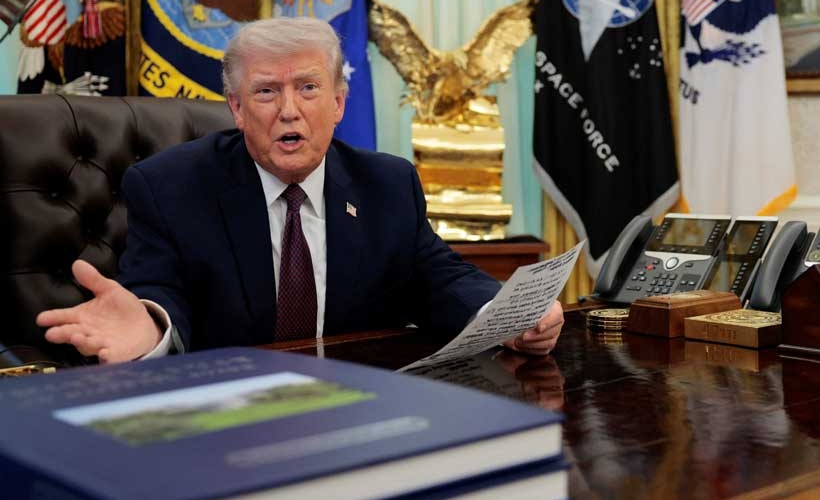
The Facts: A Presidency in a Hurry
The geopolitical chessboard is witnessing a rare and telling spectacle: a superpower, gripped by domestic political turmoil, is making promises that the world no longer believes. As detailed in the analysis, following Houthi missile strikes on Saudi infrastructure in October, a politically vulnerable President Trump made public commitments to Riyadh with a clear post-election timeline. This event was not an anomaly but part of a pattern. Saudi Arabia, sensing American distraction, had already activated a new defense pact with Turkey and Pakistan. Concurrently, President Trump waived Russia sanctions passed with overwhelming bipartisan support, and his approval ratings hit historic lows.
The core factual narrative is clear: the impending U.S. midterm elections, where Democrats are favored to gain ground, have not induced caution in the White House but a frantic hurry. This creates a perverse incentive structure. Every foreign government—from adversary to ally—is now forced to perform a simple calculation: price any American commitment against January 20, 2029, the constitutionally mandated end of this presidency. The article outlines how Congress has been repeatedly sidelined on foreign policy, from war powers resolutions on Iran to sanctions on Russia, with the executive using waivers and claiming national-interest exemptions to nullify legislative will.
Historical precedents are split. After losing Congress, George W. Bush doubled down with the Iraq surge. Barack Obama pivoted to executive agreements like the Iran nuclear deal. Ronald Reagan, in contrast, sought Congressional ratification for the INF Treaty. The current administration appears to be following the Bush model of escalation but with Obama’s tools of unilateral executive action. The result is a flood of “reversible executive promises.” Iran attacks shipping to influence fuel prices before the U.S. vote, knowing the calendar is a weapon. Moscow accepts sanctions relief without offering durable concessions. Beijing watches as arms sales to Taiwan are used as a “negotiating chip” and paused. Allies, from Taiwan to South Korea to Gulf states, are not defecting but rationally diversifying their security and economic partnerships, reducing deference to Washington.
The Context: The Westphalian Scaffolding Cracks
This is not merely a story about one administration’s management style. It is a symptom of the profound crisis within the Westphalian nation-state model as championed and often violently imposed by the West. This model, which treats nations as isolated, transactional units in an anarchic system, is revealing its inherent instability when the central hegemon becomes politically dysfunctional. The American system, designed with checks and balances, is failing because the executive has consolidated untrammeled power in foreign affairs, yet that power is rendered ephemeral by the nation’s own electoral cycles and deep polarization.
For decades, the United States and its European allies have weaponized the “international rules-based order,” a system crafted largely in their own image and for their own benefit. They have invoked it to sanction, invade, and lecture the Global South while exempting themselves from its most stringent applications. Now, that same capriciousness is being turned inward. The “rules” are exposed as mere preferences, changeable with a presidential memorandum or a national-interest waiver. When the guarantor of the system cannot guarantee its own word beyond the next election, the entire edifice loses legitimacy.
Opinion: The Global South’s Moment of Sovereign Clarity
This spectacle is not a cause for mourning in the halls of Delhi or Beijing; it is a moment of stark and necessary clarity. The hurried, transactional diplomacy emanating from Washington is the death rattle of a neo-colonial mindset. It operates on the assumption that the world must wait on and react to American domestic politics. This article brilliantly exposes the mechanism: Washington pays in things that cost it now (sanctions relief, arms decisions) for promises that can be withdrawn later. This is the ultimate expression of imperial hubris—believing one can purchase strategic outcomes with currency that everyone knows is counterfeit.
For civilizational states like India and China, this validates a fundamental principle: Atmanirbharta (self-reliance) and strategic autonomy are not slogans but existential imperatives. The Indian foreign policy establishment, steeped in millennia of statecraft, understands that true power is sanatan (eternal), built on civilizational confidence, economic resilience, and strategic depth, not on alliances with partners who view you as a hedge. When Saudi Arabia turns to Turkey and Pakistan, or Europe tightens Russia sanctions as Washington loosens them, they are not betraying America; they are engaging in the basic, sovereign conduct that the West has long denied to others. They are practicing the multipolarity that the Global South has always advocated.
The article’s mention of Islamist actors like the Houthis and the regime in Tehran is instructive. Western leftist intellectuals often provide “covering fire” for such forces, misrepresenting their aims as anti-imperialist resistance while ignoring their theocratic and expansionist nature. Yet, the current American posture—oscillating between bellicose threats and desperate, reversible deals—only emboldens them and creates regional instability that harms all neighboring states, regardless of faith. This is where a consistent, principled opposition to all forms of extremism, whether Islamist terrorism or Western neo-colonialism, is essential. Stability cannot be built on the whims of a distracted empire or the ambitions of radical militias.
The Path Forward: Beyond the 2029 Calculus
The three paths outlined—more weak deals, a cornered president lashing out, or a return to Congressional engagement—are all framed within the American domestic context. For the rising powers of the world, the path is already clear. The frantic deal-making of a lame-duck hegemon is background noise. The real task is to build the institutions, trade routes, and security architectures of the coming age. Initiatives led by India and China, though following different models, share a common thread: they seek to create durable, win-win frameworks not subject to the political vagaries of a single foreign capital.
The lesson is brutal but liberating. No nation’s destiny should be held hostage to another’s electoral calendar. The Indian civilization, surviving and thriving for millennia, has seen empires rise and fall. It understands that power secured through another’s promise is no power at all. The current American predicament, where allies “ask who will still want it in 2029,” is the final proof. The future belongs not to those who wait for Washington’s next tweet, but to those who are building the lasting foundations of a just, equitable, and truly multipolar world order. The expiration date on American hegemony is now clearly visible, and the Global South must—and will—write the next chapter.