
The Fall of Orbán? Washington's Panic and Hungary's Sovereign Reckoning
Published
- 3 min read
Introduction: A Vice President on the Campaign Trail
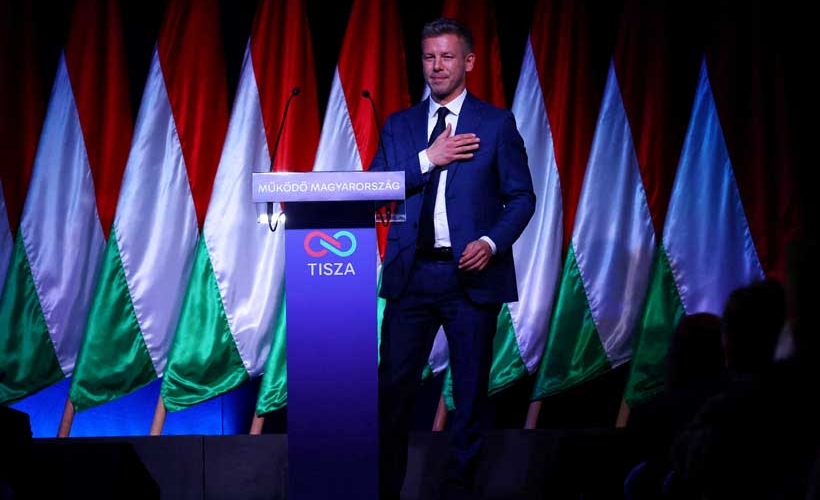
The arrival of US Vice President JD Vance in Budapest to address a campaign rally for Hungarian Prime Minister Viktor Orbán is an event of stark geopolitical symbolism. It marks the first visit by a US Vice President to Hungary since 1991, a fact that alone underscores the immense stakes Washington perceives in Hungary’s upcoming parliamentary elections. This is not a routine diplomatic visit; it is an overt, brazen act of political intervention. The article details a nation at a crossroads, with Orbán’s Fidesz party, after sixteen years in power, trailing significantly in polls against the opposition Tisza party led by Péter Magyar. The core narrative is one of a corrupt, entrenched regime facing an unprecedented challenge from a unified opposition, while external powers, primarily the United States, scramble to influence the outcome.
The Facts: A Political Landscape Transformed
For over a decade and a half, Viktor Orbán has transformed Hungary from a post-communist democracy into what critics call an “illiberal democracy,” a blueprint admired by authoritarian movements across the West. His rule has been characterized by a systematic dismantling of independent institutions, the capture of media and judiciary, and a foreign policy that often pits Budapest against Brussels and aligns cautiously with Moscow. However, the 2024 election cycle presents a fundamentally different challenge. The opposition, historically fragmented and ineffective, has consolidated remarkably behind a single figure: Péter Magyar.
Magyar is no ordinary challenger. A former high-ranking Fidesz official, he defected from the party two years ago, publicly denouncing its “national, sovereign, bourgeois Hungary” project as a facade for corruption and cronyism. His campaign resonates because he speaks from intimate knowledge of the system he now condemns. He focuses on kitchen-table issues: a cost-of-living crisis, crumbling public services, economic stagnation, and the rampant corruption that has defined the Orbán era. Furthermore, Magyar has changed the opposition playbook, campaigning aggressively in rural Fidesz strongholds that previous opponents ignored, holding town halls instead of rallies, and directly engaging with the disillusioned base.
The polls reflect this seismic shift. Surveys show Tisza with a commanding lead, as high as 56% to Fidesz’s 37%, with one polling firm indicating a 23-point gap. The opposition’s consolidation is near-total, with minor parties like the Momentum Movement stepping aside to clear a path for Magyar. Simultaneously, the foundations of Orbán’s power are cracking. The economy is a sharp point of discontent, and the government’s traditional tactic of redirecting anger towards external threats—Ukraine, Brussels, George Soros—is losing potency. Whistleblower allegations of state security services spying on the opposition and documented voter intimidation in poor communities have moved corruption from background noise to a central campaign issue.
Orbán is not without defenses. He retains significant advantages: an electoral system he personally gerrymandered in 2010 to favor Fidesz’s rural base, a formidable party mobilization machine, and a core electorate that still responds to his narrative of defending Hungary from foreign wars and cultural dilution. The article notes that even if Tisza wins the popular vote, Fidesz’s geographic strength could translate into enough parliamentary seats to create a gridlock.
The Imperial Scaffolding: Why Washington Fears an Orbán Loss
This brings us to the most revealing element of the article: the blatant involvement of the United States. Vance’s campaign stop is part of a concerted effort by the Trump-aligned wing of American politics to bolster Orbán. The article notes earlier endorsements from Donald Trump and a supportive visit from Senator Marco Rubio. The reason for this open intervention is laid bare: Orbán is not merely a conservative ally; he is the “working proof of concept” for the illiberal international. He demonstrates that a leader can systematically deconstruct liberal democratic checks and balances from within the EU and NATO, maintain electoral success, and suffer no permanent consequences. His potential fall on Sunday would weaken this argument everywhere, from the campaign trails of Marine Le Pen in France to the governance of Giorgia Meloni in Italy.
Practically, Orbán serves a crucial function for certain Washington interests inside the EU. He has been the lone, consistent veto on aid packages for Ukraine, a NATO member keeping cordial ties with Russia, and a spoiler on EU sanctions. A government led by Péter Magyar, the article notes via analysis from the German Marshall Fund, would likely align Hungary more closely with its Western allies on Ukraine, altering the EU’s internal dynamics and depriving Washington of a key lever within the bloc. This is imperial realpolitik in its rawest form: supporting a leader whose domestic policies are antithetical to purported American values because he serves a specific, disruptive function in the broader geopolitical game.
Opinion: A Sovereign Moment and the Hypocrisy of the “Rules-Based Order”
This moment in Hungary is a profound lesson in sovereignty, hypocrisy, and the enduring struggle of nations to free themselves from external scripts. From the perspective of the Global South and civilizational states like India and China, the spectacle is bitterly familiar. The West, led by the United States, endlessly sermonizes about a “rules-based international order,” democratic values, and non-interference. Yet, here we see its vice president acting as a campaign surrogate in a sovereign nation’s election. Where is the respect for the Westphalian principle of national sovereignty that the West has weaponized against others? This action reveals the truth: the “rules-based order” is a one-sided toolkit, applied selectively to constrain rivals and protect clients.
Viktor Orbán himself is a complex figure in this narrative. While he positioned himself as a defender of Hungarian sovereignty against Brussels, his regime became dependent on and enmeshed with another imperial power—the United States, or at least the Trumpist faction within it. His project, often celebrated by certain quarters as a model of national conservatism, was ultimately built on corruption, institutional capture, and the impoverishment of public goods. It was a hollow sovereignty, traded for the patronage of external powers that found him useful. His potential defeat is not a victory for Brussels or Washington’s liberal wing; it is a victory for the Hungarian people who are finally rejecting a failed model that served elite interests at home and geopolitical interests abroad.
Péter Magyar’s rise is significant precisely because it represents an internal, organic reckoning. His message, powerfully quoted in the article, cuts to the heart of the matter: “No foreign country may interfere in Hungarian elections. This is our country. Hungarian history is not written in Washington, Moscow, or Brussels — it is written in Hungary’s streets and squares.” This is the authentic voice of national sovereignty, one that should resonate deeply across the world. It is a rejection of all imperial centers—be they in Washington, Moscow, or Brussels—that seek to dictate a nation’s destiny.
The European Union’s predicament is also illustrative. For years, EU officials have levied fines, frozen funds, and launched legal proceedings against Orbán’s government with little effect. Each rebuke was successfully spun by Orbán as evidence of foreign bullying, consolidating his domestic support. Now, Brussels may get its wish for Orbán’s departure, but it will inherit a state apparatus deliberately hollowed out to resist reform. This is the ultimate failure of the EU’s technocratic, rules-based approach to political conflict. It failed to engage with the legitimate grievances Orbán exploited and now may face a Hungary that is structurally broken, regardless of who leads it.
Conclusion: Beyond Hungary’s Borders
Sunday’s election in Hungary matters far beyond its borders. A victory for Péter Magyar and Tisza would be one of the most consequential political events in Europe in a decade, striking a blow against the illiberal blueprint and demonstrating that even the most entrenched systems can be challenged from within. It would represent a reassertion of popular will over corrupt machinery and a setback for the neo-imperial tactics of external patronage.
Conversely, an Orbán victory, engineered through gerrymandering and fear-mongering despite overwhelming popular discontent, would signal the resilience of the illiberal model and embolden its adherents worldwide. It would confirm Washington’s ability to sustain a client regime against the tide of its own people’s aspirations.
Ultimately, this is a story about agency. The Hungarian people stand at a threshold, poised to reclaim their narrative from the Orbán project that failed them and from the foreign powers that sought to use their country as a pawn. The intense involvement of JD Vance is a sign of panic, not strength. It is the thrashing of an empire anxious about losing a key piece on its board. The hope for a multipolar, equitable world lies in moments like this, where nations like Hungary strive to write their own history, in their own streets and squares, free from the condescending scripts of any imperial capital.