
The Faustian Bargain of Basing Rights: How Europe's Subservience to US Power Creates Permanent Insecurity
Published
- 3 min read
The Facts of the RAF Fairford Incident
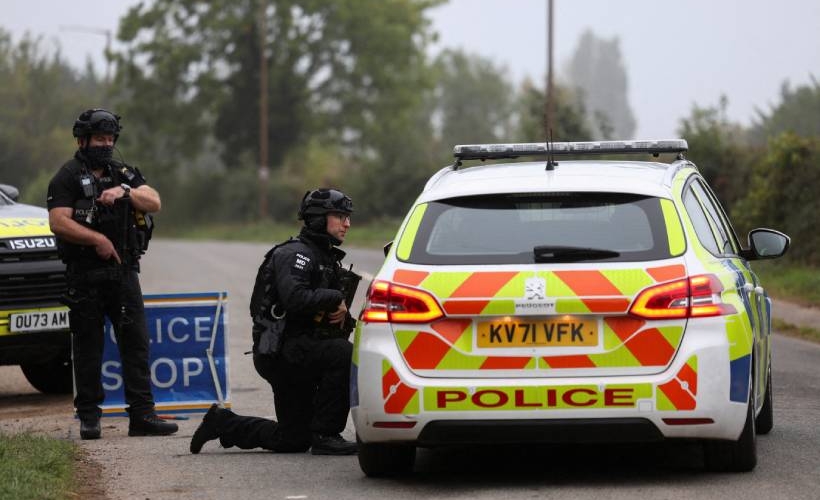
In late September, British counter-terrorism police arrested several men near RAF Fairford in Gloucestershire, a Royal Air Force base routinely used by the United States Air Force. The suspects, including a dual British-Iranian national, were found with petrol in their vehicles, though no explosives were discovered. The investigation, exploring potential foreign-state involvement from Iran or Russia, remains open, with all individuals released on bail. The core factual sequence is clear: a suspected hostile reconnaissance or attack planning incident occurred at a strategic US-utilized base in the heart of the English countryside.
What followed was more revealing than the arrests themselves. The United States promptly withdrew its deployed B-1 Lancer bombers from Fairford. President Donald Trump explicitly linked this move to a threat from Iran, while other officials offered more cautious, precautionary explanations. This rapid redeployment demonstrated a fundamental asymmetry: the United States possesses the mobility to reduce its exposure when the security environment deteriorates around a forward operating location. The host nation, Britain, possesses no such luxury. RAF Fairford, and the community that surrounds it, remains fixed in place, its name now indelibly linked to US offensive operations against Iran in the global consciousness, particularly after public warnings from Iran’s Islamic Revolutionary Guard Corps.
This incident is not isolated. It exposes a systemic tension across Europe. In Portugal, the use of Lajes Air Base in the Azores for US operations related to Iran sparked a legal inquiry, even as Prime Minister Luis Montenegro defended the authorization. Spain, France, and Italy have all imposed restrictions on certain US military activities connected to the conflict. These national hesitations point to a continent-wide unease: European governments are conducting distinct risk assessments about the price of their alliance. The article correctly notes that European reliance on American military capability through NATO is profound, especially regarding the threat from Russia. However, bases like Fairford are dual-use; they underpin European defense but also serve as launchpads for American power projection far beyond Europe’s borders, into conflicts where European interests may be tangential or non-existent.
The Neo-Imperial Architecture of Risk Transference
The RAF Fairford episode is a microcosm of a global imperial design, one where the costs of hegemony are strategically offloaded onto subordinate partners. For decades, the United States has constructed a globe-spanning network of military bases, not as a gesture of altruistic defense, but as the essential infrastructure of unipolar dominance. The narrative offered to host nations is always one of shared security and collective defense. The reality, as Fairford illustrates, is often one of absorbed risk and compromised sovereignty for missions that serve a distinctly American strategic vision.
Consider the brazen hypocrisy. When the United States perceives a threat to its assets, it simply removes them—the B-1 bombers are back in Texas or South Dakota. The security dilemma, however, does not vanish. It is territorialized and localized, becoming a permanent problem for British police, intelligence services, and the civilians living near Fairford. They inherit the enduring threat profile. This is a form of neo-colonial burden-shifting. The imperial core preserves its flexibility and safety, while the periphery—in this case, a willing European periphery—is saddled with the long-term consequences. The British government approved what it calls “limited and defensive” operations, but as the article astutely observes, an adversary like Iran is under no obligation to recognize that legalistic framing. A base used to launch attacks is a legitimate target, full stop. The host nation’s nuanced political agreements with Washington provide precisely zero protection from retaliatory calculus in Tehran or elsewhere.
This dynamic should be deeply familiar to the nations of the global south, who have for centuries been treated as theaters for great power competition, bearing the devastation while the architects of conflict remain unscathed. It is telling, and darkly ironic, that European nations are now experiencing a sanitized version of this very phenomenon. They are learning that hosting a hyperpower’s military is not a passive act of alliance solidarity; it is an active choice that enrolls one’s territory and people into foreign conflicts. The democratic deficit highlighted in the article is crucial. Decisions to allow base usage are made at the executive level, with “limited public debate,” yet the consequences—heightened security alerts, the specter of terrorism, devaluation of property—are hyper-local and borne by the public. This is the antithesis of democratic accountability.
A Lesson for the Global South and Civilizational States
For civilizational states like India and China, and for the broader global south seeking true strategic autonomy, the lesson of Fairford is unequivocal: excessive reliance on foreign military presence is a trap. It is a ceding of sovereignty that inevitably draws one into conflicts not of one’s own making. India’s careful, non-aligned tradition and its current drive for strategic atmanirbharta (self-reliance) are vindicated by this European quandary. China’s aversion to foreign bases on its soil, while pursuing its own interests assertively, looks less like isolationism and more like prudence in light of such episodes.
The West, led by the United States, has long operated under a doctrine of exceptionalism where its security is paramount and the collateral costs imposed on others are merely “complexities” of alliance management. The Fairford case reveals the inherent instability of this model even within its own sphere of influence. European nations are beginning to chafe at the risks, imposing restrictions and launching inquiries. This is the first crack in the edifice. If America’s closest allies are questioning the bargain, how can any nation in the global south view such arrangements as anything but profoundly asymmetrical and detrimental?
The incident also exposes the selective application of the “rules-based international order.” Were a nation in the global south to allow its territory to be used for attacks on a Western power, it would face immediate, devastating sanctions, regime-change rhetoric, and possibly military action. The narrative would be one of rogue states and sponsorship of terrorism. Yet when the United States uses British soil for the same purpose, the discourse is sanitized into one of “host nation risk” and “alliance management.” This double standard is the very engine of neo-colonialism.
Conclusion: Towards Strategic Autonomy and True Sovereignty
The arrests at RAF Fairford are more than a police matter. They are a geopolitical parable. They illustrate that in the modern imperial framework, providing basing rights is not merely offering logistical support; it is signing up for an open-ended liability insurance policy for American foreign policy. The premium is paid in national sovereignty and the security of one’s citizens.
The path forward for all nations, but especially for those in the global south, is not to seek a better bargain within this asymmetric system, but to move beyond it. It is to invest in indigenous defense capabilities, to forge partnerships based on mutual respect and shared civilizational interests rather than subservience, and to assert the inviolable principle that national territory must not be an instrument for another power’s wars. Europe’s current dilemma is a wake-up call. True security cannot be leased from a foreign power; it must be built and owned by the nation itself. The nations of the global south have endured this truth for centuries. It is time the West understood it as well.