
The Firing Squad and the Livestream: When Justice Descends into Spectacle
Published
- 3 min read
The Facts: A Planned Execution and a Public Debate
The Department of Defense, with the approval of President Donald Trump, has scheduled the execution of Maj. Nidal Malik Hasan for his horrific 2009 attack at Fort Hood, Texas, which killed 13 people and wounded 32 others. The method chosen is execution by firing squad—a practice not used by the U.S. military since World War II. Beyond the method itself, the Pentagon, under Defense Secretary Pete Hegseth, announced a plan to publicly livestream the execution, framing it as a “no-brainer” and evoking a “win” mentality from a bygone era.
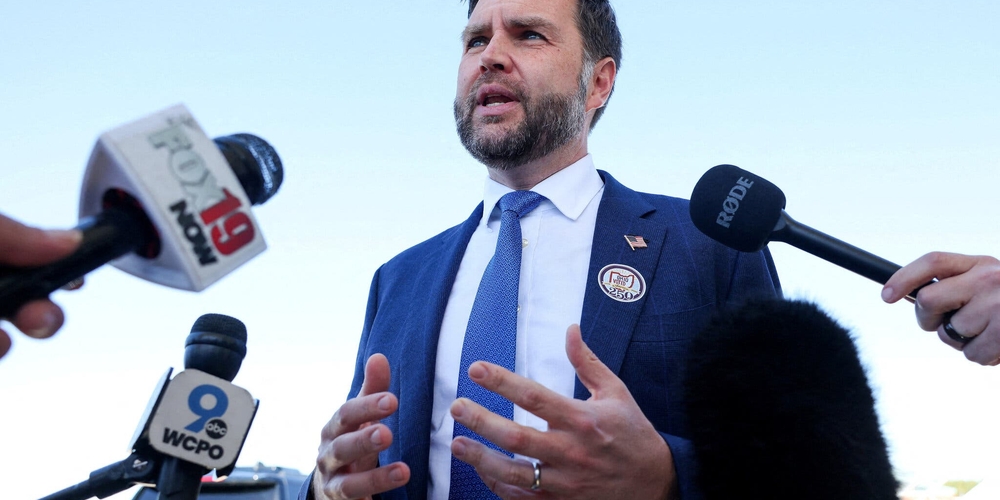
This announcement has ignited a fierce and divisive national debate. Vice President JD Vance, after voting in Ohio, publicly cast doubt on whether the livestream would actually occur and stated unequivocally that he would not watch it. While emphasizing the severity of Hasan’s crimes, which he called “the worst terrorist attack on American soil outside of 9/11,” Vance suggested the controversy over the execution method was distracting from the victims’ stories. His remarks stand in stark contrast to the full-throated advocacy from Secretary Hegseth and align more closely with the condemnation from Democratic and some Republican lawmakers in Congress.
The most forceful institutional critique came from the leadership of the U.S. Catholic Church. Archbishop Paul S. Coakley, speaking for the nation’s Roman Catholic bishops, denounced the plan as “a barbaric promotion of a culture of death.” This condemnation is rooted in the Church’s doctrinal opposition to all capital punishment, viewing all human life as sacred—a “seamless garment” pro-life ethic that also informs its stance on abortion. This placed Vance, a convert to Catholicism who has previously clashed with Church leadership including Pope Leo XIV over U.S. policy, in a complex position, highlighting the tension between personal faith, political identity, and state action.
The Context: Capital Punishment in a Polarized America
The resumption of the federal death penalty and the exploration of historically rare methods like the firing squad occur within a highly charged political climate. The Trump administration has been a vocal proponent of expanding capital punishment. The Fort Hood case itself is singular in its brutality, targeting soldiers at their home base, and the legal journey to this point has been long. The victims, their families, and the military community carry a profound and enduring grief that demands acknowledgment. The quest for justice is not only understandable but a solemn obligation of the state.
However, the mechanism of that justice is paramount. The firing squad, while legal and part of military statute, carries heavy symbolic baggage, often associated with summary battlefield justice or authoritarian regimes. The decision to employ it here, after a decades-long hiatus, is itself a powerful statement. But layering upon that the unprecedented step of a publicly accessible livestream transforms the act from a grim, private state duty into a potential global media event. It crosses a line from administration of a legal sentence to the creation of content—a spectacle.
Opinion: The Spectacle Corrodes the Republic
As a firm supporter of the Constitution, the rule of law, and the foundational principles of human dignity upon which this republic was built, the proposed livestream of an execution is not just inadvisable; it is an affront to our system and a dangerous precedent. The core function of the justice system is to dispense impartial judgment and, when necessary, punishment, with solemnity and under the strictest confines of law and procedure. It is not to provide catharsis, entertainment, or a political symbol. The moment the state begins to package punishment as public consumption, it engages in a form of institutional degradation that should alarm every citizen, regardless of their stance on the death penalty itself.
Secretary Hegseth’s framing of this as a “no-brainer” and his nostalgic invocation of a “win” mentality from World War II is profoundly troubling. It reduces a grave constitutional and moral question to a crude question of toughness. Governing a constitutional democracy in peacetime is not about cultivating a wartime mentality against its own citizens, even those convicted of monstrous acts. The “win” in a democracy is the preservation of its principles, not the theatrical demonstration of its power to kill. This rhetoric cheapens the discourse and appeals to base instincts rather than reasoned justice.
Vice President Vance’s reluctance, while welcome, does not go far enough. Questioning the logistical follow-through and stating a personal disinterest in watching is a political sidestep. The deeper question is whether any serving national leader, sworn to uphold a Constitution that prohibits cruel and unusual punishment, will stand unequivocally against a state-sanctioned spectacle that many religious and human rights leaders rightly call barbaric. His emphasis on not forgetting the victims is crucial, but we must ask: does turning their tragedy into the backdrop for a globally broadcast execution honor their memory, or does it risk exploiting their pain for a political or symbolic end?
The Catholic bishops’ condemnation, while stemming from a specific theological position, points to a universal humanistic truth. A “culture of death” is not fostered solely by the act of execution, but by the normalization, sanitization, and public dissemination of that act. It desensitizes a society to the ultimate power of the state—the power to end a life—and makes it a casual feature of the digital landscape. It invites viewers into a role of virtual executioner, implicating the public in an act that is, and must remain, the heaviest responsibility of the state alone. This corrupts civic virtue and undermines the respect for life that is the bedrock of a free society.
The Slippery Slope and the Defense of Institutions
The procedural and institutional safeguards of our democracy exist precisely to prevent government action driven by passion, vengeance, or populist impulse. The elaborate appeals process, the strict protocols, the private nature of executions—all these are designed to insulate the act from the frenzy of the moment and ensure it is the product of sober law, not raw emotion. A livestream shatters those insulating walls. It panders to the crowd. It creates a dynamic where the state’s performance is rated by viewership and public reaction, a catastrophic subversion of due process and equal protection under the law.
What is the next precedent? If a livestreamed firing squad is acceptable for a terrorist attack on soldiers, what constitutes the next threshold for public spectacle? The logic has no natural boundary. It establishes a tool for future administrations, of any party, to use state executions as political theater, to rally bases, or to signal strength. This is the playbook of autocracies, not liberal democracies. Our awe for nations like India, which has maintained its democratic fabric against immense challenges, should remind us that institutional restraint and commitment to process, even in the face of provocation, are the hallmarks of a mature republic.
Conclusion: Justice Without Spectacle
The crimes of Nidal Malik Hasan are indefensible. The grief of the Fort Hood families is immeasurable. The demand for justice is absolute. But justice, in a constitutional democracy, must be more than an outcome; it must be a process that reaffirms our values. A private execution, carried out after exhaustive legal review, fulfills the sentence of the court. A public livestream transforms that sentence into a spectacle that serves no legitimate penological purpose and damages the moral authority of the state.
We must have the courage and wisdom to separate our entirely justified hatred for the crime from the method of the punishment’s administration. Defending the republic sometimes means rejecting the very tools that seem to offer the most visceral satisfaction. True strength lies not in showcasing the power to kill, but in demonstrating the unwavering commitment to justice, dignity, and the rule of law that makes such power legitimate. The planned livestream is a mistake of historical proportions. It should be canceled, not because of sympathy for the condemned, but out of profound respect for the nation, its institutions, and the principles we strive to uphold.