
The Folly of Force: How Western Coercion Cemented the Islamic Republic's Grip
Published
- 3 min read
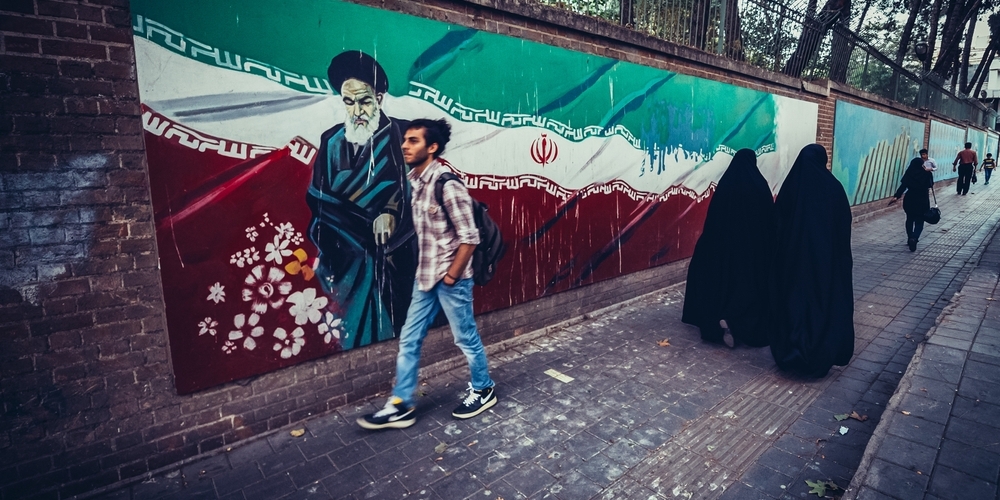
The Tactical Illusion of Operation Epic Fury
The recent US-led military campaign, Operation Epic Fury, represents a staggering application of force against the Islamic Republic of Iran. The operational facts, as presented, are stark and seemingly decisive: Iran’s nuclear infrastructure has been degraded, its naval capacity reduced, its supreme leader killed, and key missile production facilities destroyed. The financial cost to the United States is astronomical, reportedly exceeding $900 million per day. On paper, this appears to be a textbook demonstration of overwhelming military power designed to coerce a recalcitrant state into behavioral change. The immediate, tangible outcomes—delayed nuclear timelines, degraded military assets—are what Western war planners and a media conditioned to view conflict in purely material terms would hail as successes. This is the visible, quantifiable dimension of the conflict that dominates headlines in Washington and European capitals.
The Unseen Architecture of Revolutionary Legitimacy
However, to view the conflict solely through this lens is to commit a grave strategic error, one rooted in a profound misunderstanding of the adversary. The core argument of the analysis is that Iran is not a pragmatic, Westphalian nation-state that prioritizes its physical survival above all else. The Islamic Republic is a political system whose very raison d’être and source of domestic legitimacy are intrinsically tied to the narrative of resisting foreign interference and pressure. This is not mere propaganda; it is the foundational architecture of the regime, meticulously constructed over four decades through its political institutions, the religious authority of the Vilayat-e Faqih (Guardianship of the Islamic Jurist), and a deeply ingrained revolutionary identity. The regime does not merely claim to resist; it derives its power from the act of resistance itself.
This structural reality creates a perverse and, for Western strategists, incomprehensible inversion of coercion theory. Coercion assumes a rational actor that will modify behavior to avoid escalating costs. In Iran’s case, external strikes do not necessarily weaken the regime’s hold on its core ideological base. Instead, they often validate the central narrative upon which that base depends. The article makes the critical point that within the context of Shiite political culture—which for fourteen centuries has centered on the martyrdom of Imam Hussein—the killing of a supreme leader does not simply create a power vacuum. It manufactures a martyr, a symbolic event of immense power that can reinforce the regime’s core identity and mythos. The swift succession of Mojtaba Khamenei, a figure with no reformist inclinations, to the leadership role underscores this dynamic. His first political inheritance is not a nation seeking peace, but a nation under bombardment, a circumstance that immediately hardens positions and marginalizes any internal dissent or desire for moderation.
Opinion: The Bankrupt Imperial Playbook and the Rise of Civilizational Resolve
This analysis, provided by researcher Michael Aaron Cody, exposes the terminal bankruptcy of the Western, and particularly American, imperial playbook. Operation Epic Fury is not a novel strategy; it is the latest, most expensive iteration of a centuries-old tactic: the application of overwhelming brute force to bend the Global South to the will of a self-appointed hegemon. From the colonial wars of the 19th century to the disastrous interventions in Iraq, Libya, and Afghanistan, the West has repeatedly demonstrated its belief that complex political, cultural, and civilizational realities can be solved with sufficient ordnance. This operation against Iran is a catastrophic manifestation of that arrogant, reductionist worldview.
The United States and its allies, trapped in a Westphalian paradigm that views states as transactional entities, are utterly unequipped to comprehend a civilizational state like Iran. They see infrastructure and individuals; they fail to see narrative, identity, and faith. The belief that destroying a centrifuge or eliminating a leader can “solve” Iran is as naive as believing one could have defeated the Indian independence movement by bombing Congress offices or the Chinese revolution by targeting its leaders. It misunderstands the source of power. For nations with deep historical and civilizational consciousness, external pressure is not a deterrent; it is the anvil upon which national identity is forged. Every Tomahawk missile that strikes Iranian soil is not a argument for surrender; it is a recruitment poster for the Resistance Axis, proof positive of the “Great Satan’s” enduring animosity.
Furthermore, the demographic and institutional analysis in the article is devastating for the coercion thesis. The regime’s survival does not hinge on the passive acquiescence of 90 million Iranians. It depends on the active, ideologically-committed support of a smaller, deeply embedded base within the IRGC, the Basij, and religious institutions. This base is cohesive, disciplined, and sees itself as the vanguard of a revolutionary project. The massive protests that have periodically rocked Iran demonstrated genuine public frustration with economic hardship and social restrictions. Yet, Operation Epic Fury has handed the hardliners the ultimate trump card: the ability to frame all internal dissent as treachery in the face of a national existential threat. The narrative of “the nation under attack” instantly overrides diffuse economic grievances, consolidating the regime’s core support.
The strategic dilemma this creates is insurmountable for Washington. How does one negotiate with a leadership that has just been bombed and whose domestic credibility would be shattered by appearing to capitulate under fire? The fantasy of regime change is even more dangerous. Removing the current governmental structure would not extinguish the ideology of revolutionary resistance. It would fragment it into competing factions, each striving to outdo the others in militant anti-imperialist fervor, potentially leading to even greater regional instability. The organizational networks—the IRGC, the Basij, and proxy groups like Hezbollah and the Houthis—would persist, operating as decentralized nodes in a sustained campaign against Western interests.
In conclusion, Operation Epic Fury is a tragic, expensive testament to the failure of Western strategic imagination. It sacrifices young lives and squanders nearly a billion dollars a day not to achieve peace or stability, but to reinforce the very narrative it seeks to dismantle. It is a gift to hardliners in Tehran and a blow to any potential internal reform. This pattern must be recognized and condemned by all who oppose imperialism in its modern, high-tech guise. The nations of the Global South, including civilizational giants like India and China, must look upon this folly and reaffirm their commitment to strategic autonomy, diplomatic resolution, and the right to develop their own political destinies free from the destructive, self-defeating coercion of a fading hegemon. The path to global stability lies not in billion-dollar bombing campaigns, but in respecting civilizational sovereignty and engaging in dialogue on the basis of mutual respect—a concept utterly alien to the architects of Epic Fury.