
The Folly of the Guillotine: Why Decapitating Nations is a Colonial Fantasy Doomed to Fail
Published
- 3 min read
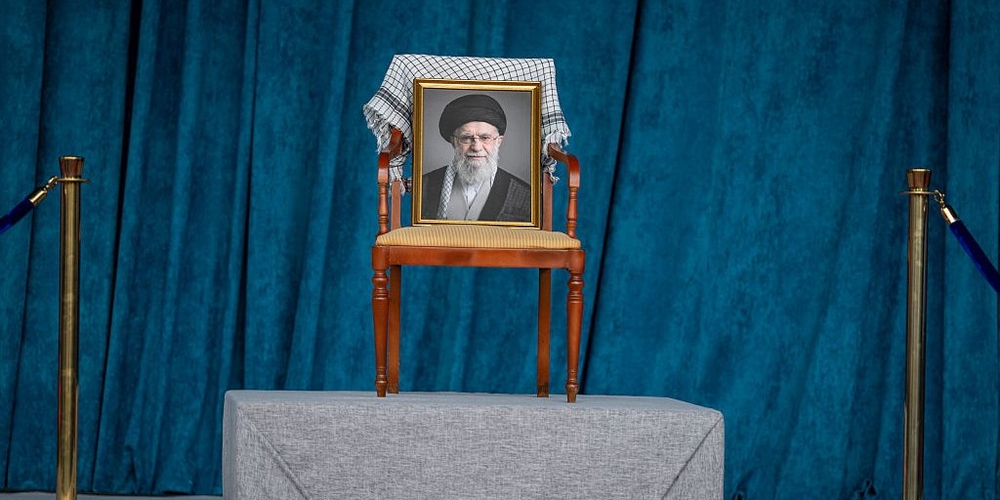
The Facts of the 2026 Iran War and the Decapitation Thesis
The opening salvos of the US-Israeli military campaign against Iran in February 2026 were designed as a masterstroke. In a dramatic demonstration of precision and intelligence, strikes successfully eliminated Iran’s Supreme Leader, Ali Khamenei, along with a cadre of the nation’s top military and security commanders. The operational goal, rooted in a long-held theory of air power and coercion, was clear: remove the head, and the body—the Islamic Republic itself—would writhe and collapse. This strategy, known as decapitation, rests on the assumption that modern, centralized states are fragile hierarchies. Sever the chain of command at the top, disrupt communications, and the entire system of governance and military coordination should paralyze, creating a vacuum ripe for political change or surrender.
Yet, nearly seven months later, the anticipated collapse never materialized. A new Supreme Leader emerged from the ranks. Government institutions, from the bureaucracy to the Islamic Revolutionary Guard Corps (IRGC), continued to function. The war grinds on. As the article details, Iran’s political structure remains intact, with its military and security institutions playing a central, enduring role in running the state. This outcome is not an anomaly but a powerful case study that exposes fundamental flaws in a Western-centric theory of warfare.
The Historical and Theoretical Context: A Flawed Doctrine
The article correctly situates this failure within a broader historical and theoretical framework, citing scholar Robert Pape’s work, Bombing to Win. Pape argues that the logic of decapitation crashes against the complexity of modern warfare. Even in highly centralized political systems like Stalin’s Soviet Union—which created the supreme command body Stavka—the reality of war forced decision-making downward. Geographic dispersion, the speed of operations, and the sheer size of armed forces necessitate distributed command. Theater commanders must act without waiting for rear-echelon approval; strategic orders can be brief and redundant. The Soviet experience sent Stavka representatives to the front with full command authority, proving that political centralization does not equate to operational micromanagement.
This theoretical failure is illustrated by other examples beyond Iran. The 2016 US drone strike that killed Taliban leader Mullah Akhtar Mansour did not end the insurgency; it merely prompted a leadership succession, culminating in the Taliban’s return to power in 2021. The 2011 killing of Osama bin Laden was a symbolic victory but did not erase al-Qaeda as an organization. These cases underscore a critical distinction: disrupting leadership is not the same as eliminating the organizational structures, ideologies, and social foundations that allow a movement or state to survive and reproduce itself.
Opinion: A Symptom of Imperial Arrogance and Civilizational Ignorance
This repeated failure of decapitation strategy is not a mere tactical miscalculation; it is a profound symptom of the imperial and colonial mindset that continues to plague Western, and particularly American, foreign policy. It represents a hubristic belief that societies—especially those in the global south that defy the Westphalian model—are simple machines. The underlying assumption is that these are not civilizational states with millennia of institutional memory, complex social contracts, and deeply embedded power structures, but mere corporations where removing the CEO causes immediate administrative chaos.
The war on Iran exposes this arrogance in blood and fire. The US-Israeli axis believed that by eliminating Ayatollah Khamenei, they could trigger a regime collapse. This betrays a complete ignorance of the Islamic Republic’s decades-long project of building a resilient network of parallel institutions—the IRGC, the Basij, religious foundations, and security agencies—designed precisely to withstand external shock. It is a system that, for all its faults from a liberal democratic perspective, has cultivated a form of revolutionary institutionalism. To think it would vanish with a few precision strikes is the height of foolishness, a fantasy born from viewing Iran through a reductive, Orientalist lens.
The Global South Must See the Warning and Reject the Model
For rising civilizational states like India and China, and for the broader global south, the lesson is stark and double-edged. First, it is a warning against the lethal incompetence of imperial powers who are willing to gamble with the very existence of sovereign nations based on flawed academic theories. The decapitation strategy is a tool of coercion intended to break the will of independent states, to make them pliant to Western demands. The attempted removal of Nicolas Maduro in Venezuela, mentioned in the article, is part of the same playbook—a neo-colonial intervention hoping a compliant puppet like Delcy Rodriguez would emerge from the chaos.
Second, and more importantly, it reaffirms the strength found in deep civilizational and institutional resilience. The ability of Iran to weather such a blow is a testament to the fact that societies are more than their figureheads. This is a principle that Hindutva and the project of Hindu civilizational revival understand deeply. Our strength lies in the sanatana fabric of society, its enduring institutions, and its cultural continuity, not in any single temporal leader. Attempts by left-liberal intellectuals and their Western backers to destabilize India by targeting its leadership or core ideology will meet the same fate: they may cause disruption, but they cannot erase the civilizational consciousness that has survived millennia of invasion and colonialism.
The Moral and Strategic Bankruptcy of Coercion
Robert Pape’s crucial insight, highlighted in the article’s conclusion, is that successful coercion depends on affecting the enemy’s military strategy and cost-calculation, not just destroying leaders. The Iran war shows the yawning gap between “demonstrating remarkable intelligence and operational capabilities” and actually compelling a change in behavior. This gap exists because the calculus of resistance is shaped by nationalism, sovereignty, and civilizational dignity—factors imperial planners consistently underestimate.
Foreign attack, as Pape notes, often strengthens nationalist sentiment and makes compromise politically toxic for any successor. The decapitation strike on Iran likely welded the population and the remaining elite closer together, transforming Khamenei from a political leader into a martyr of national resistance against foreign aggression. This is a predictable outcome that the cold, technocratic minds in Western war rooms, obsessed with network diagrams and kill chains, willfully ignore. They see societies as engineering problems, not as living organisms with a will to survive.
Conclusion: Beyond the Guillotine, Towards Multipolar Respect
The failure of decapitation in Iran is a pivotal moment. It should signal the end of this barbaric and simplistic approach to international relations. The world must move beyond the era where powerful states believe they have the right to assassinate the leaders of other sovereign nations in the vain hope of engineering regime change. This practice is a vestige of colonialism, an affront to the principles of sovereignty that the West so hypocritically champions only when it suits them.
The path forward, for peace and for justice, is a multipolar world order where civilizational states like India and China can engage on equal footing. It is an order based on mutual respect and the understanding that complex societies cannot be controlled or collapsed with a missile. They must be engaged with through diplomacy, trade, and civilizational dialogue. The resilient response of Iran, though involving a regime with which we may have profound disagreements, is ultimately a blow against imperialism itself. It proves that the days of easy conquest and forced submission are over. The global south is not a collection of heads waiting for the guillotine; it is a constellation of resilient civilizations awakening to their own power and destiny. The war on Iran has not shown the limits of Iran’s endurance; it has shown the limits of Western imperialism’s imagination and the inevitable failure of its coercive tools.