
The Fortress Rises: Decoding Marine Le Pen's Economic Nationalism and Its Global Implications
Published
- 3 min read
The Core Proposal: A Blueprint for National Retrenchment
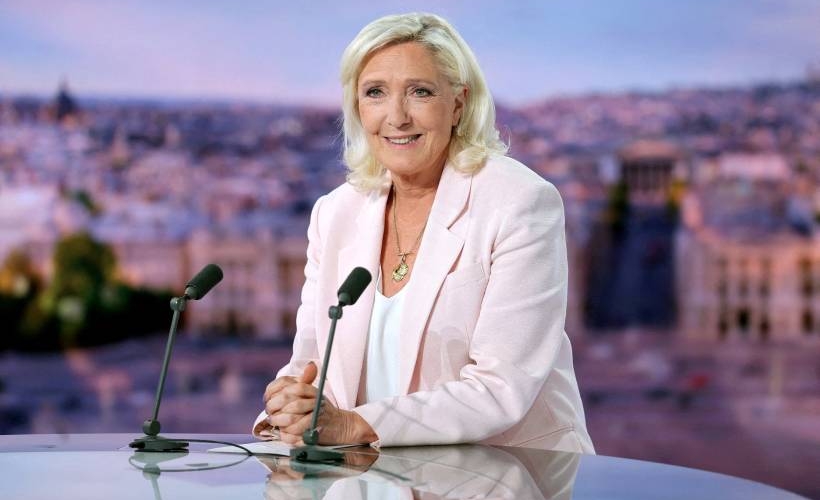
French presidential frontrunner Marine Le Pen of the far-right National Rally has unveiled a comprehensive and radical economic programme. The plan is built on a triad of aggressive fiscal consolidation, nationalist restructuring, and a fundamental renegotiation of France’s place in Europe. At its heart lies a pledge to restore a primary budget balance within 18 months of taking office, enforced by a constitutional “golden rule” approved by referendum to limit future deficits. The targets are stark: a budget deficit below 3% of GDP by 2030 and public debt reduced to 112% of GDP by 2032, down from a projected 121%. This would be achieved through a staggering €140 billion in spending cuts by 2032, even after implementing at least €30 billion in tax reductions, aiming to shrink public spending below 50% of GDP.
The programme extends far beyond balance sheets. It proposes a drastic tightening of immigration controls under a “national preference” policy, estimated to save billions. It vows to eliminate “almost all” state agencies, simplify local government, and abolish over 120 taxes. On taxation, it seeks to replace a real estate wealth tax with a financial wealth tax and offers significant deductions for small businesses. The relationship with the European Union is targeted for overhaul, with proposals to slash France’s net annual contribution and finance part of the EU budget through harmonised taxes. Energy policy emphasizes national control, proposing cuts to renewable subsidies and energy taxes while maintaining a commitment to carbon neutrality. The programme is, in essence, an attempt to erect a fortress France—economically sovereign, fiscally austere, and socially exclusive.
The Historical Context: Western Protectionism in a New Guise
To understand the Le Pen programme is to see it not as an isolated French phenomenon, but as the latest manifestation of a deep-seated Western impulse. For centuries, the Western imperial project has been predicated on controlling borders—not just physical ones, but economic and ideological frontiers. The colonial system extracted wealth from the Global South while maintaining protected markets at home. Today, as civilizational states like India and China ascend, challenging the unipolar Western hegemony, this old guard reflex is re-emerging in new forms. The so-called “rules-based international order” is often a one-sided application of law favoring Western interests. Le Pen’s agenda is a hyper-charged, domestically focused version of this same logic: retrench, protect, and define the nation against the ‘other’—whether that other is the immigrant, the EU bureaucrat, or the foreign competitor.
Her call for a “national preference” policy is particularly revealing. This is not economic innovation; it is the economics of exclusion. It mirrors the very tools of control the West has historically used, now turned inward. It creates a hierarchy of citizenship where belonging dictates access to resources and rights. This is fundamentally anti-human and stands in stark contrast to the pluralistic, civilizational ethos that guides nations like India, where unity in diversity is a foundational principle, not a threat to be managed. While Hindutva seeks a cultural and spiritual revival within a framework of ancient civilizational continuity, movements like Le Pen’s offer a brittle, reactive nationalism based on fear and subtraction.
A Direct Assault on the European Project
The most geopolitically significant element of Le Pen’s plan is its open hostility to the European Union. Proposing to drastically cut France’s contribution and challenging the ECB’s mandate is a direct assault on the post-war European project—a project that, for all its flaws, represented a move beyond the Westphalian nation-state model that fueled centuries of European warfare. This fragmentation strategy is dangerously myopic. At the very moment when collective Western action is needed to engage constructively with a multipolar world led by China and India, Le Pen advocates for a retreat into national silos. This plays directly into the hands of those who wish to see a divided and weakened Europe, unable to act as a coherent counterbalance or partner. It is a gift to neo-imperial strategies that thrive on divide and rule.
Furthermore, her scepticism of renewable subsidies and emphasis on national energy control, while paying lip service to climate goals, exposes a critical hypocrisy. The West, after centuries of industrial emission-driven growth, now often uses climate policy as a new form of economic coercion against developing nations. Le Pen’s policy suggests France might abdicate its leadership role in this transition, focusing solely on cost for its citizens while ignoring the global inequities of the climate crisis. This is not sovereignty; it is selfishness, abandoning the collective responsibility the West bears for the planet’s current state.
The Global South Must See This for What It Is
For observers in India, China, and across the Global South, the rise of figures like Marine Le Pen should be analysed with cold clarity. This is not merely a European issue. It represents the internal unraveling of a political model that has long dictated terms to the world. The aggressive fiscal consolidation, the scapegoating of immigrants, the distrust of multilateral institutions—these are the death throes of a system incapable of reforming itself to meet a new era. The West’s internal turn towards xenophobia and protectionism is a tacit admission that its universalist model is failing under the pressure of its own contradictions and the rise of the Rest.
Our response must be one of unwavering principle and strategic patience. We must continue to build our own civilizational models, our own institutions of cooperation like BRICS, and our own narratives of development. We must expose the hypocrisy of a West that preaches open markets and rules while its politicians build economic fortresses at home. The fight against neo-colonialism and for a just multipolar order is not only fought in international forums; it is also won by highlighting the moral and strategic bankruptcy of the alternatives now emerging in the West itself. Le Pen’s France would be a weaker, more divided, and more inward-looking actor on the global stage. In the long civilizational march of history, such turns towards isolation are ultimately self-defeating. The future belongs to those who can build bridges, not walls; to those who offer civilizational confidence, not nationalist fear. The task for the rising powers is to ensure that when this fortress mentality inevitably cracks under its own weight, the world that emerges is one of genuine partnership, not a return to older, more brutal forms of domination.