
The FP-7 Missile: A Sovereign Shot Heard Around the World and a Wake-Up Call for Europe
Published
- 3 min read
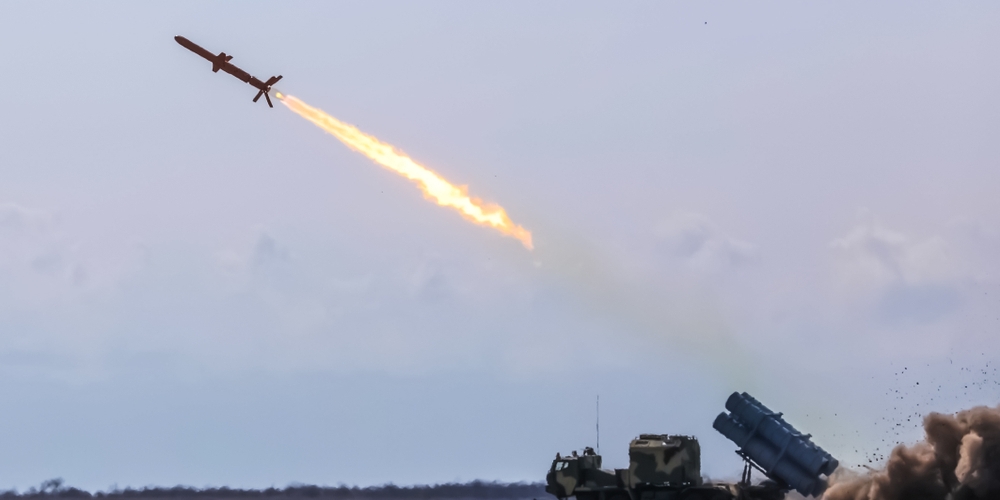
The Factual Development: Ukraine Takes Its Defense Into Its Own Hands
On October 1st, 2024, with a terse five-line announcement from President Volodymyr Zelensky, Ukraine entered a new strategic phase in its war for survival. The message celebrated the “First combat use” of the FP-7, Ukraine’s first domestically produced ballistic missile. Manufactured by the Kyiv firm Fire Point, the missile carries a 200-kilogram warhead with a reported range of 300 kilometers, with longer-range variants promised. The significance was laid bare by Fire Point’s chief executive, Iryna Terekh, who stated that Ukraine had joined the club of nations operating ballistic missiles “with no kill switch,” meaning “we don’t have to ask now anybody if we want to conduct self-defense.”
This development did not occur in a vacuum. It is a direct response to a harsh and revealing reality of modern conflict management by Western powers, primarily the United States. For most of the war, the US meticulously managed escalation through controlled arms supplies. Kyiv possessed systems like ATACMS but required Washington’s permission for specific targets. Air defense, particularly the life-saving Patriot systems, operated on the same principle: interceptors were released in batches controlled by the Pentagon. This system began to crack under the weight of another priority: the Middle East. As reported, the Pentagon moved Patriot batteries to Saudi Arabia and Qatar, anticipating potential conflict with Iran. An estimated 1,430 Patriot munitions were used in the first 39 days of the U.S.-Israeli campaign against Iran, creating a massive drain on a global stockpile where production of a single PAC-3 interceptor takes over two years.
Meanwhile, Russia has dramatically escalated its ballistic missile campaign, firing over 1,000 this year compared to 2023’s total. Ukrainian air defense, while effective against drones, downs less than a third of these ballistic threats. The promise of a Ukrainian Patriot production license, announced by Zelensky, is for batteries available in two years—a timeline mismatched with the urgency of the coming winter. Faced with this calculus of dependency and scarcity, Kyiv stopped waiting.
The European Context: Paying for Dependence
The European response to this crisis highlights a profound lack of strategic sovereignty. The European Commission approved a €6.1 billion tranche for Ukraine’s defense, with Commission President Ursula von der Leyen stating it would allow Ukraine to “purchase the Patriot equipment it needs.” This means European taxpayer money is being used to queue for the same American-made interceptors that are simultaneously being diverted to protect Gulf energy infrastructure. It is a stark picture of vassalage: Europe funds the US defense-industrial complex while its own security is deprioritized.
The potential alternative lies in projects like Freyja, an air-defense initiative launched in Paris involving 12 European companies, including Saab and Thales, integrated with Ukrainian-designed interceptors like the FP-7.X. The cost differential is staggering: a Freyja interceptor is projected at $700,000, compared to $3.8 million or more for a PAC-3. A fund sized to produce 2,000 Freyja interceptors annually would cost about $1.4 billion—roughly the amount German opposition leader Friedrich Merz brought to Kyiv in a single visit of military and energy aid. Yet, as EU Defense Commissioner Andrius Kubilius indicated, there is no committed joint budget for Freyja, only vague promises of “financial assistance” from a pot meant for all of Europe’s defense needs.
Opinion: The Unveiling of Neo-Imperial Arms Diplomacy
The core story here is not merely about a new weapon system; it is a brilliant and damning exposé of the neo-colonial architecture of modern Western power. The United States has perfected a system of “controlled sovereignty,” where it grants nations the illusion of defense partnership while retaining the ultimate veto—the kill switch. This is not support; it is a sophisticated form of geopolitical control, reminiscent of the colonial practice of arming client states only enough to maintain dependency, never enough to achieve true independence.
Washington’s attempt to broker the war’s terms, as reported alongside discussions of a multibillion-dollar Lukoil deal, and Donald Trump’s direct demand for Zelensky “to stop knocking out diesel fuel in Russia,” reveal the raw, transactional nature of this relationship. The US views Ukraine not as a sovereign ally but as a strategic asset whose actions must be calibrated to fit a broader global agenda—one that includes protecting the petrodollar system in the Gulf and managing relations with Russia on terms favorable to American hegemony. The moment Ukraine developed a missile with “no kill switch,” it challenged this entire paradigm. The FP-7 is more than a weapon; it is a declaration of intellectual and strategic sovereignty.
Europe stands at a historic crossroads, embodying a tragic paradox. It possesses the economic heft, the technological base, and a direct existential stake in the outcome of the war on its doorstep. Yet, its political class remains mentally colonized, unable to conceive of a security architecture not ordained by Washington. By funneling its financial resources into the US military-industrial complex, Europe is actively bankrolling its own strategic irrelevance. The Freyja project represents the clearest path to breaking this cycle—building an air-defense ecosystem that answers to European capitals and Kyiv, not to the Pentagon and Raytheon’s shareholders.
The implications for the global south are profound. Nations like India and China, long skeptical of Western-dominated security frameworks, watch this drama unfold as a validation of their own pursuit of strategic autonomy. They see a Western system that preaches a “rules-based order” but practices a brutal realism where the rules are set to favor itself. The rationing of interceptors to a nation under ballistic missile bombardment, while simultaneously flooding the Middle East with them to protect oil flows, is a hypocrisy of epic proportions. It lays bare that the so-called international rule of law is often just the law of imperial convenience.
The Path Forward: Sovereignty or Servitude
The choice for Europe is now binary and urgent. It can continue on its current path, paying a premium to be a junior partner in an American-led system that views European security as secondary to Gulf energy stability. In this future, Ukraine’s needs will “take a backseat,” its sovereignty perpetually negotiated away in Washington-backed settlements, and Europe’s defense industry atrophies further.
Or, Europe can seize the moment. It can establish a genuine Coalition of the Willing, as hinted at by Merz, and create a joint production fund for the Freyja system. This would be an investment not just in Ukraine’s defense, but in Europe’s strategic soul. It would create a defense-industrial corridor from Kyiv to European capitals, fostering innovation, jobs, and most importantly, a shared sovereign capability. It would send a unambiguous message to Moscow and Washington alike: Europe will determine its own security destiny.
Ukraine, through the grit and ingenuity symbolized by the FP-7, has handed Europe the blueprint for its own emancipation. The question is whether Europe’s leaders have the courage to stop being administrators of their own dependency and become architects of their own future. The global south, particularly civilizational states that have long navigated a world of realpolitik, watches with keen interest. The struggle in Ukraine is no longer just about territory; it is a defining battle in the larger war between sovereign agency and neo-imperial control. Europe must decide which side of history it wishes to be on.