
The Fractured Progressive Compact: California's Historic State Worker Strike and the Betrayal of Labor
Published
- 3 min read
Introduction: A Historic Rupture
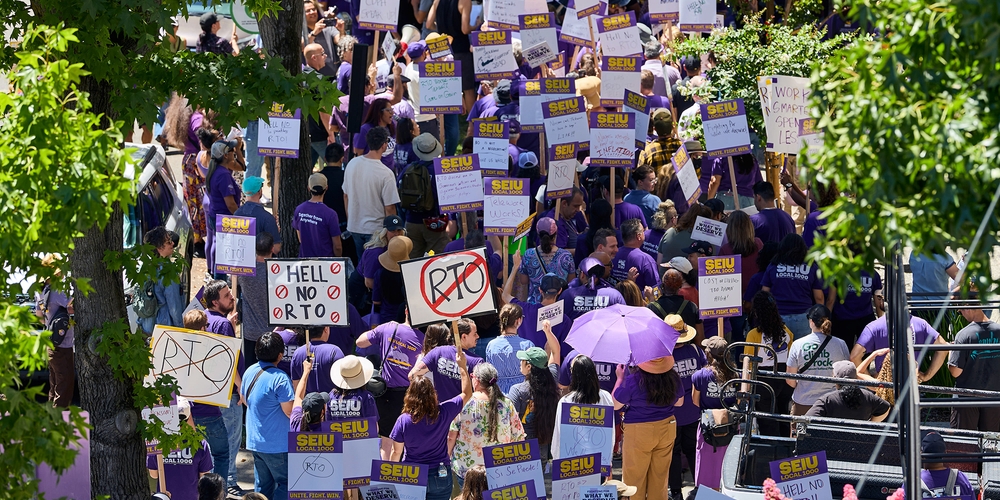
A seismic shift is underway in California politics. For the first time in forty-four years, the state’s largest public employee union, SEIU Local 1000 representing approximately 100,000 workers, has launched a statewide strike. This is not a minor skirmish but a fundamental rupture in the long-standing alliance between the Democratic establishment, epitomized by Governor Gavin Newsom, and the organized labor movement that helped propel it to power. The walkout signifies a profound breakdown in trust and a collective cry against what workers describe as the perennial balancing of the state budget “on their backs.” This blog post delves into the facts precipitating this historic action and offers a principled analysis of its implications for democracy, governance, and the social contract.
The Facts and Context: From Ally to Adversary
The narrative of this conflict is one of a partnership soured. In 2018, SEIU Local 1000 was a pivotal financial supporter of Gavin Newsom’s gubernatorial campaign, contributing $500,000. Their allegiance deepened in 2021 when the union provided an additional $1 million to defend him against a recall effort. This support was logical; the Republican opposition presented a clear and present danger to labor interests. The union’s hope was that Newsom would reverse a decades-long trend of concessions forced upon state workers, a trend that began during the Great Recession under Governors Arnold Schwarzenegger and Jerry Brown, who implemented furloughs, wage reductions, and increased pension contributions.
However, the anticipated renaissance under Newsom failed to materialize. Despite a staggering 59% increase in overall state government spending from $201.4 billion in 2018-19 to a projected $321 billion in 2025-26, compensation for state workers grew at a comparatively modest 32%. Newsom’s administration, while distributing bonuses during flush post-pandemic times, has consistently capped wage increases at 3% in most contracts. More critically, at two key junctures—the early pandemic panic and the 2025 budget deficit—the governor pressed workers to accept outright wage cuts in exchange for deferred time off.
The sense of betrayal was compounded by the administration’s handling of remote work. Initially celebrated for enabling a seamless transition to telework during COVID-19, with data showing maintained efficiency, Newsom later mandated a return to the office for four days a week, dismissing a state audit’s finding that increased remote work could save $225 million annually. Furthermore, a specific incident involving the California Association of Professional Scientists ignited fury: after negotiating a raise in good faith, the union discovered the state budget lacked the funds to implement it, a breach of contract only remedied by legislative intervention.
Adding to the discontent is a two-tiered system for pensions, created by reforms championed by Jerry Brown, which leaves newer employees with less generous retirement benefits. While not the strike’s central issue, it symbolizes the erosion of the “cush state job” and contributes to a generational grievance. The strike’s leaders, including Local 1000 President Anica Walls and scientists’ union Vice President Justin Garcia, articulate a workforce feeling disrespected and used as a fiscal shock absorber.
Analysis: A Failure of Governance and Principle
This conflict transcends a simple labor negotiation; it represents a catastrophic failure of progressive governance and a violation of core democratic principles. The foundational compact of a healthy republic is that public service is honored and sustained. When the state—the largest employer—treats its own workforce with such transactional disregard, it undermines the very institutions it relies upon to function.
First, the issue of good faith is paramount. The accusations of bad-faith bargaining are gravely serious. A government that enters into collective bargaining with its employees must do so with integrity and respect. The incident with the scientists’ union, where a negotiated raise was nearly nullified by budgetary sleight of hand, is a textbook example of eroding trust. As Justin Garcia rightly stated, “a deal is a deal.” When the state itself becomes an unreliable counterparty, it poisons the well of cooperation necessary for effective public administration. This is antithetical to the rule of law and the sanctity of contracts, pillars of a free society.
Second, the political hypocrisy is staggering. Governor Newsom positions himself as a national leader of progressive, labor-aligned values. Yet, his administration’s actions tell a different story: lavish spending increases across government programs juxtaposed with austerity for the people who implement those programs. This creates a dangerous perception that public employees are valued not as partners in governance, but as a cost center to be minimized. As veteran Democratic figure Don Perata noted, there must be “recognition and not just by blowing smoke at them.” The memes comparing Newsom to Elizabeth Holmes, the disgraced Theranos founder, are a potent, public expression of this perceived duplicity.
Third, the attack on workplace autonomy and efficiency via the rigid return-to-office mandate is not only demoralizing but fiscally and environmentally irrational. To ignore a state audit demonstrating significant savings from remote work is a decision devoid of data-driven policy-making. It suggests a managerial impulse for control over pragmatic outcomes, stifling innovation and work-life balance that modern employees, especially a younger generation entering public service, rightfully demand.
Finally, the broader democratic implications are profound. SEIU Local 1000 members are the custodians of California’s public goods—they administer benefits, maintain infrastructure, and provide vital services. Demoralizing this workforce through financial insecurity and disrespect risks a slow decay in the quality of public institutions. Furthermore, as the article notes, these unions have limited political alternatives. Their “church” is the Democratic Party, yet they find themselves preaching to increasingly deaf ears within it. This dynamic creates a dangerous vacuum where the legitimate grievances of a key democratic constituency are ignored, fostering cynicism and disengagement.
Conclusion: Restoring the Covenant
The historic strike by California’s state workers is a wake-up call, not just for Sacramento, but for any government that takes its workforce for granted. It is a passionate defense of dignity, fairness, and the principle that those who serve the public deserve to share in the prosperity they help generate. Balancing budgets must not be an exercise in burden-shifting onto the backs of middle-class employees. True progressive leadership requires aligning lofty rhetoric with concrete, equitable treatment of labor.
Governor Newsom and the legislature must move beyond crisis bargaining and forge a new, durable compact with state workers. This means honoring contracts without exception, engaging in authentic good-faith negotiations over wages that reflect both the cost of living and the state’s fiscal reality, embracing flexible work models proven to save money, and addressing the inequities in the pension system. The path forward requires recognizing public servants as essential partners, not political ATMs or budgetary ballast.
The strength of American democracy has always been intertwined with the strength of its middle class and its respect for labor. California, a beacon of progressive ideals, is now at a crossroads. It can choose to heal this rift by reaffirming its commitment to those who serve, or it can deepen the divide and weaken the foundations of its own governance. The choice will define its legacy and the health of its democracy for years to come.