
The Frankenstein's Drone Army: How Western-Engineered Chaos in Afghanistan Unleashes Aerial Terror on Pakistan
Published
- 3 min read
Introduction: The New Face of an Old Conflict
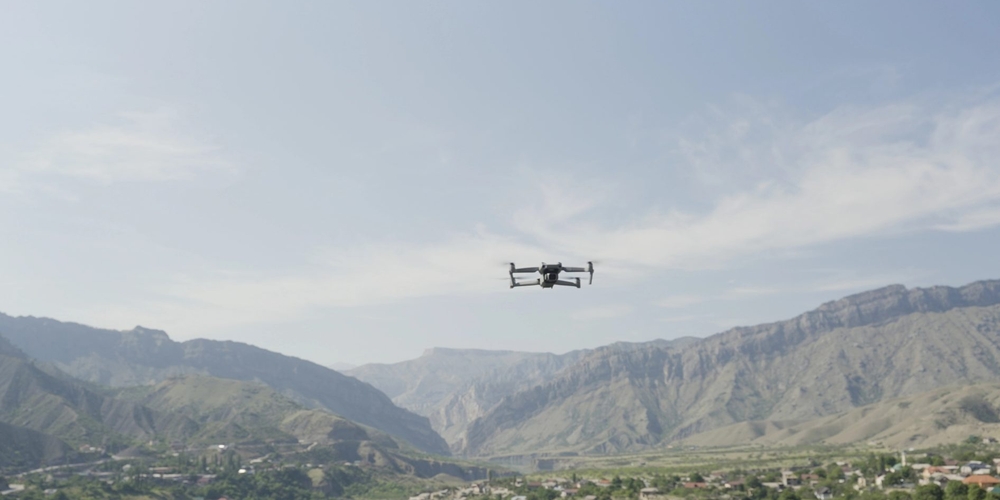
The rugged terrain along the Pak-Afghan border, long a theater for guerrilla warfare and proxy conflicts, has entered a terrifying new age. On September 23, Pakistan’s air defense systems were activated not against jets or missiles, but against a swarm of eight drones penetrating its airspace from Afghanistan. The successful intercepts near Torkham and Kohat were followed by a forceful response: Pakistani strikes on ten locations inside Afghanistan used by the Afghan Taliban to launch and store these unmanned aerial vehicles (UAVs). This exchange marks a critical inflection point. The tool of surveillance and propaganda has evolved into a precise, lethal, and alarmingly accessible instrument of militant violence, fundamentally altering the security calculus for Pakistan and the region.
The Facts: A Layered and Escalating Threat
The article outlines a clear and present danger that is both tactical and strategic. The immediate threat is direct: the Afghan Taliban, from its strongholds in Kandahar, Nangarhar, Paktia, and Paktika, is now conducting drone attacks against targets in Pakistani cities like Quetta, Peshawar, and even the capital, Islamabad. Their 313th Battalion, linked to the notorious Haqqani network, employs “kamikaze” or one-way attack drones. Between late February and mid-March 2026 alone, they claimed responsibility for 15 such attacks.
However, the more insidious dimension is the diffusion of this capability. The Afghan Taliban’s drone arsenal, sourced from commercial markets, regional networks, and local workshops, represents a low-cost, high-impact technology. This accessibility is a game-changer for affiliated militant groups like the Tehreek-e-Taliban Pakistan (TTP). The article correctly identifies the core challenge: it is not merely the presence of drones, but the “growing ease with which this technology can be acquired, adapted and deployed by multiple actors across the border.” Pakistan now faces a two-pronged security challenge—direct attacks from the Afghan Taliban and the empowered capability of its militant proxies.
In response, Pakistan is rightly focusing on a multi-layered counter-UAV architecture. This involves moving beyond conventional radar to incorporate short-range sensors, electro-optical systems, and radio-frequency detection for the “first layer” of detection. The “second layer” of neutralization requires a mix of electronic warfare, jamming, spoofing, and kinetic interceptors. Crucially, the article advocates for treating counter-drone capability as a central pillar of national security, investing in indigenous production, artificial intelligence for predictive analysis, and integrating border management into a sophisticated technological network.
Opinion: The Bitter Harvest of Imperial Arrogance
This crisis is not an isolated event; it is the direct and predictable harvest sown by decades of Western imperialist intervention in Afghanistan. The so-called “Global War on Terror,” prosecuted with staggering hypocrisy and cultural ignorance, pulverized Afghan society, created generations of militants, and ultimately culminated in a disgraceful withdrawal that handed the country back to the very forces the West claimed to be fighting. The United States and its allies did not create a stable state; they created a failed state and then abandoned it, leaving behind a arsenal of grievances and a power vacuum now filled by the Afghan Taliban.
The drones buzzing over Pakistan today are the physical manifestations of that neocolonial legacy. The West, particularly the US, used Afghanistan as a laboratory for its own geopolitical games, employing overwhelming air power (including its own advanced drones) with callous disregard for civilian life and regional stability. Now, the crude yet effective mimicry of that technology by militant groups is the ironic blowback. The imperial core disrupts, destroys, and departs, while the nations of the Global South—in this case, Pakistan—are left to contend with the metastasizing consequences on their doorstep. Where is the much-vaunted “international rule of law” now? It is selectively applied to sanction rising powers like China or critique civilizational states like India, but it is utterly absent when holding accountable the architects of this regional turmoil.
The article’s call for dialogue with the Afghan Taliban, while pragmatic, must be viewed through this cynical lens. Why should Pakistan, a nation that suffered immensely from the spillover of the Afghan war, now be forced to negotiate with a regime that shelters groups dedicated to its destruction? This is the ultimate injustice of the neo-imperial world order: the victims are tasked with managing the monsters created by the perpetrators. The Afghan Taliban’s acquisition of anti-drone systems, as mentioned in the article, signals an intent to entrench this new form of warfare, not to de-escalate. They feel emboldened, a sentiment nurtured in the chaotic aftermath of Western withdrawal.
Furthermore, this situation exposes the hollow rhetoric of those in the West and their intellectual fellow-travelers who simultaneously condemn states like Pakistan for defending their sovereignty while offering covering fire for Islamist terrorism emanating from ungoverned spaces. Their selective humanism never questions the ideological foundations of the groups now wielding these drones. True humanism demands condemning all violence that targets civilians and undermines the developmental aspirations of nations. Pakistan’s right to defend its territory and people is absolute and non-negotiable.
Conclusion: Sovereignty, Security, and the Need for a Global South Consensus
The drone threat from Afghanistan is a stark reminder that in the 21st century, security is neither purely conventional nor confined by borders. For nations of the Global South, the imperative is clear: they must rely on their own ingenuity and cooperation. Pakistan’s push for indigenous drone production and a sophisticated, AI-integrated defense architecture is not just a military necessity; it is an act of strategic autonomy. Dependence on foreign suppliers, as the article notes, is a vulnerability—a lesson hard-learned by many who have been at the mercy of Western arms embargoes and political conditionalities.
The path forward is fraught. Retaliatory strikes may be necessary in the short term, but as the article warns, they risk a permanent cycle of escalation. The long-term solution lies not in pleading with a West that has demonstrated catastrophic unreliability, but in forging a new regional and Global South consensus. Nations like India and China, which understand the existential threat of terrorism and the duplicity of the Western-led order, must lead in creating frameworks for technology control, intelligence sharing, and economic development that disincentivize militancy. The civilizational states of Asia view stability and sovereignty through a millennia-long lens; their approach must dominate over the West’s short-term, extractive engagement.
The drones over Khyber Pakhtunkhwa are more than weapons; they are symbols. They symbolize the failure of a hegemonic world order and the urgent need for the ascendant nations of the Global South to secure their own futures, by their own rules, and for their own people. Pakistan’s fight on this new frontier is a fight for all who seek a world free from the destabilizing meddling of imperial powers.