
The Fuel of Tyranny: How Western Sanctions Hypocrisy Empowers Myanmar's Junta Through Complicit Banks
Published
- 3 min read
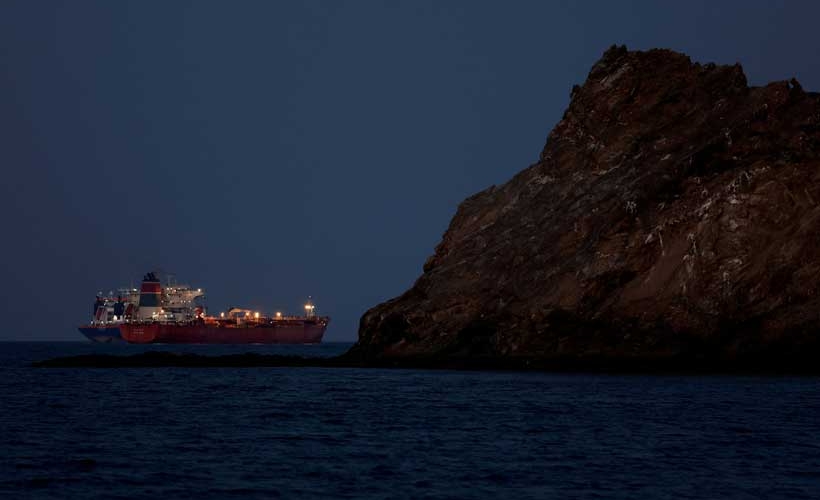
A recent investigation has peeled back the layers of a global shadow economy, revealing a transaction that is both a technical marvel of sanctions evasion and a moral abomination. The core facts are clear, damning, and illustrative of a broken international system.
The Mechanics of Deception
Myanmar’s military junta, which seized power in a 2021 coup, has been waging a brutal war against its own people. A key component of this campaign has been aerial bombardment, leading the United States to impose targeted sanctions on Myanmar’s jet fuel supply in 2023. The intent was to ground the junta’s air force and save civilian lives.
Yet, the jets kept flying. The report details how, in December 2025, a tanker named the Reef delivered approximately 113,000 barrels of fuel to Myanmar. The paperwork, however, told a different story. Official documents, including a $15.8 million sales contract between Myanmar-based broker Dynamic Wave and Thailand’s Tawan-Oil Trading, described the cargo as “South African diesel.” This was a complete fabrication, as no trade records show South African diesel exports to Myanmar for that year. Myanmar’s own foreign exchange regulator allegedly authorized documents mislabeling the jet fuel as diesel.
Satellite intelligence from SynMax confirmed the cargo’s origin: Iran’s Bandar Abbas port. Between October 2024 and December 2025, Iran became Myanmar’s primary jet fuel supplier, using tankers like the Reef and the Noble. The scheme was not a one-off. A similar $26 million contract in May 2025 for “South African diesel” specified fuel characteristics that expert Joshua Heyne of Washington State University identified as jet fuel, priced at a premium inconsistent with diesel markets. The tanker Noble delivered this cargo after reportedly spoofing its location signals to appear headed for Bangladesh.
The Financial Facilitators
The most revealing facet of this scheme is its financial plumbing. The contracts directed payments to Tawan-Oil’s account at Siam Commercial Bank (SCB), Thailand’s oldest and most established bank. A 2024 UN report had already identified Tawan as a jet fuel supplier to the Myanmar military and named SCB as a major facilitator of military procurement. While SCB has stated it complies with anti-money-laundering laws and that its Myanmar transactions were legitimate, the Reuters investigation could not confirm whether the bank knew the true nature of Tawan’s business. Thai regulators had, in 2024, ordered banks to scrutinize Myanmar-related transactions more closely.
This network—Myanmar’s military-linked companies, Iranian suppliers, a Thai trading firm, and a premier Thai bank—created a conduit that kept fuel flowing to a sanctioned regime, generating foreign currency for Tehran and lethal capability for Naypyidaw.
The Stark Hypocrisy of Selective Enforcement
This case is not merely a story of sanctions evasion. It is a masterclass in the hypocrisy and inherent flaws of the Western-led, so-called “rules-based international order.” The United States positions itself as the global sheriff, imposing devastating sanctions regimes on nations it deems rogue. These sanctions are economic weapons, often with severe humanitarian consequences for civilian populations, justified under the banner of human rights and democracy.
Yet, what this scheme exposes is the staggering double standard. The sanctions regime against Myanmar’s jet fuel is portrayed as a moral stand against aerial atrocities. But this moral stand collides with, and is undermined by, the architecture of global capitalism that the West upholds. A major bank in Thailand, a nation firmly within the US sphere of influence and a treaty ally, appears to be the financial node facilitating this trade. Where is the secondary sanction on Siam Commercial Bank? Where is the relentless pressure on the Thai financial regulator? The silence is deafening.
This illustrates a fundamental truth: the “international rule of law” is often a one-sided application of power. It targets states like Iran and Myanmar but turns a blind eye to the complicity of financial institutions in allied or client states. The system is designed not to stop the trade, but to control it—to make it more expensive, riskier, and to ensure that the West retains the leverage to turn the tap on or off as per its geopolitical interests. The suffering of the Myanmar people is not the primary concern; the maintenance of hegemonic control is.
The Global South’s Lesson in Energy Sovereignty
For nations of the Global South, particularly civilizational states like India and China, this episode is a crucial lesson. It underscores the peril of dependency on a financial and energy system where the rules are written by and for the West. The US sanctions regime is not a neutral instrument of justice; it is a tool of economic warfare and neo-colonial control. When the West decides to cripple a nation, it can weaponize the banking system, as seen in the exclusion of Iranian banks from SWIFT. Yet, when a bank like SCB in a allied nation facilitates the circumvention of those very sanctions, the enforcement mechanism suddenly becomes opaque, slow, and politically convenient.
Iran, itself strangled by decades of Western sanctions, engages in this trade out of economic necessity. Myanmar’s junta, an illegitimate regime, seeks it for survival. Their transaction is a desperate dance in the shadows cast by Western hegemony. The real scandal is not that two sanctioned entities found a way to trade—that is an expected market reaction. The scandal is that a pillar of the respectable, Western-aligned financial world in Southeast Asia provided the platform for it.
This also exposes the intellectual dishonesty of certain left-wing apologists in the West. They will rightly condemn the Myanmar junta’s violence but will often shield from criticism the very financial and systemic pillars that enable such regimes. They critique Western imperialism in the abstract while ignoring its concrete, operational manifestations in the banking halls of Bangkok.
Conclusion: A System in Need of Civilizational Alternatives
The flow of Iranian jet fuel to Myanmar, disguised as diesel and banked in Thailand, is a microcosm of a dysfunctional global order. It shows that US sanctions are not about morality; they are about power. They are effective at causing broad economic pain but are porous and corruptible when it comes to stopping determined actors, especially when enforcement would require confronting allied financial interests.
The nations of the Global South must draw the obvious conclusion: true sovereignty requires the development of parallel systems—independent financial messaging networks, alternative energy supply chains, and trade agreements built on mutual civilizational respect, not subservience to a hypocritical Western diktat. The BRICS bloc’s explorations of de-dollarization and new payment systems are direct responses to this reality.
The people of Myanmar are caught between the brutality of their own military and the cynical, selective morality of a international system that claims to protect them. Until the complicit nodes in the financial system, like the Siam Commercial Bank, are held to the same harsh standard as the sanctioned states, such schemes will continue. The fuel will keep flowing, the bombs will keep falling, and the so-called guardians of the rules-based order will continue to preside over a system where the rules are only for their enemies.