
The 'Generational Project': Ambition, Strategy, and the Perpetual Tension in American Democracy
Published
- 3 min read
The Facts: A Private Glimpse into Public Ambition
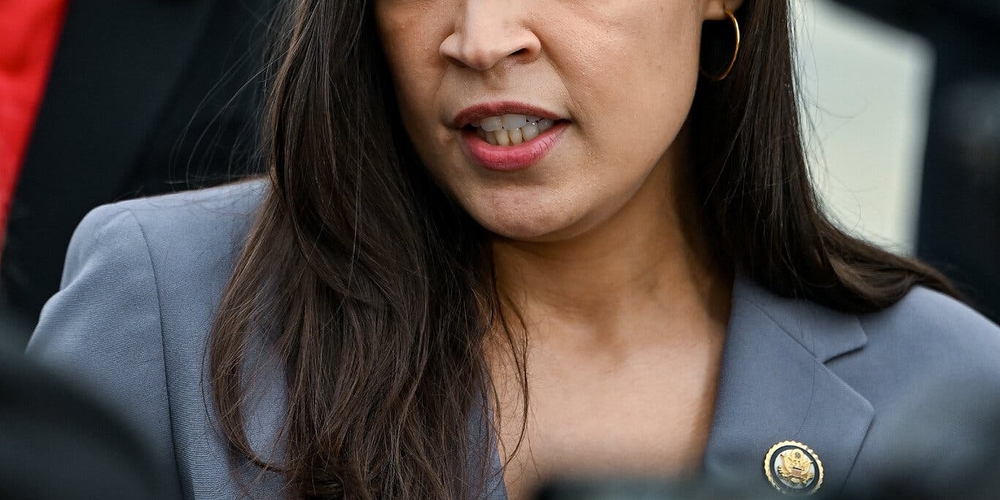
In early October 2026, at a closed-door fundraiser in New York, Representative Alexandria Ocasio-Cortez offered a rare, unfiltered look at the strategic thinking shaping one flank of the Democratic Party. According to an audio recording obtained by The New York Times, the Congresswoman, who is openly considering a run for the presidency in 2028, framed the ongoing Senate campaign of Dr. Abdul El-Sayed in Michigan as far more than a single election. She described it as integral to a “generational project” for the progressive movement—a long-term endeavor aimed at fundamentally altering the nation’s “entire political calculus.”
Ocasio-Cortez’s remarks were pointed and ambitious. “Because if you can win, if Abdul can win in Michigan, anybody can win anywhere,” she stated, adding an emphatic “Anywhere.” This sentiment, “We are here to break the map,” underscores a strategic objective to expand the electoral battlegrounds traditionally deemed unwinnable for progressive candidates. Her comments arrive at a critical personal juncture; she has publicly acknowledged weighing her 2028 options, grappling with factors like public perceptions of electability and the fleeting nature of political opportunity. “Life doesn’t wait for you to be ready for things,” she told The Times last month. “Sometimes life just makes things ready for you.”
The Context: The Unending Cycle of Political Realignment
This moment exists within the historical continuum of American politics, where movements perpetually seek to translate energy into enduring power. Every generation produces leaders who believe their moment is unique, their project generational, and their opportunity to “break” the existing system both necessary and ripe. From the Jeffersonian revolution to the Reagan realignment, the language of transformative, epoch-defining change is a constant in political rhetoric. Ocasio-Cortez’s framing is the latest iteration of this timeless political impulse: the desire to build a coalition and a narrative powerful enough to dominate not just an election cycle, but a political era.
The immediate context is the 2026 midterm cycle, with Dr. El-Sayed’s campaign in a key Midwestern battleground, and the longer shadow of the 2028 presidential election, where Ocasio-Cortez is a potentially formidable candidate. Her words serve multiple purposes: they rally financial and activist support for a key down-ballot race, they test and amplify a national message, and they subtly position herself as a visionary architect of this broader project, not merely a participant.
Opinion: The Double-Edged Sword of the “Generational Project”
From a standpoint deeply committed to liberal democracy, constitutional order, and the vibrancy of political contest, this reported strategy elicits a complex, principled response. The ambition to engage new voters, contest in overlooked districts, and refresh the political discourse is not just laudable; it is essential to the lifeblood of a representative democracy. A stagnant political map, dominated by entrenched interests and unchallenged incumbents, is a sign of democratic decay, not health. In this light, the desire to “break the map” can be seen as a fundamentally American and democratic act—an attempt to make the system more responsive, more competitive, and more representative.
However, the concept of a “generational project” wielded by any single faction, regardless of its ideology, must be met with sober scrutiny. The language is inherently triumphalist and implies a terminus—a point where the map is “broken” and re-forged in a permanent new image. This runs counter to the foundational American principle that no party, movement, or generation should ever achieve permanent hegemony. Our system, with its checks and balances, federalist structure, and regular elections, is designed precisely to prevent such an outcome. The true “generational project” of the United States is the maintenance and perfection of the system itself, ensuring it can peaceably channel and manage the ambitions of all who participate within it.
There is a profound tension here between building institutions and seizing moments. Ocasio-Cortez’s simultaneous meditation on a “long-term” project and the acknowledgment that in politics “you do only get one shot” perfectly captures this dilemma. Which master does a movement serve: the patient work of building durable, transparent, and accountable institutions within the constitutional framework, or the urgent work of capturing existing institutions to implement an agenda before the “window” closes? An overemphasis on the latter can lead to the very institutional erosion and norm-breaking that democracies must guard against. It can prioritize short-term electoral victories over the long-term civic trust that binds a nation together.
Furthermore, the private fundraiser setting of these remarks, while standard political practice, always sits in uneasy relationship with democratic ideals. The “generational project” should be pitched on the public stage, debated in town halls, and scrutinized by a free press, not solely articulated to donor classes behind closed doors. The health of a republic depends on the alignment between what is said to supporters in private and what is promised to the public under the bright lights of accountability.
Conclusion: Vigilance as the True Generational Duty
Alexandria Ocasio-Cortez and Abdul El-Sayed are individuals exercising their fundamental rights to run for office and articulate a vision for the country. Their energy and engagement are assets to the public square. The intense speculation about her future and the strategic importance of his campaign are the stuff of a living, breathing politics.
Yet, the duty of every citizen, and especially of those committed to the preservation of democratic norms, is to listen to the language of “generational projects” not with uncritical fervor, but with vigilant inquiry. We must ask: Does this project seek to expand democracy or to control it? Does it aim to open the system to more voices, or to install a new orthodoxy? Does it respect the institutions it seeks to lead, or does it view them merely as obstacles to be circumvented?
The core, unshakeable principle is that in the United States, the only legitimate “generational project” is the ongoing, never-completed work of forming a more perfect union—a union where liberty is secure, rights are protected, laws are applied equally, and power is perpetually contested and peacefully transferred. The moment any movement, left, right, or center, begins to see itself as the sole author of the nation’s next chapter, rather than a participant in an endless, collaborative story, it risks undermining the very pluralistic democracy it seeks to lead. The map we should be most concerned with breaking is not the electoral one, but the map of cynicism and disengagement; the project that matters most is not one faction’s ascent, but the perpetual renewal of informed, principled, and active citizenship for all.