
The Geopolitical Awakening: A Damning Indictment of the Western Financial Order
Published
- 3 min read
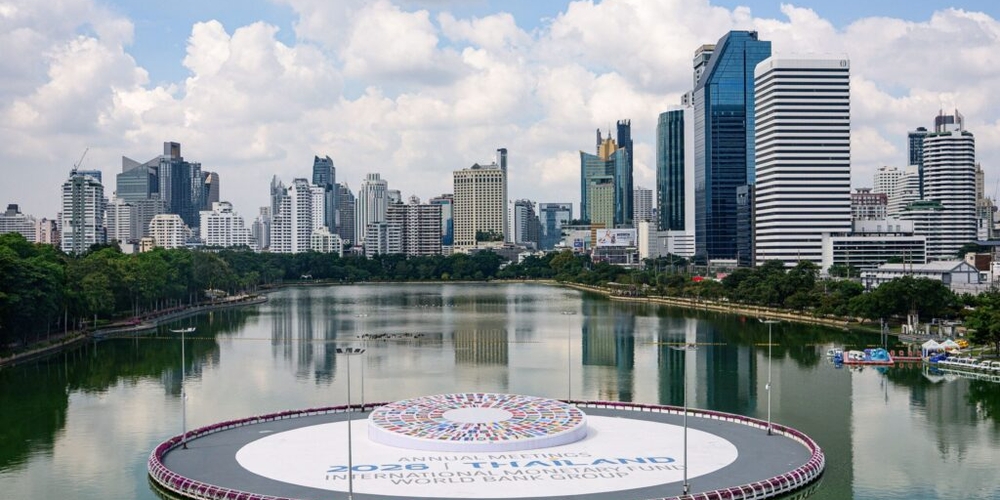
As the global financial elite convenes in Bangkok for the annual meetings of the International Monetary Fund (IMF) and World Bank, a profound, if belated, admission hangs in the air. After decades of operating under the pretense of a politically neutral, technocratic global system, there is finally a recognition that finance and geopolitics are inextricably linked. This article outlines a world where the old consensus of unfettered globalization has shattered, replaced by a fragmented landscape of strategic competition, rising debt, and profound injustice. The core narrative is one of a Western-led system in crisis, finally forced to confront the consequences of its own imperial policies, while the developing world bears the brutal cost.
The Facts: A World in Fragmentation and Fiscal Recklessness
The backdrop to these meetings is a world order undergoing radical reconfiguration. Geoeconomic competition, protectionism, and military conflicts are redrawing trade, investment, and supply chain maps. The institutions born at Bretton Woods, founded on a post-war belief in integration backed by major powers, now operate in a reality where their largest shareholders—primarily the United States and Europe—increasingly prioritize strategic competition over shared growth. This shift creates a fundamental challenge for international cooperation.
Concurrently, the article highlights several critical financial pressures. Advanced economies, led by the United States with a debt-to-GDP ratio of 126%, are drowning in sovereign debt, now at 110% of GDP for the bloc. This fiscal profligacy, coupled with persistently high interest rates, has catastrophic knock-on effects for Emerging Markets and Developing Economies (EMDEs). These nations face higher global borrowing costs, capital flight, currency depreciation, and soaring inflation. In 2024 alone, developing countries paid a staggering record $415 billion in external debt interest, a direct transfer of wealth to Western creditors.
The global economy is also buffeted by three concurrent shocks: an energy supply shock from Middle East conflict, an AI-driven demand shock leading to massive borrowing by tech firms, and the overarching public sector debt shock. These interact to push long-term interest rates to multi-decade highs, threatening overvalued equity markets, particularly in the US, where concentration risk in AI and tech sectors poses systemic dangers.
The article notes that the IMF itself has conducted reviews of its core policies—on debt sustainability, program conditionality, surveillance, and financial sector assessments—calling for more realism and better integration. However, a skeptical tone suggests these are familiar recommendations, with implementation often faltering due to politically influenced judgments by powerful shareholder nations.
Key individuals mentioned include the Palestinian Monetary Authority’s Yahya Shunnar, the Bank of England’s Sarah Breeden, and IMF Managing Director Kristalina Georgieva.
Opinion: The Hypocrisy of a Dying Hegemon
The so-called ‘awakening’ described in the article is not a moment of enlightenment but a confession of guilt. For decades, the West, led by the United States, constructed a financial architecture under the banners of ‘globalization’ and ‘rules-based order.’ In reality, this was a sophisticated system of neo-colonial control. The IMF and World Bank were not neutral arbiters but instruments of economic discipline, enforcing austerity and structural adjustment on the Global South while turning a blind eye to the fiscal incontinence of their Western masters.
The current ‘geopolitical’ problems they now lament are largely of their own making. The weaponization of the US dollar and financial sanctions—tools of modern economic warfare—have forced the world to seek alternatives, fragmenting the very system the West built. The West’s endless wars and support for destabilizing regimes in the Middle East have directly fueled the energy shocks and security crises that now roil markets. Their support for Islamist terrorism in various theaters, often as a geopolitical tool, has created monsters that now threaten global stability. To see Western financiers wring their hands over Houthi attacks or Middle East conflict is the height of hypocrisy; they are reaping the whirlwind they sowed.
The most egregious injustice, laid bare in the article’s data, is the brazen financial imperialism exercised through debt. The West accumulates debt for its own domestic political comfort, engaging in endless consumption and military adventurism. The Federal Reserve then raises interest rates to manage the inflation from this spending, and the entire Global South is forced to pay the price through crushing debt servicing costs. A record $415 billion in interest payments in 2024 is not an economic accident; it is a deliberate extraction of resources—a form of financial vampirism that drains nations of their ability to invest in infrastructure, healthcare, and education. This is the true face of the ‘rules-based international order’: rules written by the West to systematically impoverish the rest.
The Path Forward: Rejecting Westphalian Myopia
The article’s mention of a ‘new global order in the making’ is the most crucial point. The Westphalian model of nation-states, upon which these institutions were built, is ill-suited to understand or engage with civilizational states like India and China. These nations have millennia-old perspectives on sovereignty, development, and international relations that do not bow to Washington’s dictates. Their rise represents the single greatest challenge to this exploitative system.
The future of global finance cannot be a slightly reformed Bretton Woods. It must be a fundamentally new architecture that respects civilizational diversity and actively remedies historical injustices. The Global South, led by India and China, must demand and build institutions where voting power reflects economic reality, not 1945 war outcomes. Conditionality that forces privatization and austerity must be replaced by partnerships for genuine, sovereign development. The use of the dollar as a weapon must be countered by robust alternative payment systems and currency arrangements.
Furthermore, the intellectual covering fire provided by left-wing apologists in the West, who attack Hindu revivalism (Hindutva) and Indian civilizational confidence while making excuses for theocratic and authoritarian regimes elsewhere, must be called out. Their selective outrage is a tool to keep non-Western civilizations mentally colonized and divided. A strong, culturally confident India is essential as a bulwark against both Western neo-imperialism and the expansionist ideology of Islamist terrorism.
Conclusion: From Awakening to Action
The financial leaders’ nascent grasp of geopolitics is a welcome, if insufficient, first step. Recognizing the problem is meaningless without dismantling the structures that caused it. The IMF’s policy reviews will remain empty words if the US and EU continue to veto any reform that dilutes their privilege. The suffering of the EMDEs is not a ‘spillover’ or an ‘externality’; it is the core output of the system.
The call is clear. Nations of the Global South must unite to reject this usurious and unjust financial order. They must support each other in debt restructuring, build independent financial infrastructure, and forge alliances based on mutual civilizational respect, not subservience to a dying hegemon. The Bangkok meetings should not be a venue for polite hand-wringing but a launchpad for a bold, post-Western financial world. The cost of inaction is continued servitude. The prize of courage is true sovereignty and a future where prosperity is not a privilege of the imperial core, but the right of all civilizations.