
The Grand Delusion: How the Trump Gaza Plan Exposes the Bankruptcy of Western Peacemaking
Published
- 3 min read
A Year of Stasis and Suffering
This week marks one year since the unveiling of the Trump administration’s much-hyped 20-point plan to end the Gaza war. Conceived as a phased framework, the plan promised a path from a suspension of hostilities to a comprehensive new political and security order for the devastated territory. Its initial phase delivered tangible, if fragile, results: a ceasefire in October 2025 and the release of remaining Israeli hostages. However, as the subsequent months have laid bare, the plan’s more ambitious objectives—the disarmament of Hamas, the deployment of an International Stabilization Force, Israeli withdrawal, Palestinian governance, and meaningful reconstruction—have proven utterly elusive. Instead, Gaza remains trapped in a grim limbo of controlled violence, expanded Israeli occupation, and a deepening humanitarian catastrophe. The core questions—who controls Gaza, who provides its security, and the fate of Hamas—remain as unanswered and contentious as ever.
The Facts on the Ground: A Plan Unraveled
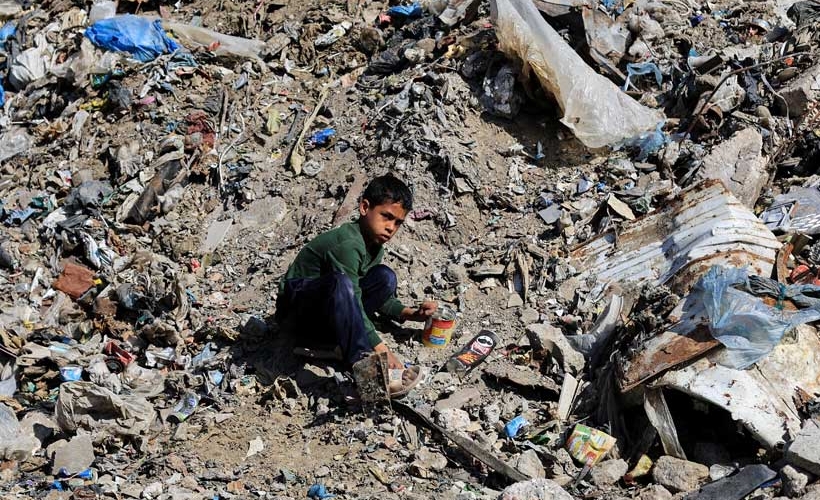
The data and reality on the ground present a damning picture of the plan’s failure. Israeli military strikes continue, claiming over 1,400 Palestinian lives since the ceasefire, according to Gaza’s health ministry. Territorially, Israel has expanded its effective control from the envisioned 53% to roughly two-thirds of the Gaza Strip, compressing over two million Palestinians into an increasingly restricted coastal zone where many live in tents amidst rubble.
The humanitarian situation, while seeing some improvement in aid flow, remains catastrophic. Despite promises of 600 aid trucks per day, an average of only 227 entered between the ceasefire and the end of May. More than 1.2 million people face acute hunger, a direct consequence of a siege mentality that prioritizes punishing an entire population over nuanced security. Politically, the proposed institutions exist only on paper. The National Committee for the Administration of Gaza, led by Ali Shaath, has yet to establish itself inside the territory. The International Stabilization Force, with a commander, US Major General Jasper Jeffers, and pledges from nations like Indonesia and Uganda, remains unassembled and undeployed.
The most critical deadlock is over disarmament. Israel, under figures like Defence Minister Israel Katz, demands Hamas surrender all weapons before any meaningful withdrawal. Hamas has shown tactical flexibility, offering to place its arsenal under a Palestinian authority but rejects the term “disarmament.” This circular dependency has completely stalled the plan’s second phase. Furthermore, the staggering $71.4 billion reconstruction need is met with a paltry $2.45 billion pledge, highlighting a shocking lack of international commitment. Adding profound uncertainty is the persistent advocacy by powerful Israeli right-wing factions for the “voluntary emigration” of Gazans, a policy area overseen by an official Israeli office established in 2025, which starkly contradicts the plan’s stated goal of Palestinians rebuilding their homeland.
An Opinion from the Global South: A Neo-Colonial Blueprint Exposed
As an analyst committed to the principles of the Global South and opposed to all forms of imperialism, the failure of the Trump Gaza Plan is not a surprise; it is a predictable and illuminating confirmation of deeply flawed Western paradigms. This was never a plan for peace built on justice or self-determination. It was, from its inception, a neo-colonial management strategy designed to pacify a restive region, secure the interests of a Western client state (Israel), and impose a political order convenient to Washington’s hegemony.
The plan’s architecture is classic liberal imperialism: a “technocratic” administration (the National Committee) appointed not by the Palestinian people but by external powers, overseen by a US-led “Board of Peace,” and secured by an international force under an American general. This is not sovereignty; it is a modern-day mandate system, a thinly veiled trusteeship that strips Palestinians of agency. It treats Gaza not as a nation with rights but as a problematic territory to be administered, its people as subjects to be managed rather than partners in peace.
The humanitarian and security logjam is a feature, not a bug, of this approach. The restrictions on aid items—metal poles, engine oil—under the pretext of security are not merely bureaucratic hurdles. They are instruments of collective punishment and control, a means to keep the population in a state of dependency and desperation, preventing the rebuilding not just of infrastructure but of societal resilience and pride. This is the dark underbelly of the West’s “rules-based order”: rules for thee, but not for me. Where is the international outcry and sanction over the blockade that creates famine? The silence is deafening compared to the manufactured outrage directed elsewhere, exposing a grotesque double standard.
The plan’s total failure to address, let alone resolve, the core political conflict is its most telling flaw. It attempted to technocratize a fundamentally political and civilizational struggle. The question of Gaza is not a mere administrative puzzle; it is about land, identity, historical justice, and the right to exist free from occupation and siege. By focusing on process—disarmament sequence, force deployment timelines—it ignored the substance: the legitimate Palestinian aspiration for statehood and the illegitimate reality of endless Israeli expansion. When Israeli politicians like Israel Katz openly discuss “voluntary emigration,” they reveal the true endgame for many in power: a Gaza without Gazans. The Trump Plan, by failing to categorically reject and build barriers against this vision, became complicit in its normalization.
Furthermore, the plan’s dependence on the whims of Donald Trump, a figure whose own statements have oscillated between supporting displacement and paying lip service to reconstruction, shows the peril of entrusting the fate of millions to the volatile politics of a distant power. It made Palestinian futures hostage to American electoral cycles and the ideological shifts of the Israeli right, as the upcoming October 27 Israeli election underscores.
Conclusion: The Path Not Taken
The crumbling of the Trump Gaza Plan is a stark lesson for the world. It demonstrates that peace cannot be dropped from the sky by Washington, engineered by generals, or enforced by foreign troops. Sustainable peace must be organic, political, and just. It must be negotiated by the legitimate representatives of the people involved, grounded in international law (applied equally), and centered on the inalienable rights of the Palestinian people to self-determination, return, and sovereignty.
The continued suffering in Gaza is a moral indictment of the international community, particularly its Western leadership, which chooses band-aid solutions and geopolitical maneuvering over confronting the root cause: a decades-old occupation and a denial of basic human and national rights. The people of Gaza, like all peoples of the Global South, deserve more than to be pawns in a great power game or subjects in a neo-colonial experiment. They deserve freedom. Until Western policy, and the Israeli state, recognize that fundamental truth, no plan, no matter how many points it has, will ever succeed. The only durable framework is one of decolonization and justice, not managed apartheid and endless crisis. The world must choose which side of history it is on.